Defence Minister Musa Emphasizes Early Planning for Robust Election Security
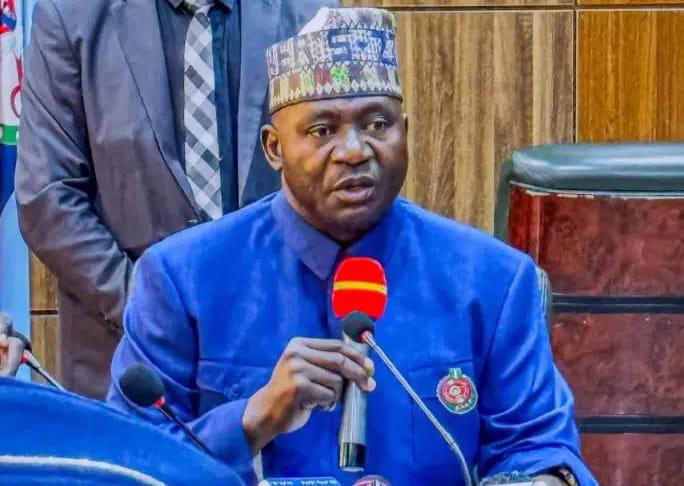
Nigeria's Minister of Defence, General Christopher Musa (retd.), has cautioned security organisations against the practice of relying on rushed, last-minute arrangements for ensuring election safety. The Minister stressed on Tuesday that securing electoral processes effectively demands extensive, intelligence-driven preparation and coordinated efforts over several months, rather than reactive, eleventh-hour deployments.
Speaking at a Blueprint newspaper seminar focused on security, Musa highlighted that election security should be perceived as an ongoing process, not merely an event confined to the voting day. He emphasized the necessity for proactive readiness and continuous evaluation of potential dangers. "The lesson is clear: successful election security is not achieved through last-minute deployments. It is achieved through months of planning, intelligence-led operations, inter-agency coordination, effective communication and continuous assessment of emerging threats and, above all, through the confidence that citizens place in the institutions established to serve them," the Minister stated. He further added, "Security should never be viewed as an event. It is a process that begins long before campaigns commence and continues long after the final vote has been counted."
General Musa noted that the evolving nature of security threats necessitates that election preparations extend beyond merely safeguarding physical polling locations. He identified potential threats to elections as emanating from cyberspace, the spread of misinformation, economic challenges, and the manipulation of ethnic and religious divisions. The Minister warned that a significant danger to electoral integrity might no longer be an armed individual at a polling unit, but rather an anonymous online operator manipulating information to erode public trust.
To bolster election security, the Defence Minister proposed a six-pillar framework:
1. **Strategic Intelligence:** This pillar should underpin all election security planning. Musa advocated for an intelligence-led approach over an incident-driven one, incorporating threat assessments, early warning systems, and real-time information sharing among security, intelligence, and electoral bodies.
2. **Digital Infrastructure Protection:** Given the increasing technological integration in elections, safeguarding digital systems is crucial. This involves protecting electoral platforms, communication networks, and information systems from cyber intrusions, digital sabotage, and malicious interference.
3. **Civil-Military Coordination:** Musa underscored the importance of seamless collaboration among security agencies, free from institutional rivalries. He asserted, "The constitutional roles of all security agencies must continue to be respected, while strengthening coordination, interoperability and joint planning; experience has shown that seamless collaboration, not institutional competition, delivers the best outcomes during national emergencies and major public events."
4. **Unified Strategic Communication:** This pillar is vital for combating misinformation. Musa explained, "In today’s information environment, silence often creates space for misinformation, and timely, accurate, coordinated public communication is essential to sustaining public confidence before, during and after elections."
5. **Responsible Information Environment** and **Engaged Citizens:** These final two pillars highlight that the government alone cannot defeat misinformation. Musa described this fight as a collective national responsibility, stating, "Government alone cannot defeat misinformation; the media, technology companies, civil society organisations, educational institutions and citizens all share responsibility for promoting fact-based public discourse and rejecting narratives designed to incite violence or undermine confidence in democratic institutions."
Adding to the discourse, former Zamfara State Governor, AbdulAziz Yari, cautioned politicians against exploiting insecurity to gain public favour. Yari emphasized that the battle against insecurity is a shared national duty, extending beyond government and security operatives. "Let us encourage all political parties to understand that insecurity is not something to be traded with for the purpose of winning the hearts of citizens. The citizens are aware that we are in trouble. From Obasanjo, Yar’adua and Jonathan to Buhari and today. We need to be fair and just," he remarked. Drawing on his tenure as governor from 2011 to 2019, which encompassed the security challenges of the 2015 and 2019 general elections, Yari observed that insecurity has remained a persistent national issue across successive administrations.
Videos
Comments
(0)0/500 · No URLs or profanity allowed
Defence Minister don talk say make we no dey wait till last minute to secure elections. E say na proper planning and cooperation dey important, plus say make politicians no dey use insecurity play politics. Na serious matter wey everybody suppose get hand inside.
Source: Punch NG
Related Stories

Fubara: Rivers State Projects to Fuel APC's 2027 Campaign Ambitions

Wike's Spokesman Challenges Deji Adeyanju Over Abuja Flood Blame

Edo State Speaker Blessing Agbebaku Resigns Amidst Impeachment Moves

BBC Accused of Family Harassment Amidst Trump's Defamation Suit

APM Insists Osun Election Outcome Spells Doom for Tinubu in 2027