Djokovic's Wimbledon Endurance Faces Sinner's Fitness Test in Semi-Final Showdown

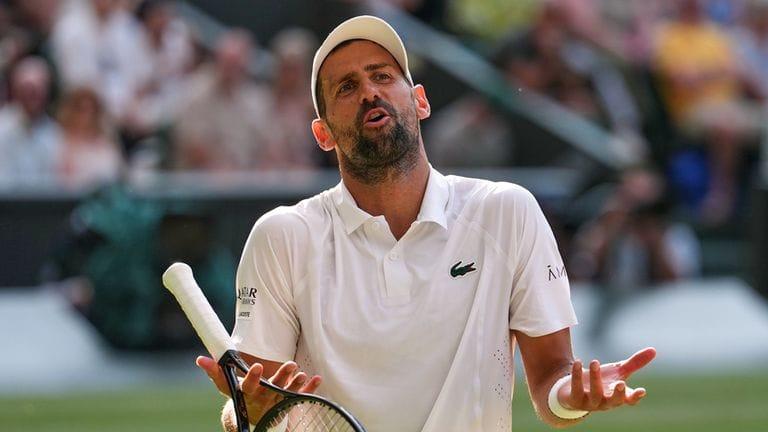
Twenty-three-time Grand Slam champion, Novak Djokovic, at 39 years old, is defying the odds of his advancing age as he navigates the Wimbledon championships. Despite visible signs of fatigue across his last three matches, the often-combustible Serb has consistently demonstrated an uncanny ability to secure victories, frequently in the nick of time. His formidable defensive skills, unwavering will to win, and perhaps an intimidating aura, have proven instrumental in preventing opponents from delivering a decisive blow when opportunities arose.
In a gruelling quarter-final encounter, Djokovic faced Canada's 25-year-old third seed, Felix Auger-Aliassime. Auger-Aliassime surprisingly lost the first set 6-7 (10-12) and subsequently failed to convert several other significant chances against the struggling veteran. Djokovic, who received treatment on his left calf early in that match—the tactical nature of which remains unclear—eventually triumphed after an epic 5-hour, 15-minute contest, making it the longest Wimbledon quarter-final in history. His opponent's poor performance in the 10-point fifth-set tie-break ultimately sealed Djokovic's progression.
This pattern of struggling yet ultimately prevailing has been a consistent theme for Djokovic throughout the tournament. In his third-round clash against Frenchman Arthur Rinderknech, Djokovic appeared to hit a physical wall, losing the third set 6-1. He then battled fiercely through a challenging fourth set, forcing a tie-break which he later described as "perfect," to clinch the match. Had that contest extended to a fifth set, the Serb would have been in deep trouble. Similarly, his fourth-round match against world No. 132 Roman Safiullin, who had surprisingly defeated Djokovic's French Open nemesis Joao Fonseca, followed a similar script. Safiullin squandered a chance to win the first set, losing it 6-7 (6-8), and convincingly won the third set 6-3, putting Djokovic under immense pressure. However, he couldn't maintain the momentum, eventually succumbing in four sets.
Despite his apparent exhaustion, Djokovic's resilience is undeniable. While it might seem improbable for a 25-year-old to lose to a 39-year-old in a match exceeding five hours, Auger-Aliassime will undoubtedly carry significant regrets. Many observers speculate that if healthier contenders like Carlos Alcaraz or Alexander Zverev had been his quarter-final opponents, Djokovic's run might have ended sooner. Nevertheless, dismissing Djokovic, regardless of his on-court appearance, is a risky proposition. He has not explicitly revealed his retirement plans, and as long as he continues to reach the latter stages of Grand Slams, he is expected to keep competing. This Wimbledon, however, could mark his 11th consecutive Slam without a title if he falters, and he previously hinted at this potentially being his final year after his exits in Melbourne and Paris.
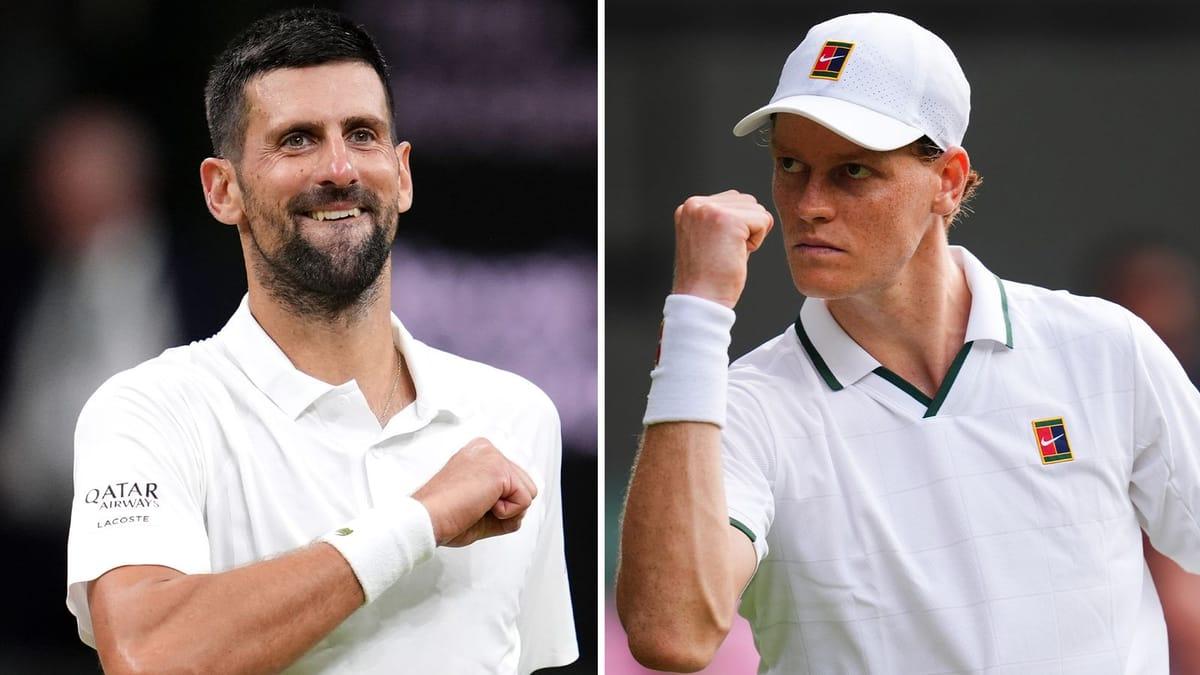
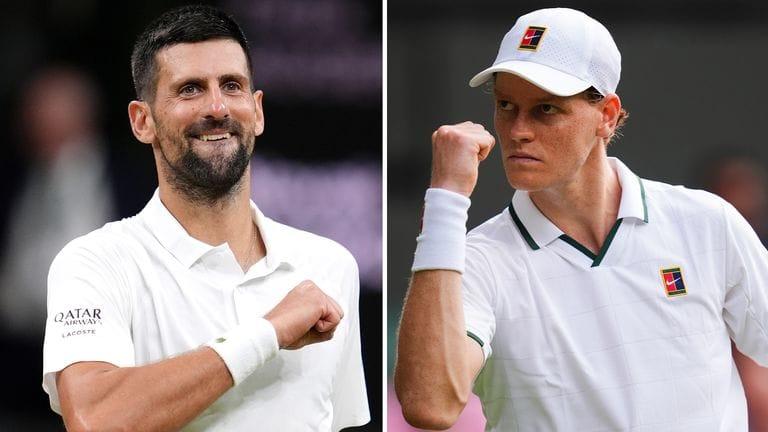
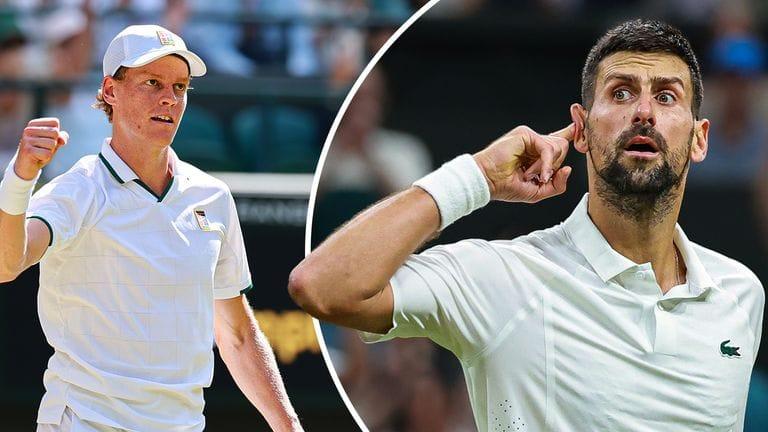
Attention now turns to world No. 1 and top seed Jannik Sinner. If Sinner performs at his optimal level, his superior mobility, dynamism, and power are widely believed to be too much for the current version of Djokovic. Although Djokovic stunningly defeated Sinner in the Australian Open semi-finals in January, there is little recent evidence to suggest he can replicate such a performance this week.
However, Sinner himself carries a history of physical vulnerabilities that could prove to be his undoing. His disappointing French Open performance in May, where he lost a seemingly un-losable Grand Slam match against Juan Manuel Cerundolo, remains a significant concern. Despite holding a commanding 6-3, 6-2, 5-1 lead and serving for the match, Sinner succumbed to cramp and dizziness in the Parisian sunshine. He sensationally lost 15 consecutive points, called for a medical timeout, and subsequently lost the third set 7-5. His body continued to fail him in the fourth set, and Cerundolo eventually clinched the match by winning the decider 6-1. During that match, Sinner was visibly exhausted, bending over on the clay court multiple times, barely running for shots, and resorting to drop shots and serve-and-volley tactics to shorten points. He attempted to cool himself with a hand-held fan and ice packs as temperatures rose from 29C to 32C. This incident follows a near exit from the Australian Open due to cramps against Eliot Spizzirri and a withdrawal from a Shanghai Masters clash in October 2025 due to heat exhaustion.
These physical issues, coupled with potential mental frailties, raise questions about Sinner's resilience. Would players like Djokovic or Alcaraz have squandered such a commanding lead? It's highly unlikely, as they have consistently found ways to win under pressure. With Wimbledon temperatures even hotter than 32C on Thursday during the women's semi-finals, the possibility of another weather-induced collapse from Sinner cannot be ruled out. Tennis fans can watch the ATP and WTA Tours live on Sky Sports.
Gallery
Comments
(0)0/500 · No URLs or profanity allowed
Djokovic don dey show say old age na just number for him, but Sinner own body fit no gree am shine for this Wimbledon semi-final. We go see whether experience go win or if the young blood go finally overcome him health palava.
Source: Google Trends Nigeria
Related Stories
Tuchel's England Plot to Neutralize Norway's World Cup Threat, Haaland
Wimbledon 2026: Zverev Dominates Fery, Djokovic-Sinner Semi-Final Awaits
Mourinho's Real Madrid Eye Enzo Fernandez in High-Stakes €90M Transfer Play

Man City Spends £10m to Re-sign Pierce Charles, Loans Him to QPR

Mbappe Cites Referee Confusion for 2026 World Cup Penalty Error vs. Morocco