Northern Bloc Emerges as Decisive Factor in Tinubu's 2027 Re-election Bid
Full Story
As Nigeria inches closer to January 16, 2027, the political landscape is already shaping up for what promises to be another fiercely contested three-way presidential election, mirroring the 2023 polls. Political parties are actively establishing their campaign structures, gearing up for a contest that many believe will be pivotal in the nation's recent history.
Just last Wednesday, October 14, the ruling All Progressives Congress (APC) formally inaugurated its Presidential Campaign Council. This council comprises not only party stalwarts but also influential figures from opposition parties who have pledged their allegiance to President Bola Tinubu’s quest for a second term. Five days prior, on Friday, October 9, the African Democratic Congress (ADC) had already launched its own campaign council in support of former Vice-President Atiku Abubakar. The third major alliance, the Nigeria Democratic Congress (NDC), featuring the Peter Obi-Rabiu Kwankwaso ticket, is scheduled to inaugurate its campaign council on Tuesday, October 20, pending any unforeseen alterations.
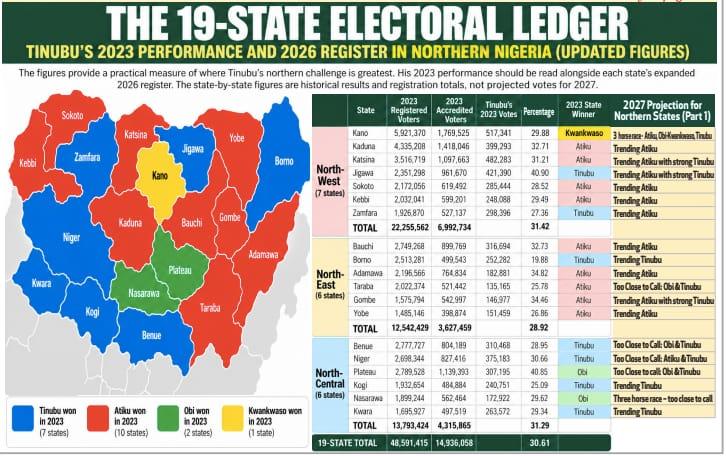
Beyond these grand ceremonies, intriguing membership lists, political endorsements, and familiar declarations of confidence, a more profound question lingers: where will the ultimate victory or defeat be decided? Despite the myriad political maneuverings nationwide, a significant part of the answer appears to lie within the Northern region. This region’s electoral might was instrumental in Tinubu’s 2023 triumph, and its political inclination towards his re-election bid has become an increasingly debated subject. Indeed, current political trends suggest that the contest for the North could very well define the 2027 presidential race.
With over 54 million registered voters across its 19 states, the North remains central to presidential election calculations in Nigeria, and the upcoming election is no exception. However, can President Tinubu maintain the region’s backing amidst Atiku’s formidable Northern credentials, the emerging Obi-Kwankwaso alliance, and the heightened scrutiny of his administration’s performance? The North, which contributed nearly two-thirds of President Tinubu’s votes in 2023, faces a different political dynamic heading into the January 16, 2027, presidential election. Factors like Atiku’s deep roots in the North, Obi’s collaboration with Kwankwaso, widespread defections, economic hardship, and the President’s robust political machinery will all influence whether Tinubu secures another four years or becomes a one-term president.
The renewed political activity observed across Northern Nigeria is quite telling. From Kano to Katsina, Sokoto to Zamfara, Kaduna to Borno, and throughout the North-Central states, politicians who typically delay revealing their allegiances until the latter stages of an election cycle are now openly declaring their positions. Some are actively mobilizing support for President Tinubu, while others are strengthening ties with Atiku, the former vice-president. A distinct third force is also emerging from the unexpected collaboration between Obi, a former Anambra State governor, and Kwankwaso, also a former Kano State governor. This flurry of activity is far from coincidental. Beneath the endorsements, defections, consultations, and routine assurances of electoral victory lies a stark reality: the 2027 presidential outcome may largely hinge on developments in the North.
For Tinubu, this significance is particularly acute. His 2023 victory was built upon a coalition that combined the electoral strength of the South-West with the considerable political structure and goodwill associated with the late former President Muhammadu Buhari in the North. This arrangement traced its origins to the alliance-building that culminated in the formation of the All Progressives Congress (APC) and its historic victory in 2015. However, four years in politics can feel like an eternity. The political goodwill that helped Tinubu secure Northern support in 2023 is not automatically transferable to 2027. This time, he must defend his own record, explain the repercussions of his economic policies, address concerns about the distribution of political power, and persuade a region grappling with insecurity and economic pressures that another four years under his leadership would serve its best interests. He must achieve this while contending with a fellow Northerner in Atiku and an Obi-Kwankwaso ticket that could introduce an entirely new dimension to Northern voting patterns.
Therefore, the question is no longer merely whether Tinubu can win the North, as he did not secure a majority of its states in 2023 yet still won the presidency. The more critical question is whether he can retain sufficient Northern votes to prevent his national electoral coalition from fragmenting. The numbers clearly illustrate why this is such a crucial consideration. According to the Independent National Electoral Commission (INEC), Nigeria had 93,469,008 registered voters for the 2023 presidential election, and the latest voter register continues to be a key factor.
Comments
(0)0/500 · No URLs or profanity allowed
Na serious matter be dis o! Dem say the North get the 'ace' for 2027 election, meaning na dem go decide who fit rule. Tinubu go really need to show working for dat region if e want second term, especially with Atiku and Obi-Kwankwaso dey eye the same votes. We go see how this political chess game go play out.
Source: Google Trends Nigeria
Related Stories
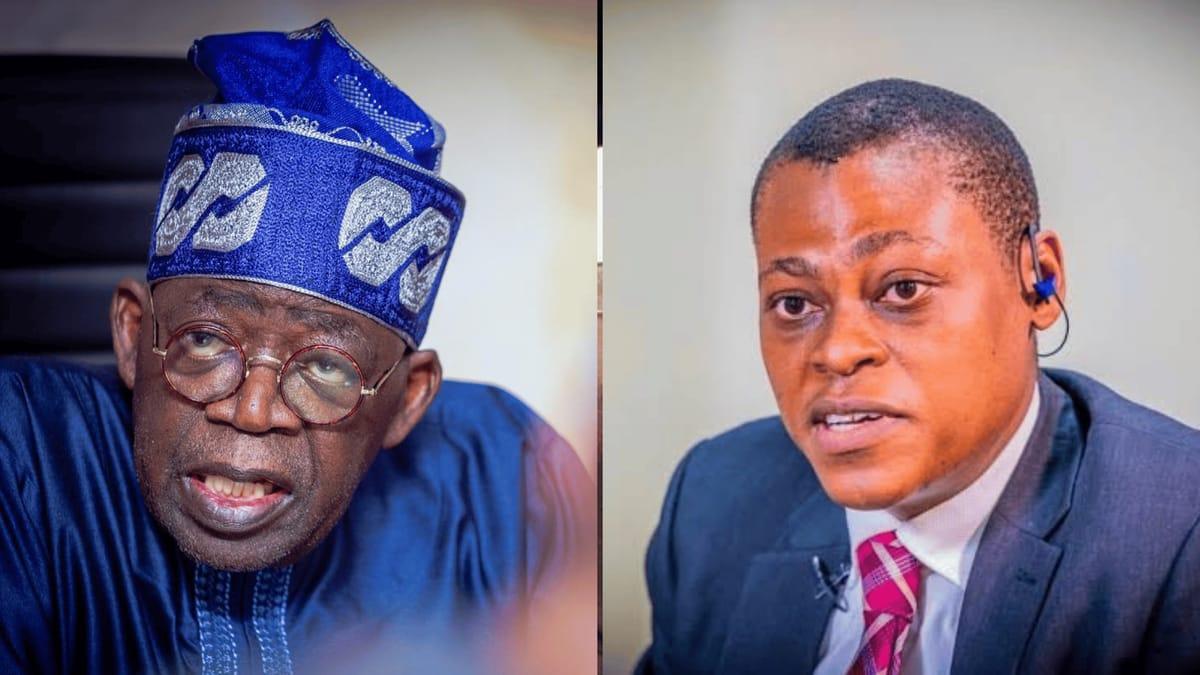
Rufai Oseni Cautions APC: Northern Voters Discontent with Tinubu's Government
KWAM 1 Publicly Endorses Daughter Damilola's Lagos Assembly Bid
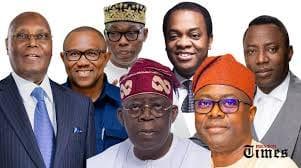
Nigerian Campaigns: Prioritizing Key Issues as Political Activities Start
Ekiti Governor Oyebanji Commits to Shared Prosperity Post-Inauguration

Kebbi APC Stalwarts Pledge Loyalty to Tinubu, Idris Ahead of 2027 Polls