Governor Radda's Administration Adopts Data-First Approach for Katsina's Future
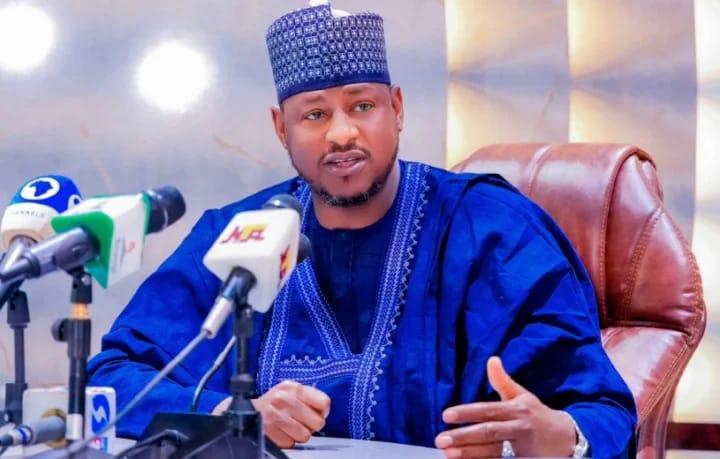
Katsina State Governor, Mallam Dikko Umar Radda, has announced his administration's renewed commitment to employing reliable data and evidence in the formulation, budgeting, and execution of development initiatives across the state. This declaration was made on Thursday in Katsina during the official launch of several pivotal documents: the Katsina State Development Plan, the State Social Protection Policy, the Multi-Sectoral Strategic Plan of Action for Food and Nutrition, the State Nutrition Policy, the General Household Survey Report, and the Statistical Yearbook. These instruments were a collaborative effort by the state's Ministry of Budget and Economic Planning, through its Bureau of Statistics.
Represented by his deputy, Faruk Jobe, Governor Radda emphasized that these documents transcend mere policy publications; they are vital tools poised to redefine the state’s developmental trajectory and significantly uplift the living standards of its populace. He stated, “Today’s event is far more than a ceremonial unveiling of documents. It is a public declaration of our administration’s commitment to planning with purpose, governing with evidence, and delivering development that is inclusive, measurable and sustainable.” The governor further asserted that "Without reliable data, planning becomes speculative. Without planning, development becomes accidental. Our administration has therefore made data and planning central pillars of governance.”
Governor Radda elaborated that the Katsina State Development Plan would serve as a crucial strategic blueprint, designed to revitalize the state’s economy and enhance the well-being of its citizens. The plan pinpoints key priority sectors, including agriculture, education, healthcare, infrastructure, industrialization, environmental sustainability, digital innovation, security, governance, and youth empowerment. He highlighted that this plan aligns seamlessly with his administration’s "Building Your Future (BYF)" policy framework, the Katsina State Economic Development Strategy, national development agendas, the African Union’s Agenda 2063, and the global Sustainable Development Goals.
Addressing the security situation, Governor Radda noted a considerable improvement across many parts of the state. This progress, he explained, is a result of robust collaboration between the government, various security agencies, traditional institutions, and local communities. "As a result, many of our farmers have returned to their farms, agricultural activities have resumed in several previously affected areas, and economic and social life is gradually being restored,” he affirmed.
Regarding social protection, Radda revealed that Katsina State is implementing a hybrid model, ingeniously combining traditional Islamic welfare mechanisms like Zakat and Waqf with contemporary social protection strategies. He disclosed that over 50,555 individuals have already benefited from the state’s Zakat programme, with more than N1.9 billion mobilized to provide support to vulnerable households, bolster livelihoods, and foster social inclusion.
On the critical issue of nutrition, the governor identified malnutrition as a significant impediment to human capital development. He stated that the state has invested over N1.7 billion in targeted nutrition interventions and provided N500 million in counterpart funding to attract additional support from development partners. These interventions are strategically aimed at preventing malnutrition, enhancing maternal and child nutrition, expanding micronutrient supplementation, and strengthening the management of acute malnutrition cases.
Radda also highlighted the General Household Survey as one of the most remarkable achievements unveiled during the event. This comprehensive survey generated household-level data across all 34 local government areas, covering crucial aspects such as poverty levels, employment, livelihoods, agriculture, education, health, housing, water and sanitation, social protection, and access to basic services. He declared, “Government will no longer rely solely on assumptions. Development interventions will increasingly be targeted using credible data. Resources will be allocated where they are needed most. Performance will be measured objectively.” The governor urged all ministries, departments, and agencies to integrate their plans and budgets with these newly launched strategic frameworks and encouraged local governments to utilize the survey findings to enhance service delivery at the grassroots level.
Earlier in the event, Mallam Malik Anas, the Commissioner for Budget and Economic Planning, emphasized that the General Household Survey would offer the state a profound understanding of the socioeconomic conditions of its households. Anas explained that the survey would be instrumental in identifying impoverished and vulnerable populations and discerning the factors impacting their livelihoods. He stated, “The GHS therefore provides a critical foundation for targeting government interventions and ensuring that scarce public resources are directed to areas and populations where they can have the greatest impact.” The commissioner concluded by commending UNICEF and other development partners for their invaluable technical and financial contributions towards the creation and dissemination of these strategic documents.
Comments
(0)0/500 · No URLs or profanity allowed
Katsina state don vex say dem go dey use real data to plan dia development. Na serious move be dat o, make dem no just dey do anyhow with government money and projects.
Source: Punch NG
Related Stories

APC National Chairman Nentawe Yilwatda Appeals for Unity, Takes Responsibility for Primary Errors
IBB's Legacy: Datti Baba-Ahmed's 'Compassion' Argument Challenged

Ondo APC Leader Commends Tunji-Ojo's Flood Relief Initiative

Atiku Declares 2027 Presidential Bid His Final Contest

Ex-Zambian Minister Dies in Lusaka Security Operation, Police Say