IBB's Legacy: Datti Baba-Ahmed's 'Compassion' Argument Challenged
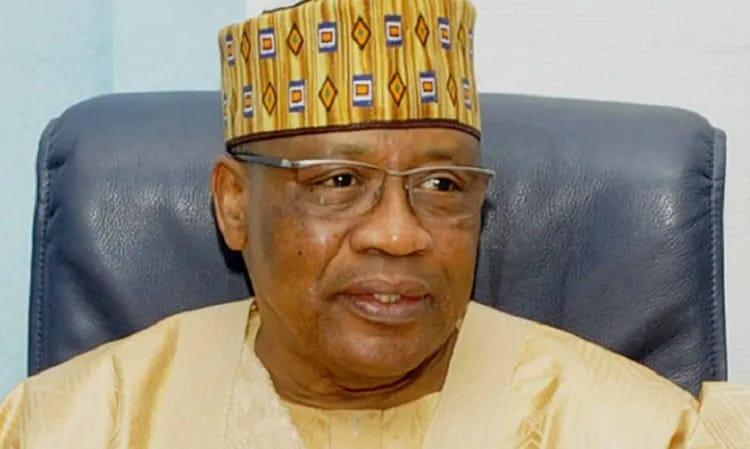
The author recently recounted a series of interactions, beginning with an encounter with Dr. Hakeem Baba-Ahmed, elder brother to Datti Baba-Ahmed and chairman of the PRP, at a National Peace Committee gathering. Dr. Hakeem, in the presence of his party's presidential candidate, Donald Duke, expressed profound admiration for the author, humorously declaring himself the author's "number one fan." Discussions also touched upon the author's advocacy for cannabis legalization.
Later, as presidential candidates convened to sign the "Peace Accord," Dr. Hakeem Baba-Ahmed again approached the author, providing his business card and urging him to remain steadfast in his pursuit of social justice. The author later messaged Dr. Hakeem to express gratitude for his kind words. In response, Dr. Hakeem reiterated his admiration and then inquired if the author had read an article by his younger brother, Mallam Yusuf (Datti Baba-Ahmed), published in Daily Trust. The article reportedly excoriated the author over comments made regarding former military dictator Ibrahim Badamosi Babangida on his 85th birthday.
Unable to locate the piece online, the author was informed by Dr. Hakeem that it appeared in the print edition. After reading Datti Baba-Ahmed's response, the author expressed pity, noting that Datti chose to deliver a sermon on "compassion" and launch personal attacks instead of confronting the historical record of Babangida's dictatorship. This, the author suggested, was an attempt to whitewash a legacy that Nigerians have every right to interrogate. The author also indicated that he was made to understand Datti belongs to a class of Nigerians whose fortunes were significantly shaped by the IBB-era establishment, learning he was an ex-military man, possibly one of the "Babangida Boys," which might explain his reverence.
The author recalled a previous, sole encounter with Datti Baba-Ahmed at a National Peace Committee event during the 2023 election cycle. The author had deliberately positioned himself in a seating area to challenge the committee's attempt to separate "frontline candidates" from others. Datti confronted the author, claiming the seat next to Peter Obi, his presidential candidate, was reserved for him. The author countered that as a vice-presidential candidate, Datti had no superior claim to a seat designated for presidential candidates. The dynamic shifted dramatically when then-All Progressives Congress candidate Asiwaju Bola Ahmed Tinubu arrived and sat next to the author.
The author was stunned to observe Datti Baba-Ahmed, whose ticket fiercely campaigned against Tinubu and the APC, suddenly become extraordinarily deferential, addressing Tinubu with terms like "Uncle," "Sir," and "Daddy," practically kneeling in the author's presence. This display of servility contradicted the ferocious rhetoric surrounding the election. When Peter Obi eventually arrived, Datti was moved to the back, while the author retained his seat, which was consistent with the alphabetical seating arrangement. The author noted that this alphabetical principle, which he had championed, was finally respected at the recent event.
The spectacle did not end there; the author also witnessed Peter Obi himself displaying similar deference towards Tinubu after the event concluded. Reflecting on these observations, the author concluded that beneath the public political warfare, Nigeria's establishment politicians are often far more comfortable with one another than their followers are encouraged to believe. This leads supporters to engage in bitter online and street conflicts, insulting, threatening, and destroying relationships, all while defending political figures who, behind closed doors, address each other as "Uncle," "Daddy," "Sir," brother, and friend.
This past experience, the author argued, provides useful context for Datti Baba-Ahmed's recent lecture on how Nigerians should treat members of the old political and military establishment, stressing that historical records are available and must be addressed. The author then focused on Datti's arguments concerning General Ibrahim Babangida, history, compassion, and accountability, pointing out the stark contradiction in Datti's lengthy response. While simultaneously delivering a sermon about compassion, morality, and human decency, Datti's article also contained considerable personal insults, making suggestions about the author's alleged drug use, alcohol consumption, imprisonment, and even an ICU stay.
Comments
(0)0/500 · No URLs or profanity allowed
E be like say some of our big politicians get one kind 'family meeting' for back, even when dem dey fight for public. Na so dem fit dey call each other 'Uncle' and 'Daddy' while their supporters dey vex for street. Na wetin concern IBB legacy and accountability be that.
Source: Punch NG
Related Stories

Ondo APC Leader Commends Tunji-Ojo's Flood Relief Initiative
Atiku Declares 2027 Presidential Bid His Final Contest
Ex-Zambian Minister Dies in Lusaka Security Operation, Police Say
Atiku Questions Obasanjo's Electoral Strength, Cites Arewa's Role in 1999 Victory
Osun Governor Adeleke Humbles Himself Before Elder Sibling After Poll Victory