New Revenue Sharing Blueprint, Judicial Pay Structure Finalized by RMAFC
The Revenue Mobilisation Allocation and Fiscal Commission (RMAFC) has announced the completion of its assessment of Nigeria’s revenue distribution framework. This development sets the stage for a revised method of sharing national income among the Federal, state, and local governments. Furthermore, the commission confirmed that its review of compensation for judicial office holders has been concluded, while the evaluation of salaries and allowances for individuals in executive and legislative positions is in its advanced stages.
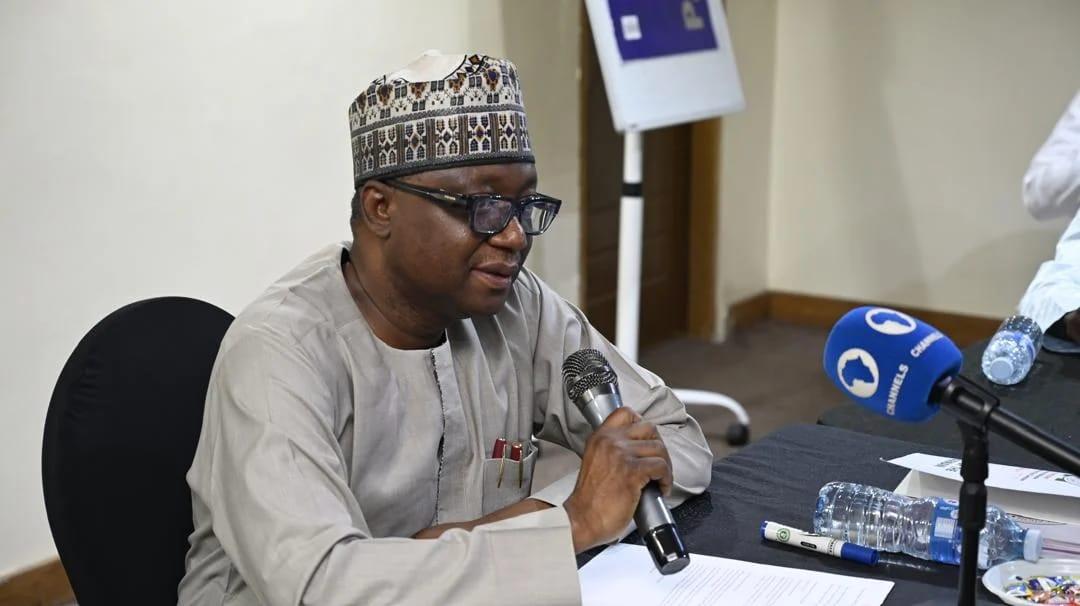
Mohammed Bello Shehu, the Chairman of RMAFC, shared this information during a dialogue session with members of the Nigerian Guild of Editors in Lagos. He used the opportunity to present an overview of the commission's activities and reform initiatives undertaken since 2023.
According to a statement released on Saturday by Maryam Yusuf, Head of the Information and Public Relations Unit, Shehu explained that the completed revenue allocation review was the result of extensive consultations. These discussions involved all three tiers of government, various technical experts, and other key institutions across the nation.
He elaborated that the process entailed a thorough examination of fiscal responsibilities, prevailing revenue trends, and a comparative analysis with other federal systems. This comprehensive exercise culminated in a consolidated report and proposed legislation, which are now prepared for submission to the relevant authorities.
“The Commission has completed a comprehensive review of Nigeria’s Revenue Allocation Formula. It has completed the review of remuneration for judicial office holders, culminating in the enactment of the Judicial Office Holders (Salaries and Allowances) Act, 2025. Also, the review of remuneration for executive and legislative office holders is at an advanced stage, with an executive bill on the Political and Public Office Holders (Salaries and Allowances) Act, 2026 expected to be transmitted to the National Assembly,” the RMAFC chairman stated.
Shehu underscored that the primary goal of this initiative is to establish a more equitable and sustainable system for revenue sharing. This new system aims to reflect the evolving economic and governance realities within the country.
He reiterated the finalisation of the judicial office holders' remuneration review, which has led to the enactment of the Judicial Office Holders (Salaries and Allowances) Act, 2025. Similarly, the review for executive and legislative office holders is nearing completion, with an executive bill for the Political and Public Office Holders (Salaries and Allowances) Act, 2026, slated for transmission to the National Assembly.
These developments come amidst persistent discussions regarding the adequacy of public office holders' pay and the necessity to balance improved compensation with accountability and performance. Shehu firmly asserted that any salary increments must be accompanied by enhanced service delivery, stressing that better remuneration should not be seen as an end in itself. He remarked, “Remuneration reforms must be matched with accountability and performance. Improved pay should translate into improved service delivery.”
Beyond these critical reviews, the RMAFC chairman noted that the commission has intensified its efforts in monitoring oil and gas production data. This is to ensure the accurate application of the 13 per cent derivation principle. He detailed that the commission has deployed verification exercises, geospatial mapping, and collaborated with relevant agencies to resolve discrepancies in oil well attribution, ensuring that states receive their rightful revenues.
A significant intervention highlighted by Shehu was the reallocation of 17 oil wells from Imo State to Rivers State, in adherence to a Supreme Court judgment. He mentioned that similar actions have been undertaken in Cross River, Akwa Ibom, Imo, and Anambra states. Additionally, improved reporting of gas production has allowed Enugu and Kogi states to benefit from derivation revenues.
The commission has also strengthened its collaborative ties with the Nigerian Upstream Petroleum Regulatory Commission (NUPRC), NNPC Limited, the Nigerian Midstream and Downstream Petroleum Regulatory Authority (NMDPRA), the National Boundary Commission, and the Office of the Surveyor-General of the Federation. Shehu indicated that these partnerships are designed to enhance revenue monitoring, resolve attribution disputes, and reinforce compliance.
He further revealed that RMAFC is engaging the Ministry of Defence concerning the ongoing challenges of crude oil theft, pipeline vandalism, and production losses, which he identified as significant threats to government revenue. The commission is also actively seeking revenue sources beyond the petroleum sector. Shehu stated that RMAFC is exploring partnerships with the Federal Airports Authority of Nigeria (FAAN) and the National Space Research and Development Agency (NASRDA), including leveraging satellite and geospatial technologies to identify new revenue opportunities. He concluded that these reforms are part of the commission's broader strategy.
Comments
(0)0/500 · No URLs or profanity allowed
RMAFC don finish wetin dem dey do for sharing money for government and dem don even update judicial salaries. Dem say na to make things fair and better service go follow. We go dey watch if dis new pay go truly ginger public servants to work well, or na just another talk-talk.
Source: Punch NG
Related Stories
Aregbesola's Unit Falls to APC as Accord Party Wins Big in Osun Governorship Election

Osun Election: Voter Exposes Alleged Vote Recording Error
Osun Governorship Election: Adeleke Leads with 177,572 Votes as Collation Continues
Osun Decides 2026: Governor Adeleke Triumphs at His Polling Unit with 421 Votes
Governor Adeleke Condemns Osun PDP Chairman's Arrest, Seeks Immediate Freedom