Wildfire Smoke Prompts Trump's Tariff Threat Against Canada
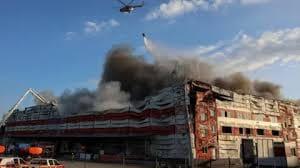
Former US President Donald Trump has issued a strong warning, threatening to impose fresh tariffs on Canada. This comes as extensive wildfires across Canada have blanketed significant portions of the northern United States in dense smoke.
Trump's latest threat follows increasing complaints from US lawmakers regarding the fires, even as Ontario's Premier, Doug Ford, urged the US to send assistance to combat the blazes rather than simply complain. In a post on Truth Social, Trump declared, "The United States is being unnecessarily invaded by filthy, polluted, and unhealthy air," and indicated he would levy new duties on Canada for its "willful negligence."
As of Saturday, the Canadian Wildland Fire Information System reported approximately 955 active fires across Canada, with the majority burning uncontrollably. Over 190 of these infernos are raging in Ontario, some completely out of control. Trump stated his intention to contact Canadian Prime Minister Mark Carney, demanding an explanation for Canada's alleged "willful negligence" and accusing the country of failing to "properly maintain" its forests and brush.
Some fellow Republicans have leveraged this issue to reignite Trump's previous suggestion of making Canada the 51st US state, an idea that has historically caused offense among Canadians, prompting many to boycott travel to their southern neighbour. Online discussions also floated the possibility of delaying the opening of the Canada-funded Gordie Howe International Bridge, which is set to link Ontario with Michigan.
Prime Minister Carney had previously highlighted that tackling climate change is a shared responsibility for both nations. Following Trump's remarks, Carney's emergency management cabinet minister confirmed continuous communication between the two countries, underscoring their long history of collaboration on such disasters. The minister referenced a reciprocal firefighting agreement from 1982 and another assistance accord that emerged from the 2025 G7 summit. MP Eleanor Olszewski, in a statement, noted Canada's proactive efforts in wildfire prevention, including an investment of approximately C$12 billion ($8.5 billion; £6.4 billion) in forest sustainability and fire prevention. She added, "This is a challenge that knows no borders, and Canada is working with speed, collaboration and coordination to keep people safe."
Relations between the US and Canada have experienced periods of strain over the past year, primarily due to trade disputes. Last year, Trump imposed tariffs on Canada, a nation that had enjoyed decades of free trade with the US, and a comprehensive trade deal between them remains elusive.
According to the Canadian Wildland Fire Information System, nearly 3 million hectares of Canadian land have already been consumed by these wildfires. The repercussions have been extensive, with a thick blanket of smoke extending across numerous US states, including Minnesota, Michigan, Pennsylvania, Ohio, and New York. "Hazardous" air quality alerts have been issued throughout much of the affected region, leading to the cancellation of numerous outdoor events. Swiss air quality tracker IQAir reported that as of Friday, Detroit's air quality was the worst globally, followed by Chicago, Washington D.C., and New York ranking seventh.
In an open letter addressed to Canadian officials, US lawmakers John James, John Moolenaar, Jack Bergman, and Lisa McClain expressed that their "patience has run out." They stated, "We are done accepting apologies in place of action," cautioning that the US might explore direct involvement in cross-border wildfire protection and firefighting if Canada fails to take adequate measures. They claimed, "We were told last year that this would be treated with urgency. It was not," asserting that "American lungs are paying the price for Canadian inaction, year after year." The lawmakers identified issues such as "chronic under-investment in forest thinning, fuel reduction, and prescribed burns, along with inadequate enforcement against arson," as unaddressed "adequately enough."
However, scientists consulted by BBC Verify offer a more nuanced perspective. Dr. Patrick James from the University of Toronto pointed out, "Weather doesn't care about international borders," noting that smoke from significant US wildfires has also impacted Canada in recent years. Experts also highlight that many of the current Canadian fires are burning in vast, remote forests, making them difficult to detect or contain before they escalate. While improved forest management can mitigate wildfire risk in certain areas, particularly near communities, it cannot prevent fires across such a large ecosystem. Wildfires are common in Canada, but the recent surge in outbreaks is attributed by experts in both the US and Canada to sustained hot weather in northern Ontario during late June, combined with below-average rainfall. Scientists also link increasingly severe wildfire seasons, in part, to climate change, which fosters hotter, drier conditions conducive to fires. Some fires have also been ignited by lightning. Dr. Anabela Bonada from the University of Waterloo emphasized, "Climate change is a global issue, and it would be inaccurate to suggest that Canada alone caused or could have prevented these wildfires."
Ontario Premier Doug Ford criticized the rhetoric from American politicians as "a shame" and "unacceptable." He recalled Canada's past assistance to its southern neighbour in fighting California wildfires and responding to hurricanes in North Carolina. "That's what neighbors do," Ford stated on Saturday. "You don't get on and start threatening and criticising because guess what? One day it's going to be your turn, and we're going to be down there without hesitation to support our neighbours." The Premier also revealed that the US states of Michigan and Massachusetts, both led by Democrats, have offered aid including water bombers, firefighters, and rescue operations.
Responding to the US lawmakers' criticism, Prime Minister Carney, speaking in French during an Ontario news conference, reiterated: "Climate change is everyone's responsibility - truly everyone's - including the United States." He affirmed his government's "close communication" with provinces and local communities. Meanwhile, Ford dismissed criticism regarding his government's handling of the fires, confirming that over 150 fire crews, along with more than 80 water bombers and helicopters, are actively battling the blazes. He added that his government has invested over a billion dollars in wildland fire efforts since 2018, routinely exceeding its annual base budget allocation for firefighting due to necessity. "We are throwing every single resource we can," he asserted.
As the haze grips the region, some residents in northern Ontario have been forced to evacuate, with one First Nations chief reporting her community was "burnt to ashes." Fires are also active on Canada's west coast, where British Columbia reported over 59 active fires on Friday, with 39 starting in the last 24 hours and more than half (31 fires) out of control, necessitating aggressive firefighting tactics. A large cluster of fires in northwestern Ontario is primarily responsible for sending thick smoke and poor air quality across the region and into the US.
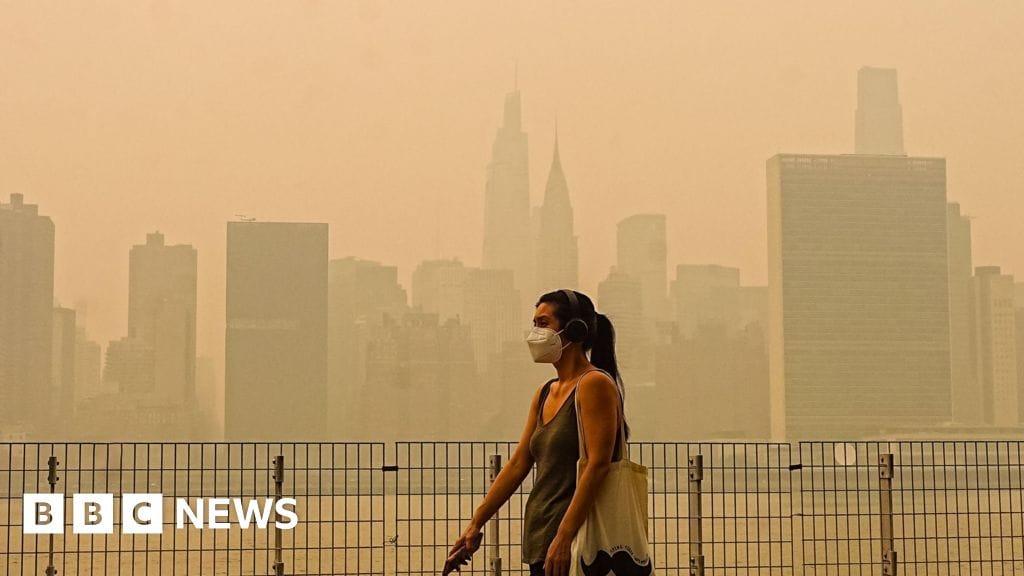
On Thursday, a dense haze obscured views across New York City, including iconic landmarks like the Empire State Building and the Statue of Liberty. Similarly, national monuments in Washington D.C. were obstructed by the hazy conditions. Officials have urged people to remain indoors, with some areas distributing free masks, due to the severe health risks associated with inhaling the fumes.
Gallery
Comments
(0)0/500 · No URLs or profanity allowed
Wahala don burst between US and Canada over smoke wey don choke US cities. Trump say na tariff dem go use collect, but Canada say make dem just send help and remember say climate change na everybody matter.
Source: Google Trends Nigeria
Related Stories

Tragedy Strikes Spain's World Cup Victory Celebration as Young Boy Loses Life
Ukraine Under Siege as Russia Unleashes Barrage of Ballistic Missiles

West Africa Condemns Xenophobic Attacks in South Africa

US Government Issues Strong Travel Warnings for 23 Countries, Including Several in Africa

Iran Vows to Teach US Bitter Lessons as Tensions Escalate