Senate Urges FG to Discontinue Flawed Boko Haram Rehabilitation
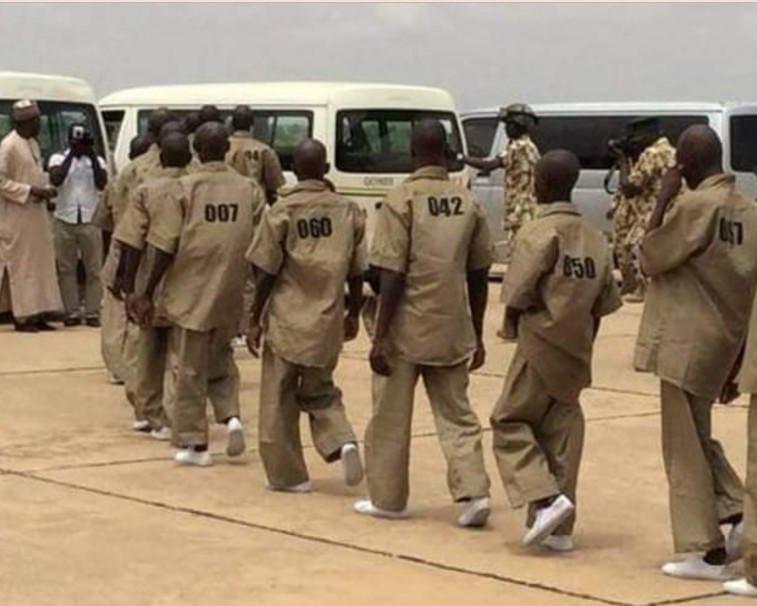
Nigeria's Senate has strongly advised the Federal Government to cease its programme focused on rehabilitating and reintegrating former Boko Haram fighters and other insurgents. Lawmakers contend that this policy has proven ineffective in tackling the nation's escalating security challenges. This directive emerged from a motion introduced by Senator Abdulaziz Yar'Adua (APC, Katsina), who chairs the Senate Committee on Army, addressing the increasing incidents of attacks, kidnappings, and murders targeting both active and retired military officers, notably the former Director of Defence Information, retired Major General Rabe Abubakar.
At a plenary session held on Tuesday, July 7, senators collectively condemned the ongoing rehabilitation efforts for Boko Haram militants, bandits, kidnappers, and other criminal elements through government-backed deradicalisation initiatives. Many legislators attributed the persistent insecurity across northern Nigeria directly to the release of these supposedly repentant criminals back into communities. Furthermore, the Senate highlighted a worrying increase in targeted assaults against both active and retired military personnel, cautioning that such a pattern represents a severe risk to national security, given that many of these victims formerly held crucial intelligence, operational, and command roles.
Specific instances brought to light included the assassination of retired Major General Richard Duru in Owerri, reportedly after a $50,000 ransom payment; the killing of retired Brigadier General O.M. Harlord Udokwere in Abuja; the abduction and 56-day detention of retired Brigadier General Maharazu Tsiga, a former NYSC Director-General; and the death of retired Major Aja during his captivity in Kogi State. In a gesture of respect, the Senate observed a minute of silence for Major General Rabe Abubakar and all others who have fallen victim to terrorism, insurgency, banditry, kidnapping, and violent crimes nationwide.
The lawmakers pressed the Federal Government to ensure the swift arrest and prosecution of individuals implicated in these attacks. They also called upon security and intelligence organizations to enhance their capabilities in intelligence collection, surveillance, threat evaluation, and the implementation of early warning mechanisms. Additionally, the government was encouraged to expedite the rollout of advanced security technologies to effectively counter terrorism, banditry, and kidnapping operations.
The Nigerian government initiated "Operation Safe Corridor" in 2016, a deradicalisation scheme designed for Boko Haram combatants who willingly surrendered. This programme, which began in the North-East and later extended to sections of the North-West, operates on five core principles: disarmament, demobilisation, deradicalisation, rehabilitation, and reintegration. Official statistics indicate that by 2017, approximately 10,000 ex-Boko Haram members had been reintegrated into society. Borno State alone reported that around 9,680 former fighters had completed the programme.
While government officials have consistently hailed this initiative as a vital part of Nigeria's strategy against insurgency, worries have persisted due to allegations that some individuals who underwent rehabilitation later rejoined terrorist factions. Nonetheless, Dr. Babayo Sule, a security analyst and Associate Professor at the University of Namibia, voiced strong disapproval of the Senate's decision, labeling it "unfortunate" and potentially detrimental.
"The news I'm receiving concerning the Senate's resolution for the federal government to cease its rehabilitation and deradicalisation policy against violent armed groups in Nigeria, including Boko Haram and bandits, is indeed an unfortunate proposition," stated Dr. Sule. He added, "It appears to me that either there are no security experts within the Senate, or if there are, their voices might be overlooked."
Dr. Sule contended that rehabilitation, reconciliation, disarmament, and deradicalisation are globally acknowledged elements of effective counter-insurgency frameworks. He emphasized that these strategies should not be discarded merely because the programme has experienced some deficiencies. "The Nigerian government would not have chosen deradicalisation as an option unless the country's security infrastructure was already overwhelmed by the complex and diverse insecurity challenges nationwide," he explained.
He reminded listeners that prior to the launch of Operation Safe Corridor, the government's approach primarily involved military offensives, the Joint Task Force, the Multinational Joint Task Force, and aid from the African Union, noting that "almost all the processes adopted by the government failed." While conceding that the programme has not fully met its goals, he maintained that it warrants enhancement, not outright cancellation. "Our research, spanning nearly five years, revealed issues indicating it wasn't progressing towards the desired outcomes. However, that fact does not imply it should be abandoned or abolished. I believe such a decision would not be prudent," he asserted.
Instead, Dr. Sule advised the legislators to conduct a thorough investigation into the programme, summon security heads to clarify operational hurdles, and allocate the necessary logistical support to bolster Nigeria's security efforts. "The appropriate action is to identify shortcomings, determine how to rectify them, and improve the programme. Expanding it would be preferable to discarding it," he stated. He further dismissed assertions linking the deradicalisation initiative to the resurgence of insecurity, citing research that found "no connection between pardon and deradicalisation and the increased insecurity."
Dr. Sule attributed the nation's security woes instead to "politicisation, negligence, outdated security infrastructure, corruption, and other similar problems." He cautioned that a complete abandonment of the programme could exacerbate the security situation. "Should the government discontinue deradicalisation and rehabilitation, even the modest progress made towards peace would be undone. Given the current lack of capacity to decisively defeat terrorists and with peaceful negotiation being rejected, insecurity will intensify, leading to a situation far worse than what we currently experience," he concluded.
Comments
(0)0/500 · No URLs or profanity allowed
Ah, dis matter get k-leg sha! Senate say make FG stop to dey rehabilitate Boko Haram, say e no dey work. But one security expert come talk say na mistake, say make dem fix am instead of throway am. Na who we go believe now?
Source: Linda Ikeji's Blog
Related Stories
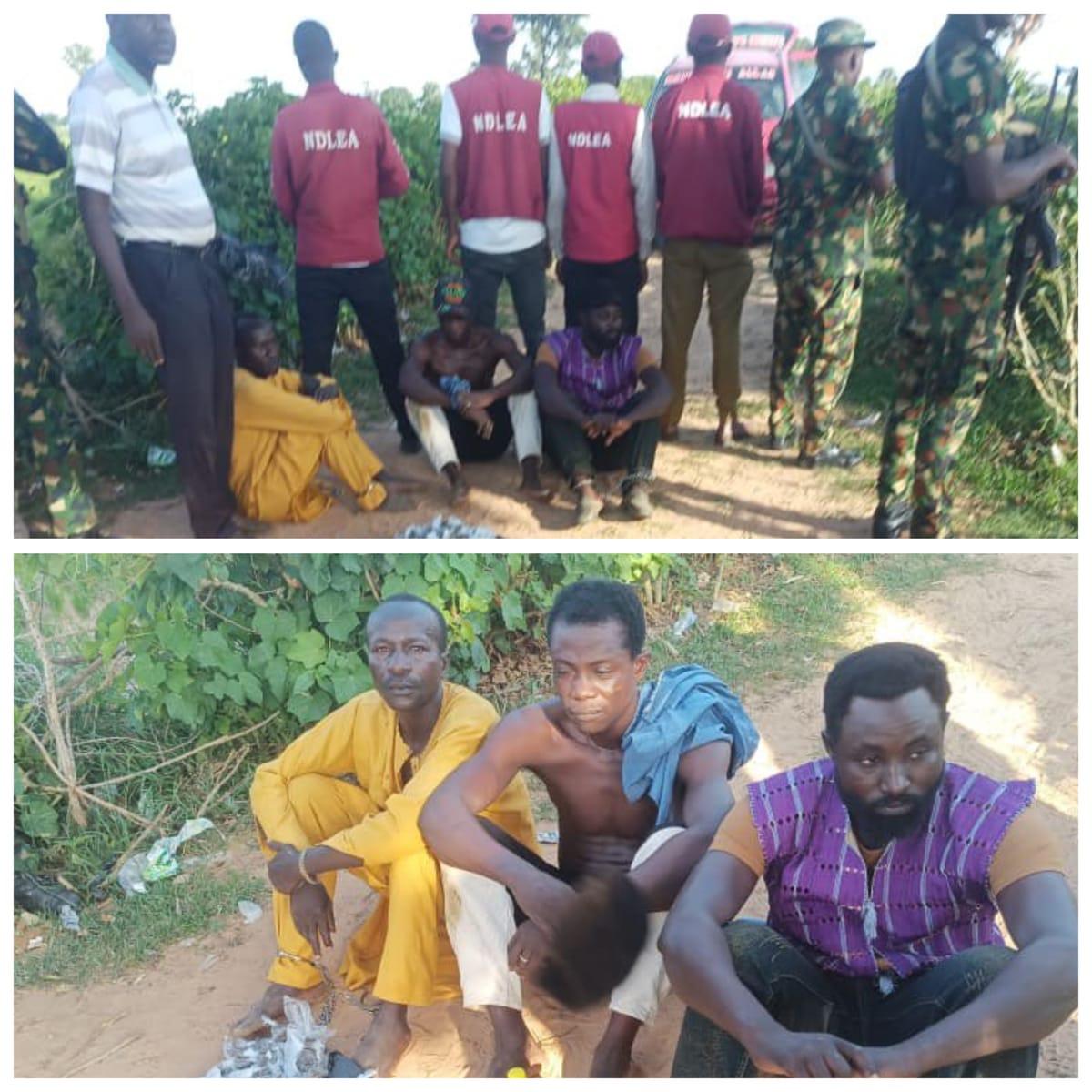
Katsina Joint Operation Nabs Three Suspected Terrorist Drug Peddlers
Akwa Ibom Police Unmask Imposter, Seize Fake Uniforms and IDs
N76bn Fraud Allegations: Ex-AMCON MD, Co-Defendants Get Passports for Medicals
Delta Police Boss Convenes Oghara Security Summit Over Kidnapping Spike
Ebonyi Police Detain Officers Over Civilian's Alleged Eye Injury