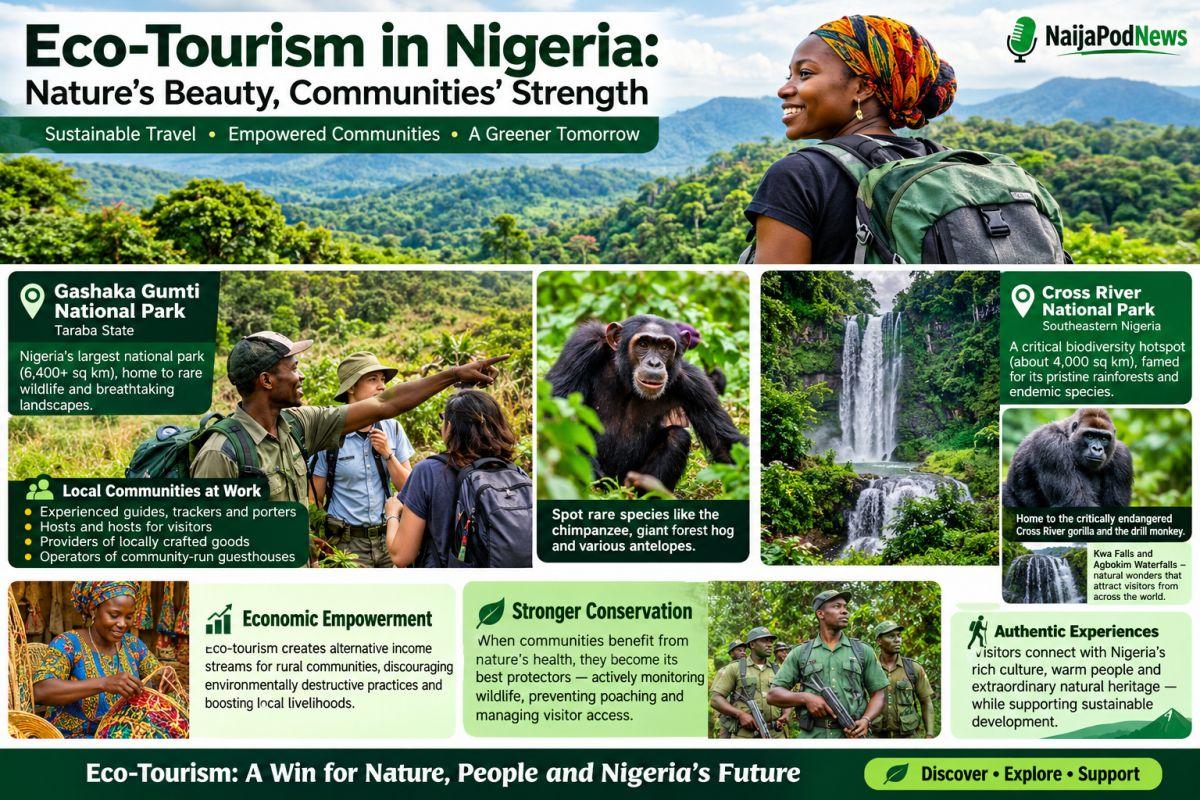
Eco-tourism in Nigeria: communities that host visitors for nature
Full Story
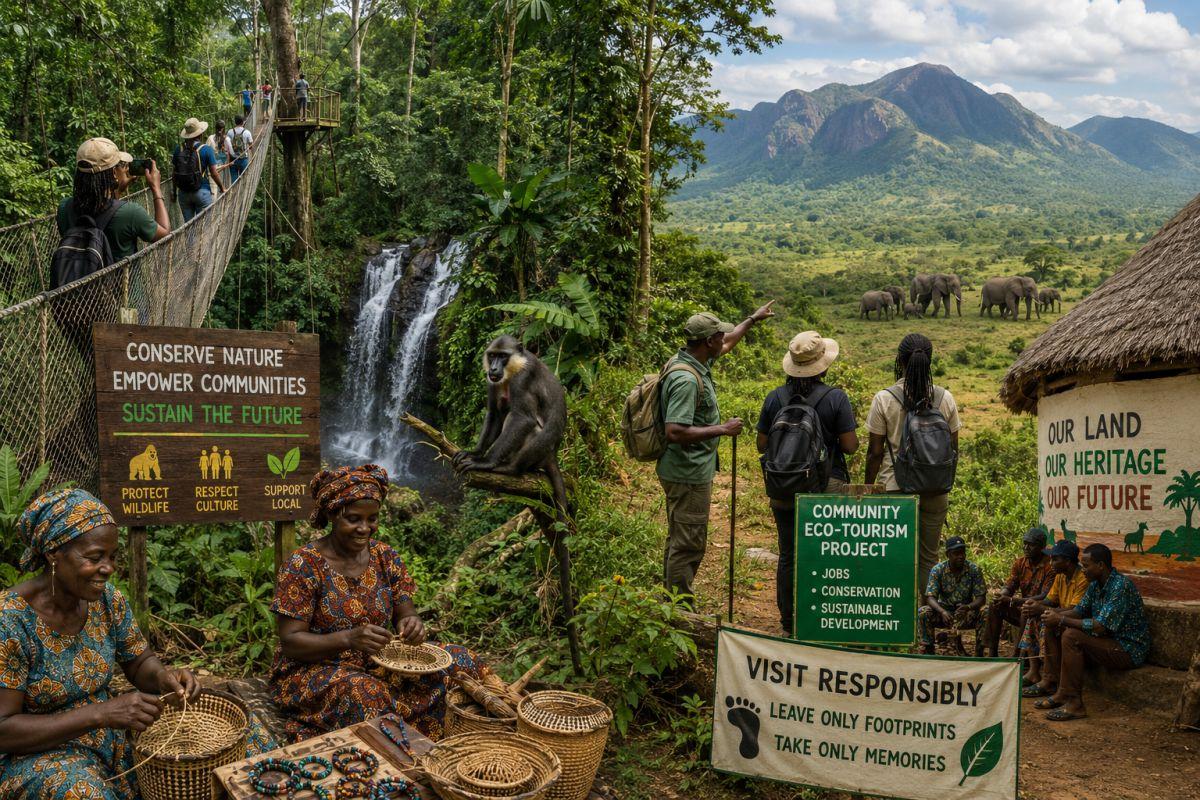
Nigeria's rich biodiversity, from its ancient rainforests to its vast savannahs, presents a unique opportunity for sustainable development through eco-tourism. This approach prioritises environmental conservation while empowering local communities, allowing visitors to experience nature responsibly. NaijaPodNews explores how various Nigerian communities are embracing eco-tourism, hosting nature enthusiasts, and fostering a symbiotic relationship between conservation and livelihood.
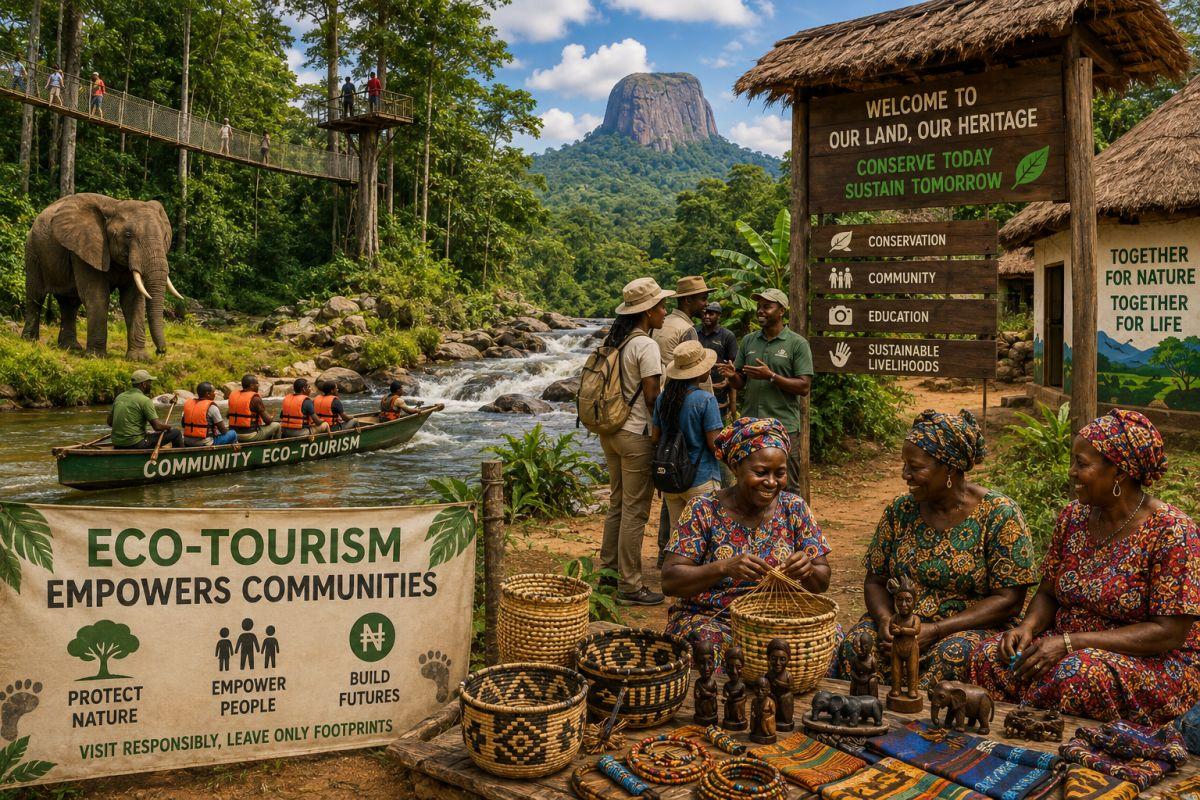
Eco-tourism in Nigeria is gaining traction, driven by a growing awareness of environmental preservation and the economic potential it offers to rural areas. Unlike conventional tourism, eco-tourism focuses on minimal impact, environmental education, and direct financial benefits for the communities that safeguard these natural treasures. This model ensures that the natural beauty and ecological integrity of these sites are maintained for future generations, while providing sustainable income and employment opportunities for local residents.
One prime example of community-led eco-tourism is found in Cross River State, particularly around the Afi Mountain Wildlife Sanctuary and the Oban Hills. Here, communities like those near the Pandrillus Foundation's Drill Ranch have become integral to the conservation efforts of endangered species like the drill monkey and the Cross River gorilla. Local guides, often drawn from surrounding villages, lead visitors through dense rainforests, sharing indigenous knowledge about the flora and fauna. The Kakum Canopy Walkway, though a more established attraction, also provides employment for local staff and generates revenue that, in part, supports the surrounding communities and conservation initiatives within the park. These initiatives demonstrate how direct engagement provides alternative livelihoods, reducing pressure on natural resources and fostering a sense of ownership over conservation efforts among the community.
Further north, Gashaka Gumti National Park in Taraba State, Nigeria’s largest national park spanning approximately 6,402 square kilometres, showcases another model of community involvement. While the park itself is federally managed, the communities bordering its vast expanse play a critical role in its protection. Local villagers are often employed
Gallery
Comments
(0)0/500 · No URLs or profanity allowed
Nigeria's rich biodiversity, from its ancient rainforests to its vast savannahs, presents a unique opportunity for sustainable development through eco-tourism. This approach prioritises environment...
Related Stories

Ozumba Mbadiwe Road Set for 35-Day Upgrade, Lagos Announces Diversions

German Mission Urges Nigerians: Adhere to Official Visa Procedures
Traveler Slams Lagos Airport Experience, Praises Qatar's Efficiency

Following NCAA Order, Air Peace Offers 25% Discount for Delayed Lagos-Enugu Trip

N30,000 Airport Ride: Tourist Questions FAAN's New Transport System in Lagos