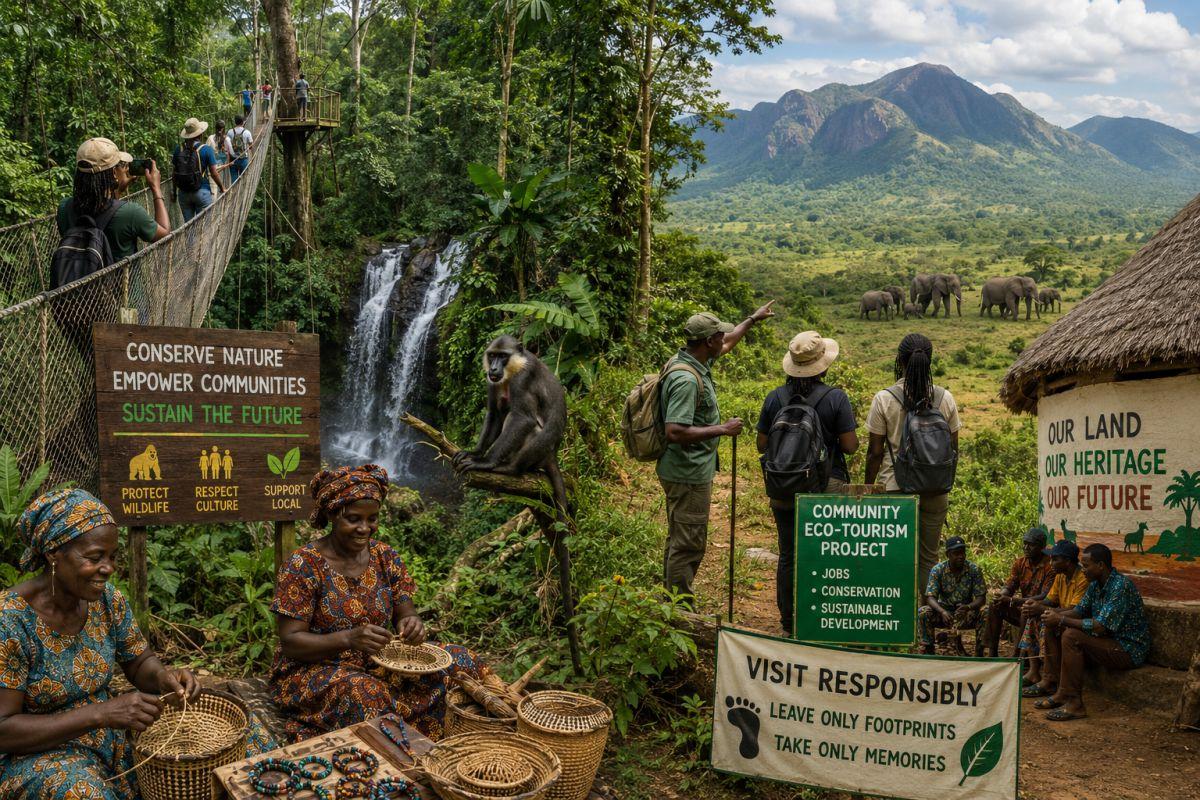
Unlocking Nigerias Green Gold: Eco-Tourism for Community Empowerment
Full Story
Nigeria, a nation celebrated for its vibrant culture and dynamic economy, is also home to an astonishing array of natural wonders. From dense rainforests to sprawling savannas and ancient rock formations, this biodiversity offers a unique opportunity for eco-tourism. Far beyond conventional sightseeing, eco-tourism in Nigeria is emerging as a powerful tool for sustainable development, empowering local communities who act as custodians of these natural treasures while offering authentic experiences to visitors. NaijaPodNews explores how these communities are shaping the future of nature-based travel across the country.
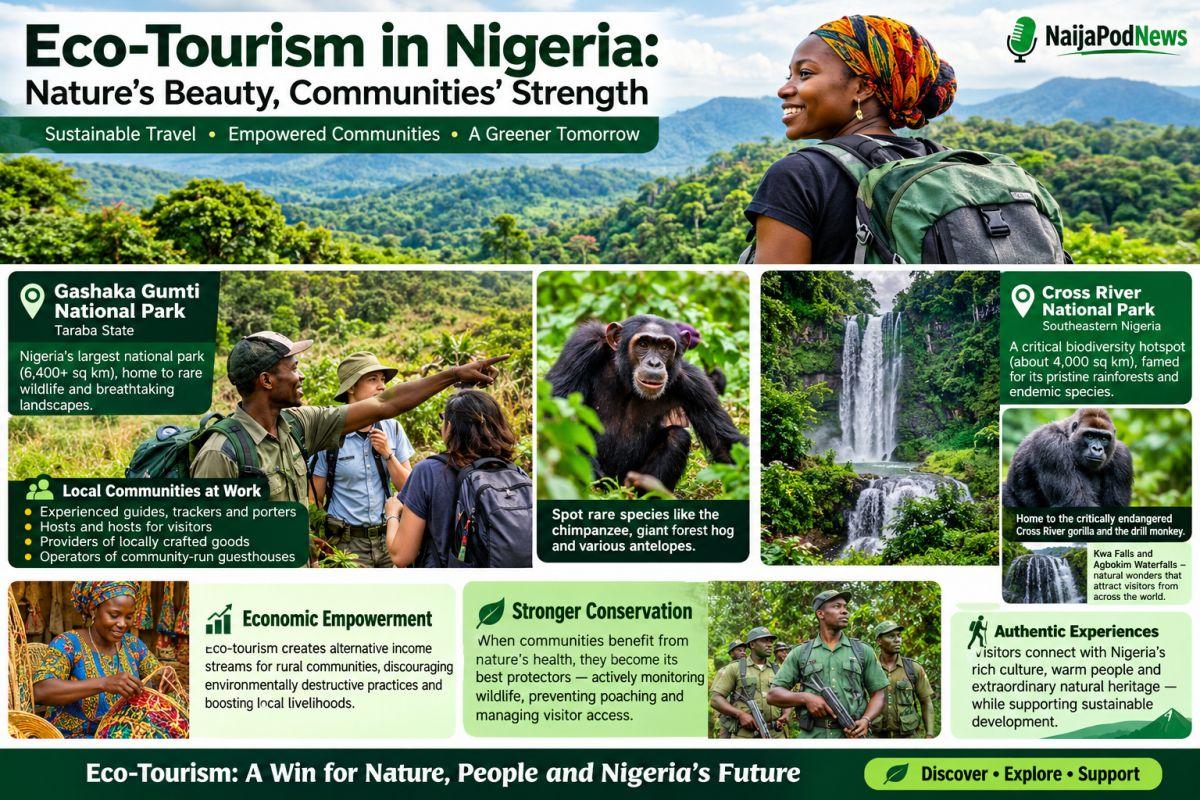
One of the most compelling aspects of eco-tourism in Nigeria is its direct impact on community empowerment and economic diversification. In many rural areas, traditional livelihoods are often limited, but eco-tourism provides alternative income streams that discourage environmentally destructive practices. For instance, communities bordering the expansive Gashaka Gumti National Park in Taraba State, Nigeria's largest national park covering over 6,400 square kilometers, are increasingly involved in hosting visitors. Local residents, including the Kuteb, Mambilla, and Fulani peoples, serve as experienced guides, trackers, and porters, leading tourists through challenging terrains to spot rare species like the chimpanzee, giant forest hog, and various antelopes. They also sell locally crafted goods and provide accommodation in community-run guesthouses. This direct engagement ensures that the economic benefits of tourism flow back into the community, incentivizing the preservation of the park’s rich ecosystem.
Beyond economic benefits, eco-tourism fosters a deep sense of conservation through participation. When communities directly benefit from the health of their natural environment, they become its most ardent protectors. This is evident in areas surrounding the Cross River National Park, a critical biodiversity hotspot in southeastern Nigeria. The park, spanning approximately 4,000 square kilometers, is renowned for its pristine rainforests and endemic species, including the critically endangered Cross River gorilla and the drill monkey. Local communities, often working with conservation organizations, are actively involved in monitoring wildlife, preventing poaching, and managing visitor access to natural attractions like the Kwa Falls and Agbokim Waterfalls
Gallery
Comments
(0)0/500 · No URLs or profanity allowed
Nigerias rich biodiversity offers a unique opportunity for eco-tourism. Its empowering local communities and shaping the future of nature-based tourism.
Related Stories

Ozumba Mbadiwe Road Set for 35-Day Upgrade, Lagos Announces Diversions

German Mission Urges Nigerians: Adhere to Official Visa Procedures
Traveler Slams Lagos Airport Experience, Praises Qatar's Efficiency

Following NCAA Order, Air Peace Offers 25% Discount for Delayed Lagos-Enugu Trip

N30,000 Airport Ride: Tourist Questions FAAN's New Transport System in Lagos