Details emerge: VP Shettima Seeks Stronger Accountability for Food Security Interventions
Full Story
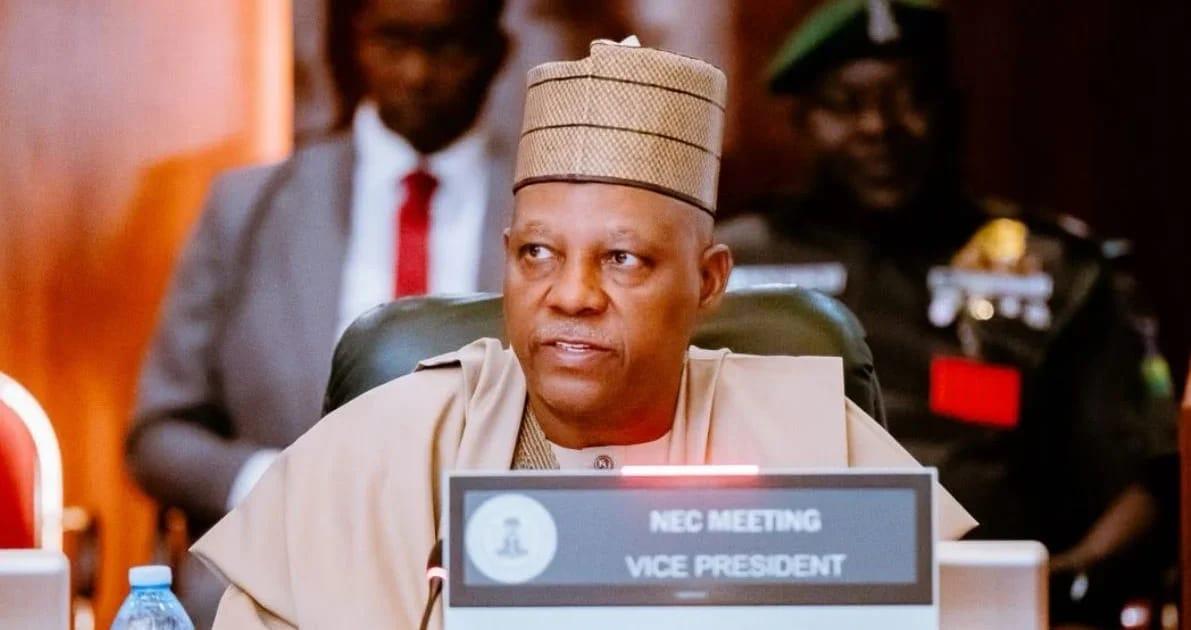
Vice President Kashim Shettima has emphasized the critical need for enhanced accountability regarding the Federal Government's initiatives aimed at ensuring food security. He asserted that public funds allocated for these programmes must yield visible results that positively impact farmers, markets, and Nigerian families.
This directive was conveyed through a statement released on Saturday by the Presidential Food Systems Coordinating Unit (PFSCU). The statement followed the seventh Steering Committee meeting, which took place on Friday at the State House in Abuja, with Vice President Shettima presiding.
Attendees at the meeting included state governors, federal ministers, key figures from the private sector, and various development partners. Their agenda focused on assessing Nigeria's overall food systems landscape and strategizing coordinated efforts to boost local food production and ensure wider availability.
The PFSCU reported that Shettima specifically “called for stronger visibility and accountability across ongoing interventions,” underscoring the importance of ensuring that all allocated resources achieve measurable and concrete results.
Furthermore, the Vice President advocated for a boost in domestic food output, coupled with strategies to lower food prices for citizens. He highlighted that achieving President Bola Tinubu’s food security objectives requires a unified approach involving the Federal government, state governments, the private sector, and pertinent agencies to produce verifiable outcomes.
As the major harvest season approaches, the committee deliberated on various initiatives designed to assist farmers, enhance local production, streamline the transportation of food from farms to consumers, and bolster national strategic food reserves. Discussions also covered critical aspects like logistics, transportation challenges, levies, market accessibility, and other distribution elements that influence the ultimate price of food items.
The committee concluded that enhancing the efficiency of food distribution channels, particularly between agricultural production hubs and consumption centers, is vital for alleviating existing strains within the food supply network.
Marion Moon, the Executive Secretary of the PFSCU, stated that the government plans to increasingly base its intervention decisions on robust evidence. She quoted, “Our focus is to ensure that the Government has the evidence to act early and precisely – supporting farmers, improving the movement of food, strengthening preparedness and directing interventions to where they can make the greatest difference.”
Jigawa State Governor, Umar Namadi, emphasized the importance of placing farmers at the core of all agricultural policies. He identified key priority areas such as irrigation, provision of inputs, access to financing, production support, and market accessibility. Governor Namadi also urged for enhanced collaboration between the Federal and State governments to guarantee that national interventions are tailored to address the specific challenges faced by farmers in individual states.
The Minister of Finance and Coordinating Minister of the Economy underscored the necessity of harmonizing local production efforts with existing trade policies. The committee, as per the statement, acknowledged that trade policies could supplement domestic output and bridge confirmed supply deficits. However, it cautioned that such measures must be weighed against the status of strategic reserves, prevailing market conditions, and the imperative to sustain incentives for Nigerian farmers and agribusinesses.
Additionally, the committee assessed significant food security initiatives, notably the $500 million Nigeria Sustainable Agricultural Value-Chains for Growth programme, referred to as AGROW. The PFSCU confirmed that AGROW has concluded its planning and coordination stages and has now been handed over to the Federal Ministry of Agriculture and Food Security, along with the participating states, for implementation.
Other initiatives under review encompassed the National Agribusiness Policy Mechanism, the establishment of the National Agro-Productivity System, and the National Food and Nutrition Crisis Preparedness Framework, which is being managed by the Office of the National Security Adviser.
The PFSCU indicated that these initiatives are designed to bolster the government's capacity to comprehend farmers' cultivation plans, track seasonal yields, and foresee potential risks.
The PFSCU Steering Committee plays a crucial role in coordinating all food system interventions, bringing together federal, state, and local governments, the private sector, security agencies, and development partners.
This development comes as The PUNCH had previously reported a significant increase in food inflation, which reached 20.31 percent year-on-year in July, up from 17.52 percent in June. The month-on-month rate also saw a rise to 5.56 percent from 3.75 percent. Financial analysts at Comercio Partners attributed this renewed pressure on food prices to a combination of factors, including limitations in agricultural supply, escalating logistics and distribution expenses, seasonal variations, and wider structural impediments that cannot be addressed solely by monetary policy.
Gallery
Comments
(0)0/500 · No URLs or profanity allowed
VP Shettima don yarn say make dem account for all di money dem dey put for food security. We just hope say dis wan go really make food plenty and cheap for market, no be just talk-talk again.
Source: Punch NG
Related Stories

Cross River: Obi-Kwankwaso Movement Commissions Secretariat, Installs State Executives

Data Neutrality Concern: CITAD Urges NIMC Boss to Exit APC Campaign Role

Kaduna Governor: North-West Must Reward Tinubu's Impact with 2027 Votes
Violence, Irregularities Force YPP Boycott of Anambra Local Government Election

VP Shettima Heads to Angola for AU Summit, Represents Tinubu on Peace Mission