US Hits Iran with Broad Sanctions on Oil, Military Networks
Full Story
The United States has enacted extensive new sanctions against Iran, focusing on its military acquisition channels, operators of its 'shadow fleet,' and those involved in petroleum and petrochemical trading. These actions, announced by the US State and Treasury Departments, fall under "Operation Economic Outcast," a broader initiative by Washington to isolate Iran from global financial and commercial systems. The US government confirmed these latest measures impact nearly 60 individuals, organizations, and ships, covering Iranian military operations, procurement, cyber activities, and the generation of revenue from oil and petrochemicals. Washington stated these restrictions aim to curb the funds Tehran uses for regional aggression, terr*rism support, and maintaining its military capabilities.
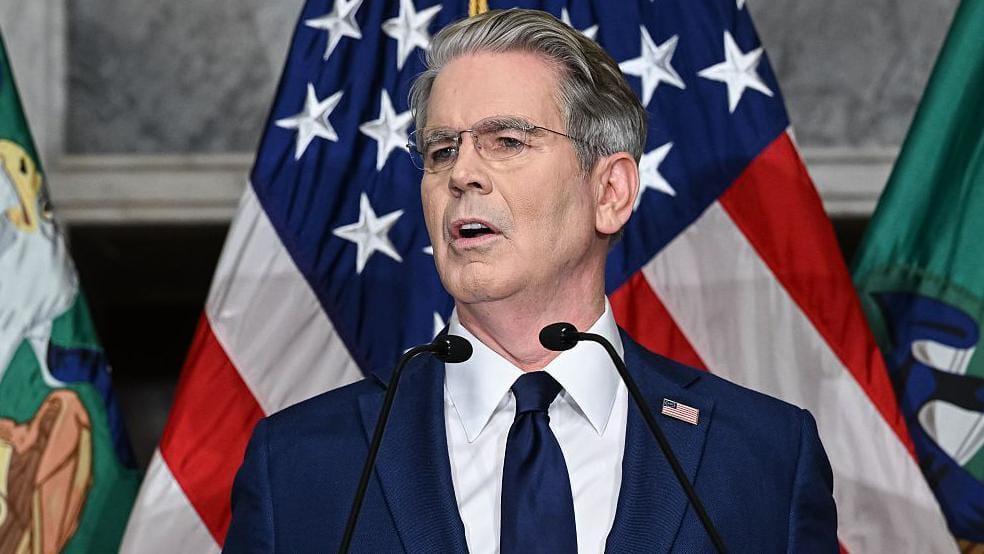
Companies and intermediaries situated in other nations, linked to the acquisition, transport, and sale of Iranian oil and petrochemical goods, are also caught in these sanctions. Specific targets include Indian firms accused of importing Iranian petroleum products, Turkish entities involved in petrochemical trade, a Hong Kong-based company reportedly operating a tanker carrying Iranian crude, and an Indian customs broker. US Treasury Secretary Scott Bessent characterized this campaign as an "economic onslaught" against Iran, emphasizing Washington's goal to cut off the financial resources sustaining the Iranian regime. Bessent issued a warning that any entities facilitating transactions involving Iranian oil or assisting in converting its petroleum earnings into funds for the regime could face penalties. He also revealed that US President Donald Trump is engaging with global leaders, urging them to cease economic dealings with Tehran.
The announcement has sparked particular scrutiny regarding China, which stands as Iran's primary trading partner and a significant purchaser of its oil. China has consistently opposed unilateral sanctions, advocating instead for political and diplomatic resolutions to the conflict, potentially setting the stage for a dispute between Washington and Beijing over the enforcement of these new directives. However, Bessent refrained from naming the specific countries that would be targeted or disclosing when such penalties would be enforced, stating that these nations would be given time to conform to the new mandates. He remarked at a press conference, "We are giving everyone the opportunity to remedy bad behaviour. Why would I want to blow up the global financial system?"
Additionally, the US has sanctioned high-ranking Iranian military officials, including Ahmad Vahidi, Commander of the Islamic Revolutionary Guard Corps (IRGC); Ali Abdollahi, Commander of the Khatam olAnbia Central Headquarters; and Sayyed Hosein Majid Musavi Eftekhari, Commander of the IRGC Aerospace Force. Washington alleges these officials are responsible for directing or supporting Iran's military operations, specifically its ballistic missile and unmanned aerial vehicle initiatives. The US also designated the Iranian Islamic Revolutionary Guard Corps Cyber-Electronic Command, accusing it of gathering intelligence on US military assets and facilities to aid Iranian targeting operations.
These sanctions are not limited to Iran itself, as Washington has issued a stern warning that companies and individuals in other nations who facilitate Iranian oil and petrochemical transactions could also face similar restrictions. Among the companies targeted is India-based Sadashiva Overseas Limited, which the US claims imported approximately $69 million worth of Iranian-origin petroleum products between February 2024 and June 2025. Another Indian firm, PP Softtech Private Limited, faced accusations of importing about $25 million worth of Iranian petroleum products from January 2024 to June 2025. Furthermore, Prakrutees Infra Impex India Private Limited was sanctioned for importing Iranian petroleum products valued at approximately $25 million between May 2023 and February 2026.
Hong Kong-based Selenium Resources Limited was also targeted, with Washington asserting it exported over $22.8 million worth of Iranian-origin petrochemical products between January 2023 and September 2024. The measures also impacted Turkey-based Huzur Plastik, which the US stated imported Iranian-origin polyethylene valued at $28 million between June 2022 and May 2024.
The US outlined that these sanctions would freeze the assets and interests in property of designated individuals located within the United States or under the control of US persons. It further cautioned that entities owned, either directly or indirectly, by blocked persons at 50 percent or more, would also be subject to these restrictions. Essentially, these measures forbid US persons and any transactions occurring within or passing through the United States from engaging with the sanctioned individuals and entities, unless explicit authorization is granted by the US Treasury’s Office of Foreign Assets Control. These latest sanctions represent an ongoing effort by the US to heighten economic pressure on Tehran.
Comments
(0)0/500 · No URLs or profanity allowed
America don come again with heavy sanctions on Iran, dem say na to choke dem financially. We go see whether dis 'Operation Economic Outcast' go truly make Iran change their ways or if na just plenty noise.
Source: Arise TV
Related Stories
US Targets 200,000 Visas for Revocation Amid Asylum Fraud Allegations

US Lifts Syria's 'State Sponsor of Terrorism' Tag, Boosts Investment Hope
Zelensky Foresees Russia Mobilizing 300,000 More Troops for Ukraine Conflict

US Judge Voids Immigrant Visa Ban Affecting Nigeria, 74 Nations
Former President Obasanjo and AU Commission Chair Discuss African Peace Initiatives