Neurofibromatosis Patient Eseoghene Oghenekevwe Faces Church Snubs During Peace Sign Ritual
Full Story
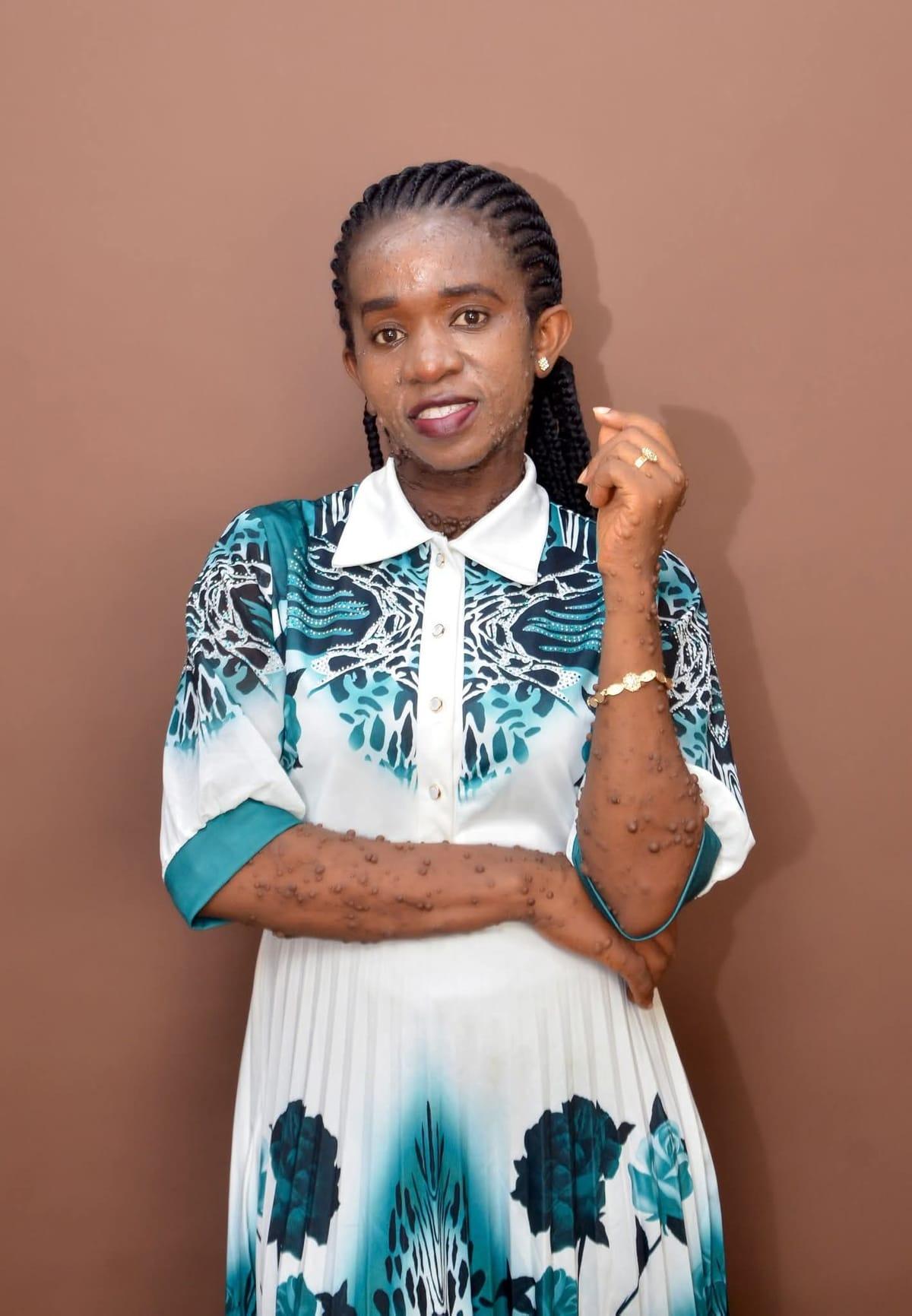
Eseoghene Susan Oghenekevwe, a Nigerian woman living with neurofibromatosis, has openly discussed the challenges and discrimination she encounters within her church, particularly during the 'sign of peace' segment of the service. Neurofibromatosis is a genetic condition characterized by the growth of non-cancerous tumors along the nervous system, skin, and bones.
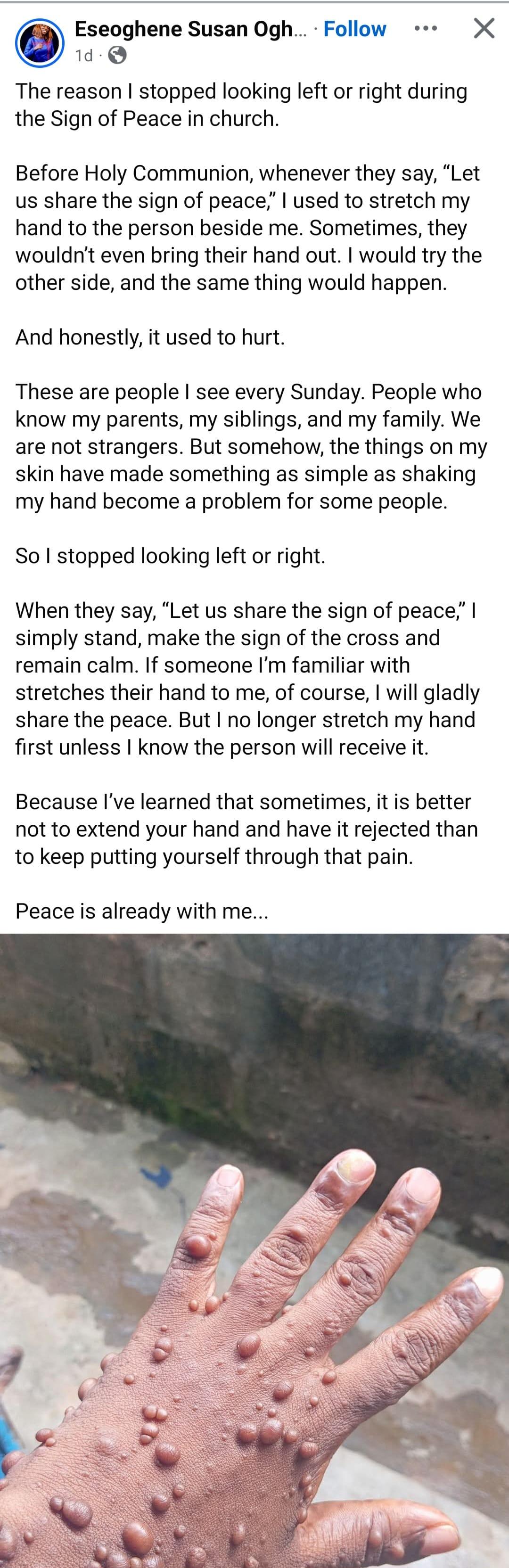
Susan, a devout Catholic, shared her painful experiences on Facebook. She explained that during the 'sign of peace,' when congregants typically shake hands with those around them, people consistently avoid physical contact with her. "The reason I stopped looking left or right during the Sign of Peace in church," she wrote, detailing her ordeal. "Before Holy Communion, whenever they say, 'Let us share the sign of peace,' I used to stretch my hand to the person beside me. Sometimes, they wouldn’t even bring their hand out. I would try the other side, and the same thing would happen."
She expressed the emotional toll this took on her, noting, "And honestly, it used to hurt. These are people I see every Sunday. People who know my parents, my siblings, and my family. We are not strangers. But somehow, the things on my skin have made something as simple as shaking my hand become a problem for some people."
As a result of these repeated rejections, Susan has changed her approach. "So I stopped looking left or right," she revealed. "When they say, 'Let us share the sign of peace,' I simply stand, make the sign of the cross and remain calm. If someone I’m familiar with stretches their hand to me, of course, I will gladly share the peace. But I no longer stretch my hand first unless I know the person will receive it. Because I’ve learned that sometimes, it is better not to extend your hand and have it rejected than to keep putting yourself through that pain. Peace is already with me..."
In a separate post, Susan also highlighted the profound acceptance she receives from her husband. She recounted her initial reluctance to post unedited photos of herself online, fearing negative comments. "When I first started posting pictures on Facebook, I hardly posted my pictures without editing," she stated. "I always had to edit because so many people are frustrated online. So many people are not happy and here I am posting pictures when I’m trying to be happy, only for someone to bring their unhappiness to stain my white. You can imagine how frustrating that can be sometimes. So, I hardly post pictures."
She explained how her husband's support changed her perspective. "When I got married, I still didn’t post much, but my husband kept posting me. He was like, I can’t hide you. I have to post my wife now. He would post and I would still be there editing my pictures. If someone wants to see my real picture, they just go to my husband’s profile. Because on my own profile, na edited pictures you go see. But recently, I started posting little by little. Sometimes my husband would just tell me, 'Why can’t you just…' And honestly, I’m beginning to understand what he meant."
Gallery
Comments
(0)0/500 · No URLs or profanity allowed
Na serious matter Eseoghene don yarn about wetin she dey face for church. E pain say even for house of God, some people still dey discriminate because of skin condition. But her husband's love show say true acceptance still dey.
Source: Linda Ikeji's Blog
Related Stories

U.S.-Based Nigerian Nurse, Sugar, Details Ex-Husband's Threesome Demands

Chinonso Onuoha Exposes Ex-Husband's Alleged Childbirth Mistreatment: Epidural Refusal, C-Section Threat
UAE-Based Nigerian Man Publicly Brands Ex-Wife Unfaithful, Warns Suitors
Man's Restaurant Advance Stuns Heavily Pregnant Moronkeji Adekunle Igwe

Writer Daud Gambo Killed in Auto Crash Hours After Mother's Passing