NBA President Challenges Police Over Punitive Bail Requirements
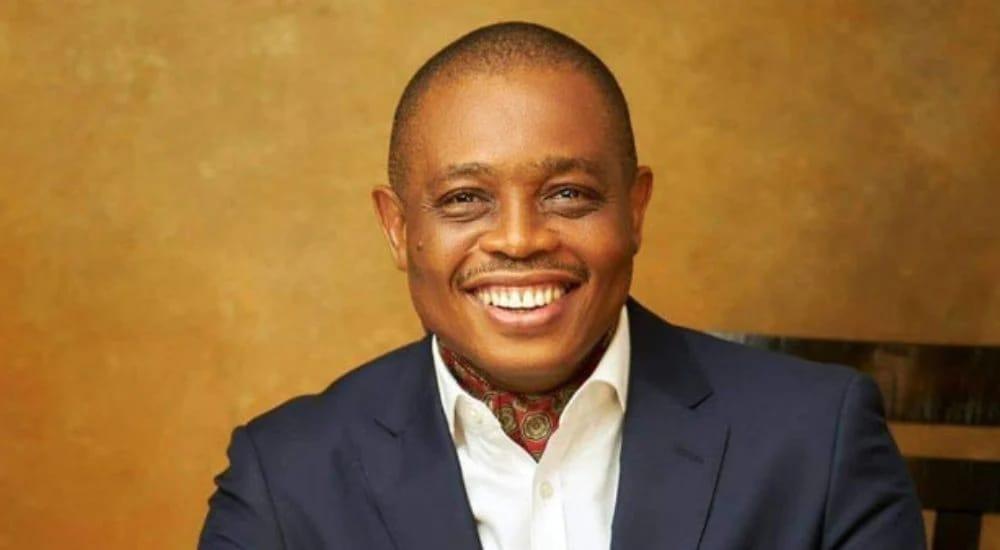
Afam Osigwe (SAN), who heads the Nigerian Bar Association (NBA), has voiced significant worries regarding the increasingly harsh and unfair bail stipulations enforced by various police departments nationwide. During a Tuesday meeting in Abuja with the Inspector-General of Police, Olatunji Disu, Osigwe highlighted that bail procedures are often managed in a way that prevents suspects from accessing their liberty. He asserted, “I will use this opportunity to note that bail has become a punitive thing, that in our police stations, in our courts, in EFCC offices, ICPC offices, bail is being given with the intention that the people should not enjoy it. So we deny bail by pretending to give it.”
Osigwe pointed out that a particularly concerning trend involves certain police officers demanding that suspects present directors or high-ranking civil servants as guarantors before bail can be secured. He elaborated, stating, “The worst part of it is that it has now seemed to be becoming normal that in some police stations, when bail is granted, they say you must bring a director or senior civil servant. And sometimes it is only the directors acceptable to the investigating officers that can stand as sureties.” This practice, according to Osigwe, has inadvertently fostered a “black market in suretyship,” where individuals unconnected to suspects act as sureties in exchange for payment. He explained, “These directors who don’t know the suspects now agree to become sureties for a fee. So a great financial burden is thereby imposed on the person in detention, his family and his friends.”
The NBA leader advocated for a return to sensible bail conditions, whose sole purpose should be to guarantee the suspect's presence when needed by law enforcement or judicial bodies. Furthermore, the NBA president urged the Nigeria Police Force to adhere to legal mandates that require judges and magistrates to conduct inspections of detention facilities within their assigned areas.
Osigwe stated that, notwithstanding the stipulations within the Administration of Criminal Justice Act, certain law enforcement bodies, including the police, have shown resistance to allowing judicial officers entry into detention centers. He quoted, “There is presently a provision in the Administration of Criminal Justice Act which says that the Chief Judge shall direct judges and magistrates to visit detention facilities or centres within their jurisdiction to inspect.” He added, “And even with this statutory provision, the police, and not only the police, but some law enforcement agencies also refuse and resist these efforts.”
Osigwe emphasized that these inspections are not meant to incriminate security agencies but rather to confirm legal adherence and protect the rights of those in custody. He clarified, “I want to use this opportunity to bring this to the attention of the IGP and to respectfully request that the police should understand that this is not an indictment, that the magistrates and judges, when they come, are merely carrying out statutory duties.” He implored the police hierarchy to guarantee that their personnel collaborate with judicial officers during these visits, concluding, “I will be asking for the cooperation of the IGP so that this provision of the law is given effect.”
In his response, IGP Disu acknowledged the validity of the concerns raised, assuring the NBA that the issue would be tackled. He stated, “That is very true. I noticed it too. And then I’ve noted it down. It is not our duty. That was not what we were taught. Give bail to anybody responsible who will be able to bring the person when we want them.” He further clarified that police training does not endorse the implementation of such stringent conditions, like mandating specific classes of public servants as sureties. “Women can stand as surety for anybody. That is it. So they did not teach us to start putting that condition. Must be level 14, must be no. No. I have noted it down. We are going to address it,” Disu affirmed.
Disu highlighted that the efficient functioning of justice administration necessitates collaboration between law enforcement, legal practitioners, and the judiciary, characterizing their relationship as “symbiotic.” He further recognized that both the police and the judicial system hold crucial responsibilities in ensuring the seamless execution of criminal justice. “So it’s a symbiotic relationship between us,” he concluded.
Comments
(0)0/500 · No URLs or profanity allowed
NBA don vex say police dey make bail too hard, especially with di 'director surety' wahala wey dey create black market. Dem also talk say police no dey allow judges check cells as law talk. IGP say e don hear and go fix am. We go see whether dis promise go hold water.
Source: Punch NG
Related Stories

IG Disu: Ending Mistrust Crucial for National Security
Plateau Killings: Police Chief Deploys Top Team to Quell Violence

IGP Disu Advocates for Nationwide Ban on Tinted Vehicles

Zamfara Boy Seeks Revenge Against Bandits After Witnessing Father's Murder

UK Deputy Defence Chief Arrives Maiduguri to Bolster Military Cooperation