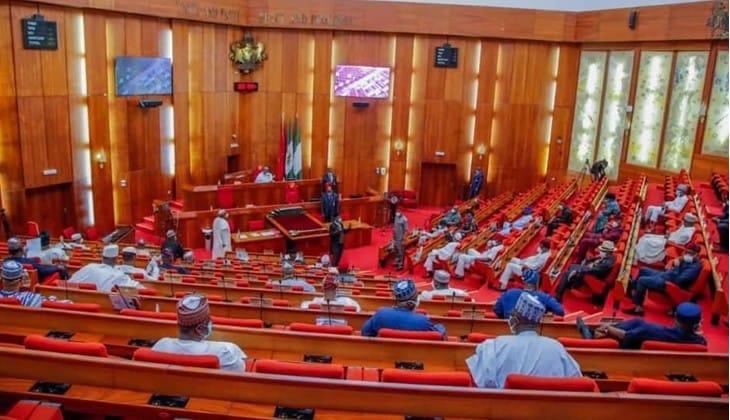
President Tinubu Pushes COREN for Stricter Engineering Oversight, Stronger Penalties
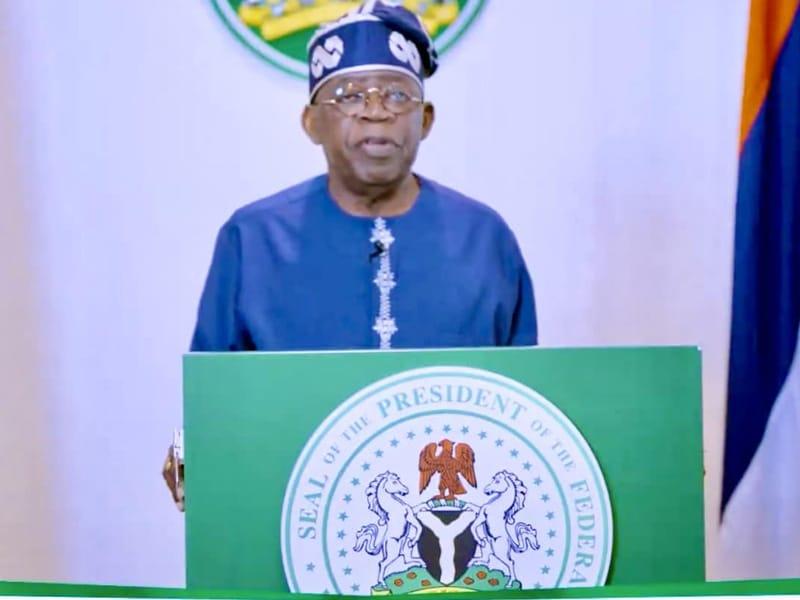
On Tuesday in Abuja, President Bola Tinubu delivered a directive for enhanced engineering oversight, robust enforcement, and appropriate punitive measures. This mandate aims to protect citizens' lives and elevate the standard of infrastructure nationwide. The President issued this instruction during the official opening of the 34th Engineering Assembly hosted by the Council for the Regulation of Engineering in Nigeria (COREN).
Addressing the assembly's central theme, "Advancing Public Safety in Nigeria through Strategic Engineering Regulation, Enforcement and a Tiered Sanction Regime," President Tinubu, represented by the Minister of Works, David Umahi, emphasized a crucial shift. He stated that engineering regulation should evolve from its current reactive state to a proactive, data-informed, and implementable framework that places public safety as its paramount concern. Umahi conveyed the President's message, highlighting the imperative for engineers to prioritize safety in all their professional undertakings.
"Engineering encompasses more than just the construction of roads, bridges, buildings, dams, power grids, and digital networks," the President declared. "It also involves safeguarding the child's journey to school, the trader's commute to the market, the patient's urgent trip to the hospital, and indeed, every Nigerian relying on public infrastructure." He further underscored that lapses in engineering lead to fatalities, squandered resources, and eroded public trust, asserting that public safety must perpetually serve as the foundational principle of engineering work.
President Tinubu characterized COREN as a vital public safety body, entrusted with overseeing engineering practices and shielding Nigerians from inferior infrastructure. He articulated, "Regulation should never be perceived as a punitive measure. Rather, regulation is a safeguard. It shields the public from professional inadequacy, clients from subpar project delivery, the government from inefficiency, investors from infrastructure failures, and most crucially, it preserves human lives."
Furthermore, Tinubu stated that engineering oversight must extend to every stage of infrastructure development, encompassing initial planning, design, construction, supervision, ongoing maintenance, and ultimate decommissioning. He reiterated his administration's dedication to providing long-lasting infrastructure nationwide. "Each road project undertaken by our government is designed to endure for a period of 50 to 100 years," he noted, contrasting this significantly with past practices where "most roads never lasted up to five years." The President emphasized Nigeria's need for "a balanced system of strong regulation, fair enforcement and proportionate sanctions" to guarantee both engineering excellence and the well-being of the populace.
During his welcoming remarks, Professor Zubair Abubakar, President of COREN, affirmed that the assembly's theme aligned with the council's legal obligation to protect the public through diligent engineering regulation. He pointed out that engineering mishaps frequently lead to catastrophic outcomes, thereby making stringent compliance checks, vigorous enforcement, and clear accountability indispensable elements of professional conduct.
Professor Abubakar then enumerated various successes achieved by COREN. These include implementing admission quotas for engineering courses in partnership with the National Universities Commission (NUC) and the Joint Admissions and Matriculation Board (JAMB), aimed at elevating the standard of engineering education. He also revealed that COREN has ramped up national compliance inspections across infrastructure projects and industrial sites, bolstered enforcement actions against hazardous engineering methods, broadened its digital registration and verification platforms, and improved professional development initiatives for engineers. He further stated that COREN has advanced in establishing engineering codes and standards, fortifying international collaborations, and implementing engineering intelligence and risk-based regulatory approaches designed to identify and avert potential failures proactively.
Despite these strides, Abubakar acknowledged significant hurdles facing engineering regulation in Nigeria. These include widespread quackery, insufficient adherence to engineering benchmarks, ineffective enforcement structures, decaying infrastructure, and swift technological advancements. "Our approach must transition from reactive regulation to a system of predictive and preventive engineering governance," he declared, calling upon all stakeholders to adopt strategic regulatory frameworks, risk-focused inspections, ethical conduct, technology-enabled systems, and enhanced cooperation.
In another address, Aliko Dangote, President and Chief Executive of the Dangote Group, represented by the Group's Chief Economist, Professor Hassan Mahmoud, characterized engineering as a public trust. Its efficacy, he noted, directly influences public safety, industrial expansion, and investor assurance. Dangote asserted that engineering excellence is now a critical economic necessity for Nigeria, especially as the nation strives to close its infrastructure gap and establish itself as a manufacturing powerhouse within the African Continental Free Trade Area. He argued that robust engineering regulation ought to foresee potential hazards instead of simply reacting to breakdowns. He elaborated, stating, "Sound regulation acts as a catalyst for investment. Nations that successfully attract enduring capital are typically those where investors have confidence in engineering standards, as high-quality engineering mitigates risks and reduces long-term operational expenses."
Citing the Dangote Refinery project as an example, he explained that safety and engineering discipline were integral to every engineering decision made. He emphasized that the expense of upholding rigorous standards is considerably lower than the repercussions of engineering mishaps. Dangote further called for clear and appropriate penalties that differentiate between administrative mistakes, professional oversight, and intentional wrongdoing, while enforcing a strict zero-tolerance policy for recurrent violations that jeopardize human lives. He implored regulatory bodies to confront systemic issues like flawed procurement processes, political meddling, and the disregard for expert counsel. He stressed that effective regulation should aim to resolve the underlying causes of engineering failures, rather than solely penalizing those who err.
Comments
(0)0/500 · No URLs or profanity allowed
President Tinubu don tell COREN say make dem tighten up engineering rules well-well and punish offenders proper. Na to make sure say our roads and buildings no dey collapse anyhow and to protect everybody. We just pray say dem go follow am through, not just talk.
Source: Arise TV
Related Stories

Millions in Cash, Vehicles Await Top Globacom Dealers

Tinubu's Nigeria targets 250,000 informal businesses for formalisation support
Electricity Firms Decry NERC's New CapEx Rule, Cite Investor Concerns

N31.48tn pension assets growth driven by renewed public confidence says PenCom

Al Nassr, Ronaldo's Club, Hits Financial Snag; Salary Payments Lag