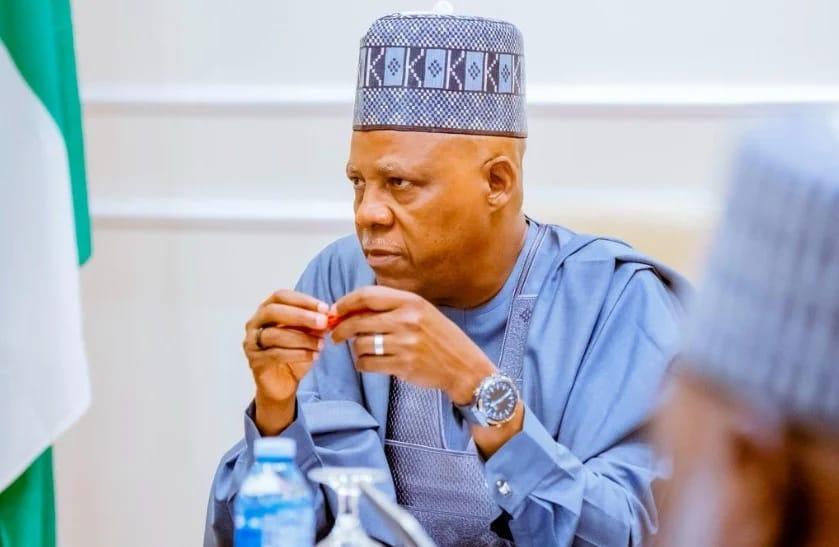
Senate Grills Customs Over N34tn Waivers, Warns MDAs on Unremitted Funds
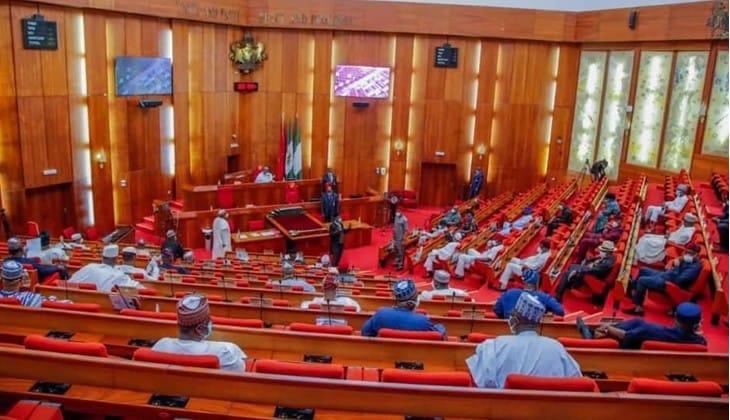
The Senate Committee on Finance on Monday initiated a new investigation into the federal government's issuance of Import Duty Exemption Certificates (IDEC), which are estimated to be worth approximately N34 trillion for the period spanning March 1, 2000, to December 2025. The panel voiced apprehension regarding the waivers' effect on state earnings, although the Nigeria Customs Service (NCS) justified them as vital fiscal strategies aimed at tackling security, economic, and social issues.
Chaired by Senator Sani Musa, the committee also issued a strong caution to various Ministries, Departments, and Agencies (MDAs) for failing to appear at its continuing inquiry into the remittance of internally generated revenue and operating surpluses to the Consolidated Revenue Fund (CRF) for the years 2023 to 2025. Parliamentarians indicated that legislative and administrative penalties would be imposed on non-compliant agencies, further warning that continued disregard could lead to reports being made directly to President Bola Ahmed Tinubu.
During the session, the Comptroller-General of the Nigeria Customs Service, Bashir Adewale Adeniyi, was present and offered comprehensive clarifications on Customs' revenue achievements, the execution of fiscal policies, import duty exemptions, adherence to the Treasury Single Account (TSA), and current reforms intended to streamline trade processes.
A significant revelation during the proceedings was the escalation of Import Duty Exemption Certificates issued by the federal government, reaching approximately N34 trillion by 2025. Addressing senators' worries about the increasing monetary value of these exemptions, Adeniyi clarified that almost 60 percent of the approved waivers were for military equipment, imported to bolster Nigeria's security framework amidst ongoing national security issues. He further detailed that these exemptions also encompassed the import of Compressed Natural Gas (CNG), electric and hybrid automobiles, essential healthcare devices and medical provisions, industrial machinery, manufacturing raw materials, and food import initiatives aimed at alleviating inflationary pressures.
The Customs chief posited that fiscal inducements should not be evaluated purely from a revenue perspective but also based on their broader economic goals. He contended that these incentives were designed to encourage industrial output, decrease the price of vital goods, enhance healthcare services, and reinforce national security. Nevertheless, Adeniyi proposed that the government implement more robust oversight systems to guarantee that recipients of duty waivers genuinely achieve the desired economic results, such as reduced consumer costs, boosted domestic production, and better access to healthcare.
Earlier in the hearing, senators brought up past discussions concerning the swift rise in duty exemptions and emphasized the necessity for the Minister of Finance to clarify the policy's financial ramifications. The committee additionally reviewed the revenue performance of the Customs Service over the preceding four years.
Adeniyi revealed that in 2023, the Service generated N3.2 trillion, falling short of its N3.67 trillion target by approximately eight percent. He noted a substantial improvement in revenue collection in 2024, with Customs accumulating N6.1 trillion, thereby surpassing its N5.079 trillion target by over 20 percent. For 2025, he stated that the Service achieved about N7.2 trillion, exceeding its N6.584 trillion goal. As of June 2026, revenue collected was roughly N4.5 trillion, against an annual target of N11 trillion. The Comptroller-General linked these variations in revenue performance to external factors, such as disturbances in international cargo logistics stemming from the Russia-Ukraine conflict and Middle East tensions, notably the Iran situation. Despite this, he conveyed optimism regarding the recovery of cargo volumes, pointing out that July's figures indicated promising progress.
The Fiscal Responsibility Commission (FRC), also presenting to the committee, informed the legislators that government-sanctioned import duty exemptions on foodstuffs like maize and rice had led to a significant decrease in Customs' revenue. The Commission, however, verified that all funds collected by Customs were deposited directly into the Treasury Single Account, adhering to existing financial regulations.
Additionally, the committee scrutinised the federal government's recent decision to lower import duties on vehicles. During the proceedings, Senator Adams Oshiomhole challenged this policy, contending that a reduction in import duties for specific vehicle categories, including pre-owned cars, might jeopardize Nigeria's domestic automobile assembly sector. While recognizing that Customs' role is solely to execute government directives, Oshiomhole asserted that promoting more affordable imports could deter investments in local vehicle production.
In response, Adeniyi emphasized that Customs does not formulate fiscal policies but is responsible only for implementing decisions made by the federal government. He conceded that the lowered tariffs would impact Customs' revenue but clarified that the initiative was enacted to make vehicles more accessible for Nigerians facing increasing economic difficulties.
The committee also assessed the advancement of the National Single Window project, with Adeniyi revealing that its implementation had progressed to the second stage. He reported that systems managed by pertinent government bodies had already been integrated, and comprehensive awareness campaigns had been conducted for importers, exporters, shipping firms, airlines, and port operators. While admitting to operational hurdles during the rollout, he characterized them as typical for a project of this scale and voiced assurance that the endeavor would enhance transparency, trade efficiency, and Nigeria's competitive standing.
Regarding Customs' ongoing modernization efforts, the Comptroller-General stated that the introduction of electronic payment systems, digital declarations, geospatial intelligence, and surveillance technology had considerably bolstered revenue collection and border security. He further disclosed that Nigeria's export trade had seen an expansion of approximately 70 percent over the last three years, subsequent to the establishment of a specialized export command in 2023.
The Fiscal Responsibility Commission also informed the panel that the Nigeria Customs Service had not yet submitted audited financial statements for periods beyond 2019. The Commission stated that Customs currently faces an estimated outstanding operating surplus liability of around N8.9 billion, though the precise amount can only be confirmed once more recent audited accounts are reconciled. As a result, the committee instructed the Comptroller-General to furnish comprehensive revenue documentation and updated audited financial statements within a seven-day period.
During the investigative hearing, the Corporate Affairs Commission (CAC) also notified the panel of an unremitted revenue sum exceeding N13.9 billion owed by the agency from its operations between 2023 and 2025. Hussaini Ishaq Magaji, the Registrar-General of CAC, who presented before the committee, acknowledged the outstanding debt but assured the panel that payments were being made incrementally. The FRC revealed this outstanding liability after Senator Sani Musa, Chairman of the Senate Committee, requested the FRC representative to confirm CAC's remittances. While senators praised the CAC for its "impressive" revenue generation, they also questioned the N13.9 billion liability, deeming it excessively high. Following Magaji's assertion that CAC was progressively settling the debt, Musa instructed that CAC, the FRC, and the committee convene to reconcile the figures and determine the precise outstanding balances. The session then moved to the scheduled appearance of NNPC Limited, which was ultimately deferred due to the absence of its Group Chief Executive Officer.
Comments
(0)0/500 · No URLs or profanity allowed
Senate don vex say N34tn waivers no clear, plus MDAs dey dodge account. Na serious matter for government money o, hope dem go get answers sharp-sharp to make sure say our common wealth no dey disappear.
Source: Arise TV
Related Stories

N31.48tn pension assets growth driven by renewed public confidence says PenCom

Al Nassr, Ronaldo's Club, Hits Financial Snag; Salary Payments Lag
Tinubu's Administration Offers Free CAC Registration to 250,000 MSMEs
West Africa Urged to Boost Tax Cooperation by Finance Minister Taiwo Oyedele
NRS E-invoicing: Taxpayers Speed Up Integration as Compliance Deadline Approaches