UN Reveals Terrorists Using Drones, Crypto for Sahel, Nigeria Attacks
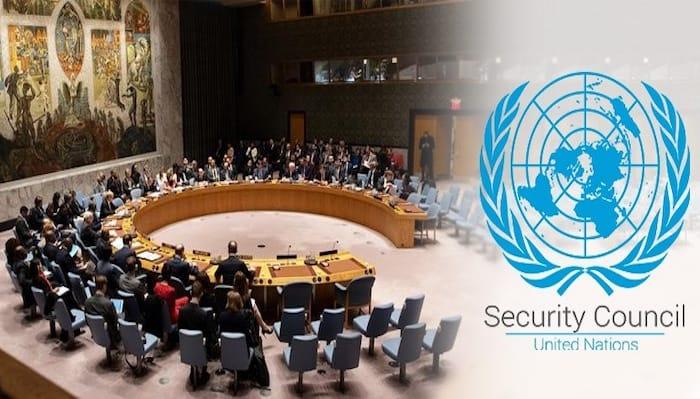
The United Nations has issued a strong warning that terrorist groups operating across northern Nigeria and the broader West African and Sahel regions are rapidly enhancing their operational capabilities. These groups are now employing sophisticated tools like drones, advanced communication systems, and cryptocurrencies to bolster their activities. This alert was delivered during a briefing to the UN Security Council by Leonardo Simão, the Special Representative of the Secretary-General for West Africa and the Sahel, who also heads the United Nations Office for West Africa and the Sahel (UNOWAS). Simão presented the Secretary-General's latest report, which covered developments in the region from November 29, 2025, to June 30, 2026.
This report was reviewed as the Security Council assessed the complex security, political, and humanitarian landscape in West Africa and the Sahel, a region grappling with persistent terrorist violence, ongoing political transitions, and escalating humanitarian needs. The briefing followed the council's recent decision to extend UNOWAS's mandate until January 31, 2029, signaling continued global commitment to preventive diplomacy in the area. Simão informed the council that terrorist organizations are evolving at an alarming pace, making their containment increasingly challenging. He stated, “Armed groups are increasingly using drones, sophisticated communications and cryptocurrencies while coordinating operations across borders.”
Simão further explained that the operations of these groups are becoming intricately linked with transnational organized crime. Their objectives include consolidating territorial and economic control, eroding public trust in state institutions, and undermining social cohesion.
The UN's briefing comes just weeks after the United States revealed what it termed the most significant seizure of terrorist equipment in Nigeria since the September 11, 2001, attacks. According to Dr. Sebastian Gorka, then United States Deputy Assistant and Senior Director for Counterterrorism, a joint counterterrorism mission involving Nigerian forces led to the recovery of a massive cache of electronic devices and other operational materials from jihadist factions. Gorka noted the scale of the seizure was so vast that an additional aircraft was needed to transport the confiscated equipment for detailed forensic analysis by American intelligence agencies. He also mentioned that this specific operation resulted in the elimination of 199 jihadists during a single raid.
However, Simão highlighted that Nigeria, Niger, and Burkina Faso continue to endure severe terrorist attacks, kidnappings, and substantial civilian casualties.
Addressing the council, Simão emphasized the devastating human toll of the violence, reporting that approximately 6.8 million people have been displaced across the region, with an additional 1.28 million seeking refuge or asylum. He pointed out that humanitarian access remains severely restricted due to insecurity and funding shortfalls, leaving women, children, and young people disproportionately affected by the crisis. He warned, “The problem is acute, especially in the central Sahel and northern Nigeria…Their actions intersect with transnational organised crime, and are aimed at consolidating territorial and economic control, erosion of public confidence in State authority, with serious damage to social cohesion.”
Despite the worsening security situation, the UN observed encouraging signs of improved regional collaboration. The reopening of the Kamba border crossing between Nigeria and Niger was cited as a practical outcome of renewed diplomatic engagement. Simão also acknowledged the progress made by the Cameroon-Nigeria Mixed Commission in implementing the 2002 International Court of Justice (ICJ) ruling concerning the two countries' land and maritime boundary, describing it as proof that dialogue can resolve long-standing disputes. He stressed, “These are some examples of regional efforts towards dialogue.”
The UN reiterated that military interventions alone would not eradicate terrorism, urging governments and the international community to address the fundamental causes of violent extremism. Simão affirmed, “Fighting poverty and vulnerability must therefore remain a common objective in the broader fight against terrorism.” He added that “Regional actors are working hard to find solutions,” noting ECOWAS's renewed efforts to operationalize its standby force, albeit at a smaller scale than required due to financial constraints.
Broadly, the 15 Security Council members concurred that terrorism in West Africa and the Sahel is growing in sophistication and increasingly linked with organized crime and illicit trafficking. They underscored the critical need for enhanced regional cooperation. Several delegations, including those from the US, China, Russia, UK, France, Liberia, Pakistan, and Burkina Faso, argued that security responses must be complemented by investments in governance, education, employment, humanitarian aid, and economic development to tackle the root causes of instability. A note from the meeting stated, “Council members broadly agreed that increasingly sophisticated terrorist networks, linked to organised crime and drug trafficking, threaten regional stability. Speakers stressed that military action alone cannot defeat extremism and called for governance reforms, development, education, job creation and humanitarian support to address root causes.” The note also highlighted that “Despite worsening insecurity, regional diplomacy is gaining momentum, with renewed cooperation among Sahel States and members of the Economic Community of West African States. The council signaled strong support for UNOWAS and preventive diplomacy as essential tools for confronting both immediate security threats and the region’s long-term challenges.”
Furthermore, participants at the meeting acknowledged that drug trafficking, production, and consumption are intensifying insecurity, particularly in coastal nations. An unnamed Liberian representative noted that "Youth are the principal victims," and reports indicate that terrorist combatants are also using drugs. Russia's Deputy Permanent Representative, Anna Evstigneeva, recalled that the council had classified some attacks as terrorist acts and pointed to the involvement of “external forces” supporting these activities.
Comments
(0)0/500 · No URLs or profanity allowed
Ah, dis matter of insecurity for Nigeria and di Sahel don enter another level o! UN don yarn say terrorists dey use drones and crypto now. Na serious wahala be dis, we just hope our leaders go find beta way to tackle am, no be only military action go solve am.
Source: Arise TV
Related Stories

UK Designates Iran's IRGC as Security Threat, Criminalizes Support
NAF Air Component Delivers Devastating Blow to Borno Terrorist Stronghold
New Report: Boko Haram, ISWAP Harness AI for Bomb Craft, Operational Tactics
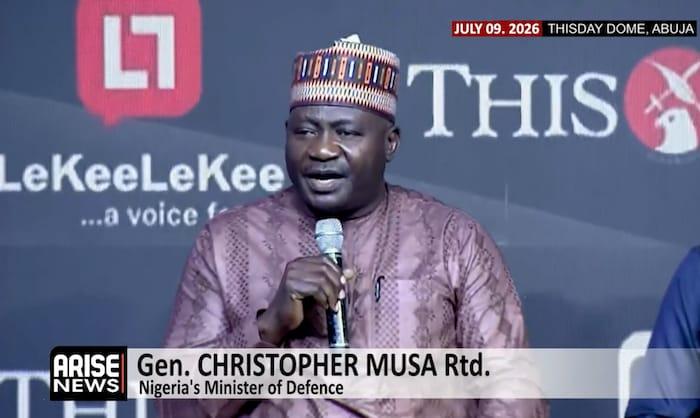
Defence Minister Musa Emphasizes Dual Approach for Counterterrorism Success

Niger State: IED Attack Leaves Captain, Two Soldiers Dead