Scorching Miami Heat Threatens England's World Cup Quarter-Final Against Norway

England faces an unprecedented challenge in their World Cup journey this Saturday, as they prepare to battle Norway in Miami's scorching heat. The quarter-final match will take place in conditions previously unfamiliar to the Three Lions, who have largely been spared from extreme temperatures during their North American campaign.
Up until now, England's fixtures included indoor games in Dallas and Atlanta, while their three outdoor encounters in Boston, New Jersey, and Mexico City benefited from cooler, more humid weather. However, the 22:00 BST kick-off on Saturday is set to test their endurance, potentially under conditions the global players' union deems too hazardous for play.
In contrast, Norway has predominantly played their matches outdoors, with their only indoor exception being a last-32 victory over Ivory Coast in the air-conditioned Dallas Stadium. Their recent 2-1 triumph against Brazil occurred outside in New Jersey, while the region was under an extreme heat warning from the US National Weather Service (NWS). This raises questions about which team is better equipped to handle Miami's intense heat.
The weather forecast for Miami paints a clear picture of hot and humid conditions. The NWS has issued a "hazardous heat threat," indicating an elevated risk of heat-related illnesses. While the actual air temperature is projected to be around 33C (91F), the high humidity will make it feel closer to 41C (106F). A heat advisory was in effect for Friday and is expected to continue through the weekend. Although there's a chance of thunderstorms and showers, particularly at the match's start, sunny intervals are otherwise anticipated.
Global football governing bodies like Fifa employ the Wet Bulb Globe Temperature (WBGT) index, which considers temperature, humidity, time, and sun exposure. According to players' union Fifpro's guidelines for playing in heat, a WBGT exceeding 28C should prompt the "delay or postponement of matches" until safer conditions prevail. Current WBGT calculations for Miami around kick-off time range from 28-30C, though there has been no indication the match will be cancelled.
Despite two of England's group-stage games being in the warmer climates of Texas and Georgia, the air-conditioned stadiums kept temperatures at a comfortable 21C. The highest temperature England has faced was 25C during their final group match against Panama, which was played under overcast skies. Their recent game in Mexico City, with its 18C temperature and rain, felt more familiar, as July is the city's wettest month. Miami's hot and humid weather will present a distinctly different challenge.
Norway's tournament opener against Iraq was played under clear skies at 25C. Their subsequent matches against Senegal and France saw rain and cloud, though most first-choice players were rested against Les Bleus. Following their indoor game against Ivory Coast, Norway endured oppressive conditions during their win over Brazil, where the shaded temperature in New Jersey reached 31C, feeling considerably hotter on the pitch due to humidity.
Interestingly, England's initial base in the United States was Florida. Manager Thomas Tuchel and his squad spent ten days there, playing warm-up matches against New Zealand in Tampa and Costa Rica in Orlando. They then relocated to their tournament facility in Kansas, where daily temperatures hover around 32-34C (90-93F). These preparatory measures should aid England in managing the heat.
Dr. Lee Taylor from Loughborough University, an authority on elite athlete performance in heat and altitude, emphasized the critical role of acclimatization. He informed BBC Sport, "That is the gold-standard method to protect players' health and performance." Taylor added, "They've been getting those exposures into the players pretty consistently as they had two hot bases. So we're fairly certain those players are acclimated. They haven't been able to really test that in a game environment, but we're not too concerned because we know they've acquired those physiological adaptations."
Norway, on the other hand, played their two warm-up games against Sweden and Morocco in the cooler environments of Oslo and New Jersey, respectively. Their tournament base in Greensboro, North Carolina, experiences temperatures similar to England's current location. Dr. Taylor noted, "Norway have played four pretty warm games, and the one in New Jersey was particularly hot. I'd probably rather have the scenario that England have evolved through, based on the fatigue the Norway players have acquired."
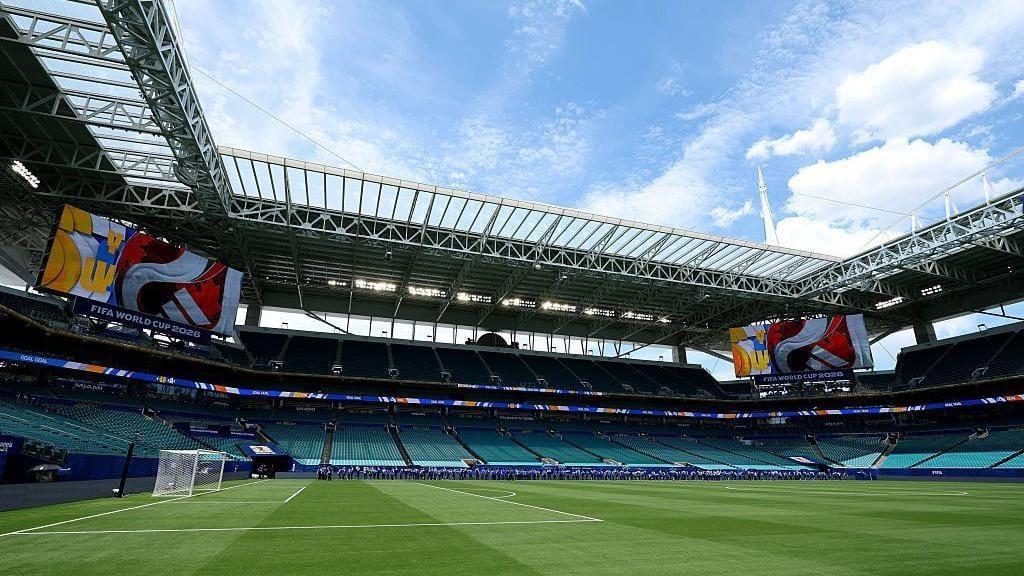
England has implemented various recovery strategies at their Kansas training camp, including the use of cooling tents. Unlike many open-air World Cup stadiums, the Hard Rock Stadium, with its European-style design, features a roof that can impede airflow to the pitch. Dr. Taylor explained this design creates a "humidity trap," preventing free-flowing air. He stated, "Sweating is king - it is the best way we can lose heat. We're highly efficient then. But in an environment that's got high humidity, with high water vapour pressure, there's nowhere for the sweat to go."
Fifa has introduced several measures to combat the heat, such as climate-controlled benches, readily available water and electrolyte drinks, ice, cold towels, fans, mist, and shaded areas. Players can also wear phase-change ice vests before the match, which contain ice blocks. During hydration breaks and at half-time, large towels soaked in ice-cold water are particularly effective. The winner of Saturday's match will then need to re-acclimatize for Wednesday's semi-final against Argentina or Switzerland, which will be played indoors in Atlanta.
Supporters attending matches at the Hard Rock Stadium face risks of heat exhaustion and heatstroke. Following the initial three fixtures, the Miami-Dade Fire and Rescue reported 38 heat-related calls at the stadium, with five individuals requiring hospital treatment. The situation was more severe at the city's Fan Fest, where the City of Miami recorded 79 heat-related calls on June 23rd alone. Fans are advised to utilize shuttle stations, which offer cooling sites, instead of walking the entire distance.
Dr. Taylor highlighted the "final mile" as a significant concern, referring to the often cordoned-off or lengthy routes designed for crowd management, which can be particularly challenging. His advice for fans is straightforward: "seek shade, stay hydrated, have a refillable bottle and a wide-brim hat."
To illustrate the extreme conditions awaiting the teams, the two hottest group-stage games occurred in Miami. Uruguay's 1-1 draw with Saudi Arabia registered a WBGT of approximately 32.9C, surpassed by their 2-2 draw with Cape Verde six days later at 33C. During a last-32 match in New Jersey, with temperatures reaching 32.22C, France's players resorted to using on-field sprinklers for relief. The tournament's warmest game so far was last Saturday's Paraguay versus France last-16 tie in Philadelphia, where temperatures hit 37C, feeling closer to 44C due to record-breaking heat.
Gallery



Comments
(0)0/500 · No URLs or profanity allowed
Dis World Cup match for Miami go be serious wahala for players, especially with that stadium roof wey no let breeze enter. We just dey pray say nobody go collapse for field, because dis kind heat no be joke at all!
Source: Google Trends Nigeria
Related Stories

Brazil Legend Ronaldo Shares Battle with Severe Depression, Weight Gain Post-Retirement

Hitchin Town FC Honours Mark Burke's Enduring Legacy After Two Decades

Fortuna Sittard Set to Clash with Belgian Giants KRC Genk

Barcelona Eyes Young Belgian Sensation in €10m Deal

Sadio Mané Hangs Up Boots for Senegal After 2026 World Cup Exit