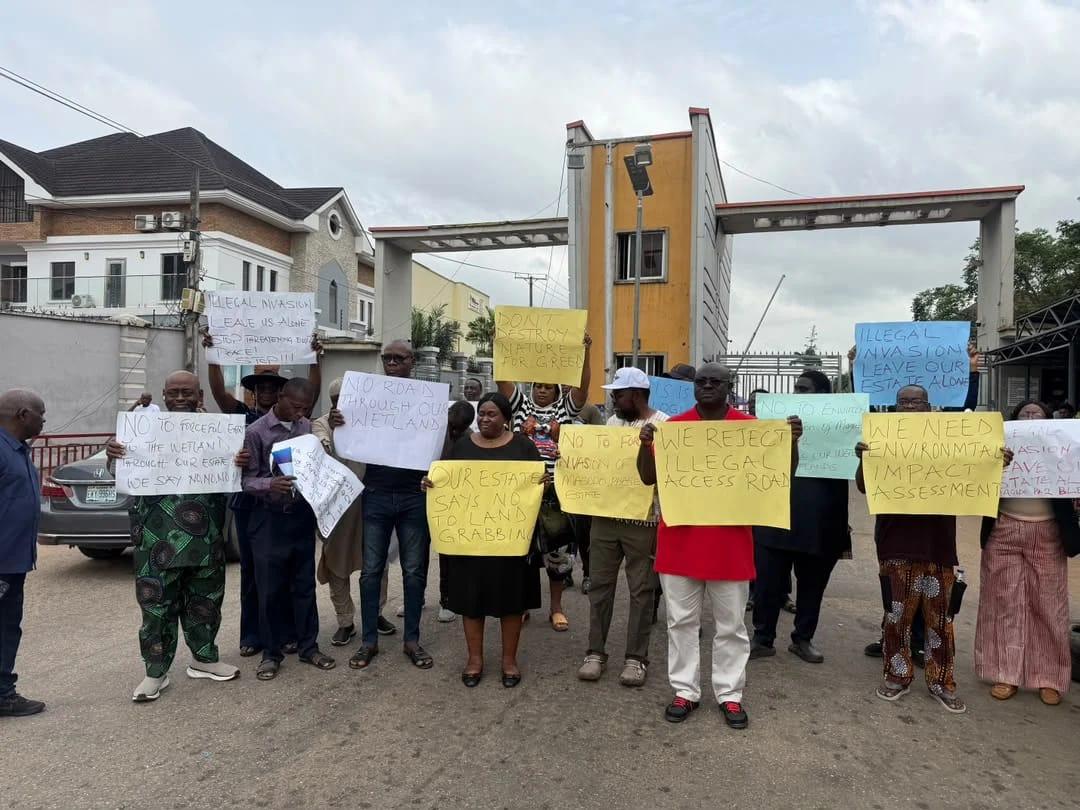
Federal Government Eyes Heavy Truck Diversion from First Niger Bridge
Full Story
The Federal Government is exploring a temporary measure to alleviate persistent traffic congestion on the First Niger Bridge, which involves rerouting heavy-duty vehicles and trucks to the Second Niger Bridge. Timothy Emenike, the Federal Controller of Works for Anambra State, confirmed this development during an interview on Tuesday. He indicated that barriers could be erected at either end of the First Niger Bridge imminently to restrict access for heavy-duty trucks.
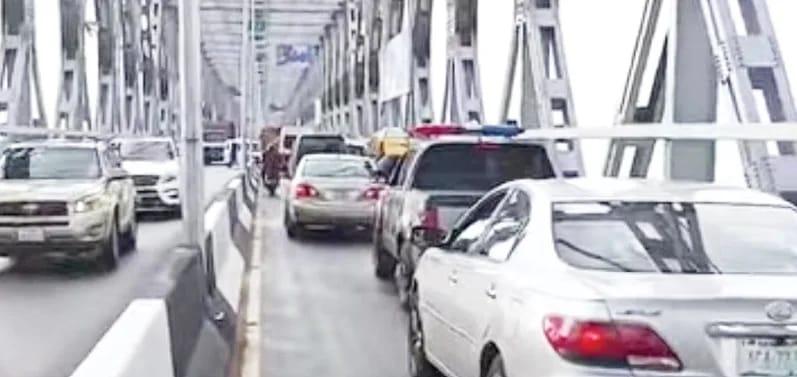
A recent investigation by South-East PUNCH over the weekend revealed that severe gridlock, often resulting in prolonged standstills, continues to affect the First Niger Bridge. This bridge, linking Onitsha in Anambra State with Asaba in Delta State, has experienced these issues since its reopening on October 15. Its initial closure occurred on September 7, 2026, following an inspection by the Minister of Works, Dave Umahi, who identified significant structural damage. This damage included missing bolts, severed steel parts, and compromised expansion-jointed steelwork.
Upon its reopening, the bridge featured new road demarcations and a central median. These recent installations have effectively reduced the width of the traffic lanes. Drivers and passengers have reported frequent instances where broken-down trailers and large trucks become immobile within these narrower, newly-defined lanes, leading to complete traffic blockages. They expressed frustration that such obstructions leave road users stranded for several hours, drawing considerable public outcry and criticism against the new physical barriers. Users of the bridge further noted that the congestion intensifies significantly whenever a heavy-duty truck fails on the bridge. This scenario typically forces all other vehicles to remain stationary in one direction, as the limited space prevents any form of navigation or bypass.
Acknowledging the recurrent traffic jams, Timothy Emenike reiterated that the proposed redirection of heavy-duty vehicles to the Second Niger Bridge aims to create more space on the First Niger Bridge, thereby facilitating smoother traffic movement. However, Emenike appealed to all drivers, particularly those operating heavy-duty vehicles, to ensure that any broken-down vehicle is moved to a location that does not impede other road users.
He stated, “The traffic congestion on the First Niger Bridge has been observed, and the ministry is actively investigating various solutions to guarantee seamless traffic flow, especially with the approaching Yuletide season. This gridlock is avoidable if drivers act responsibly.” He further explained, “A vehicle doesn't just spontaneously develop a problem and halt instantly. If an issue arises while a vehicle is in motion, the driver usually has a brief window to maneuver it safely off the main carriageway, allowing other vehicles to pass unimpeded. However, many drivers in our country fail to clear their vehicles from the road upon noticing a fault while driving.”
Emenike added, “The road demarcations were implemented to enhance traffic flow, and prior to their installation, we conducted tests to confirm that two vehicles could pass simultaneously. The challenge often stems from some drivers deliberately stopping and obstructing others when their vehicles break down.” He clarified, “We acknowledge that a heavy-duty truck and a smaller vehicle can share one lane on the First Niger Bridge concurrently. Nevertheless, two heavy-duty vehicles cannot pass each other simultaneously on the bridge. This is precisely why the ministry is contemplating redirecting heavy-duty trucks to the Second Niger Bridge, which possesses sufficient width to accommodate them.”
“Therefore, currently, we are implementing numerous measures, and one key consideration is the diversion of heavy-duty trucks to the Second Niger Bridge, given its capacity to handle a large volume of vehicles,” Emenike stated. He concluded, “The Second Niger Bridge is ample enough for all of them, yet its utilization remains inexplicably low.”
Meanwhile, road users, including motorists and drivers, have voiced differing opinions regarding the new demarcations. Some drivers, in separate interviews, attributed the persistent gridlock directly to these new concrete dividers on the bridge, arguing that they severely hinder other vehicles from navigating past a broken-down vehicle. One driver, identified as Emeka, commented, “Ever since the concrete demarcations were put in place, if any vehicle – be it a car, bus, or truck – develops a fault or stops, it entirely obstructs that particular lane, leading to significant traffic halts.”
“Currently, a single lane cannot accommodate two vehicles simultaneously, and this is the core of the problem. When a vehicle, particularly a heavy-duty one, breaks down, other vehicles become stranded because there is no room to pass,” Emeka lamented. He further stated, “The ministry had pledged to deploy towing vans at both extremities of the bridge to facilitate the swift removal of stalled vehicles, but as of today, this promise remains unfulfilled. Consequently, each time a vehicle breaks down, others are left stuck for multiple hours until a resolution is reached.”
Comments
(0)0/500 · No URLs or profanity allowed
FG wan divert big trucks from First Niger Bridge because of too much go-slow. Dem say the new bridge wide enough, so e go ease traffic. We just hope say this plan go work well and make road user dem life easy, especially as Yuletide dey come.
Source: Punch NG
Related Stories
NCAA Investigates Airline Over Passenger's Bleeding Amid Poor Cabin Air
Lagos Tragedy: Fadeyi Building Collapse Kills One, Traps Others
Ogun FRSC Command Confirms Sector Commander Oludare Ogunjobi's Passing

NAF Addresses Igbokoda Odour Fears Amidst Ongoing Ondo Crash Recovery
Nigerian Air Force Establishes Panel for Ondo Plane Crash Investigation