Kalu Assures European Union: State Police Bill Includes Abuse Controls
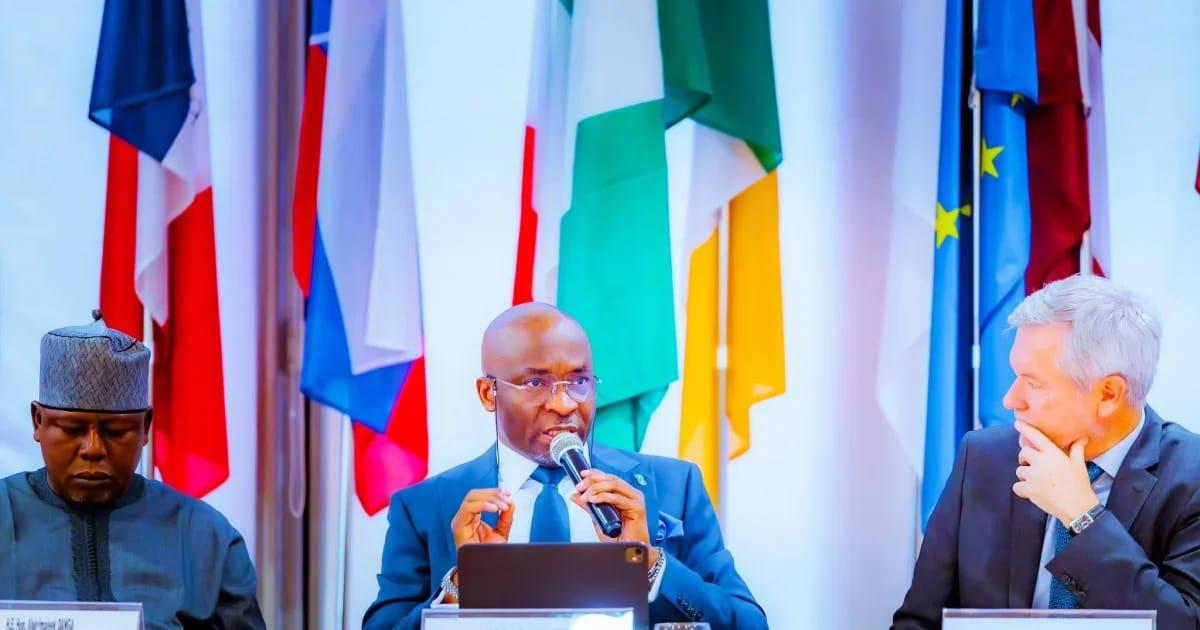
The Deputy Speaker of the House of Representatives, Benjamin Kalu, on Tuesday moved to calm anxieties surrounding the proposed establishment of state police. He affirmed that the constitutional amendment bill currently before the National Assembly incorporates ample safeguards designed to prevent political exploitation and ensure robust accountability.
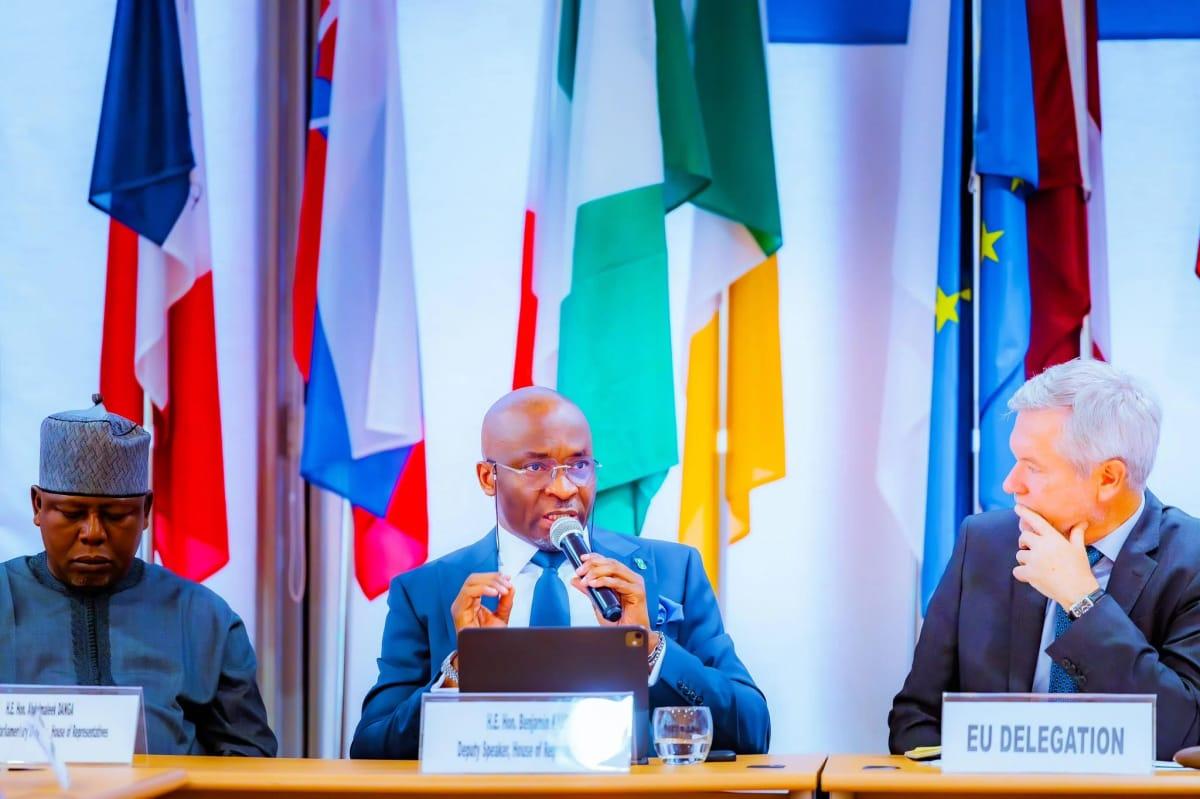
Kalu, who also serves as the Chairman of the House Committee on Constitution Review, offered these assurances during a reception hosted by Ambassador Gautier Mignot, the European Union Ambassador to Nigeria and ECOWAS, in Abuja. At the event, Kalu sought the backing of European Union Heads of Mission for Nigeria’s ongoing process of constitutional reform.
The Deputy Speaker explained that concerns about state governors potentially using state-controlled police formations as tools against political adversaries have been thoroughly addressed within the proposed legislation through a system of constitutional checks and institutional oversight.
A statement released by Levinus Nwabughiogwu, the Chief of Staff to the Deputy Speaker, quoted Kalu as saying: “And to legitimate concerns about abuse; concerns we have heard, including from partners in this room, the bill responds not with assurances but with architecture. Our objective is not simply to decentralise policing; it is to constitutionalise accountability. We have put guardrails in the way the state police are going to be operated. The guardrails will not allow any abuse.”
The proposed creation of state police remains one of Nigeria’s most debated constitutional reform issues. Proponents argue that the country’s highly centralized policing framework is no longer effective in combating escalating insecurity, while critics express fears that state governments could misuse it for political repression.
Advocating for decentralized policing, Kalu contended that Nigeria’s sheer size and population render the current arrangement increasingly unsustainable. He highlighted that Nigeria, spanning 923,768 square kilometres and home to over 230 million people (according to United Nations estimates), is policed by a single, centrally commanded force. This force, he noted, operates far below the United Nations’ recommended ratio of one police officer for every 450 citizens.
“No other federation of our size operates this way; from Germany to India, from Canada to Australia, the world’s great federations police locally and coordinate nationally,” Kalu stated. He further elaborated on Nigeria’s proposal: “Our proposal follows that settled wisdom: a constitutional framework allowing states to establish their own police services, with defined jurisdictions, independent oversight, professional recruitment standards, and coordinated command.”
He reinforced his argument by adding, “I often put it simply: the officer who comes from a community knows its roads, its markets, its people, its tensions. The officer who knows the forest will police the forest.”
The renewed drive for state police comes amidst continuous appeals from governors, security experts, and civil society organizations for comprehensive reforms to Nigeria’s security architecture. These calls are a direct response to the surge in banditry, kidnapping, terrorism, and communal violence across various regions of the country.
Beyond security reforms, Kalu implored the EU to maintain its support for the wider constitutional amendment process, characterizing the exercise as crucial for bolstering democratic governance and enhancing service delivery. He revealed that the constitutional amendment bills have successfully passed through both chambers of the National Assembly and are now at the critical phase of requiring approval from a minimum of 24 state Houses of Assembly before they can be forwarded for presidential assent.
Emphasizing the importance of continued collaboration, Kalu remarked: “In this decisive phase, your continued partnership through technical cooperation, comparative expertise, and the candid counsel that only trusted friends can give matters more than ever.”
He added, “The Office of the Deputy Speaker remains an open door to every mission in this room, and we welcome deeper parliamentary diplomacy between Nigeria and the legislatures of Europe. What we have built together over these years, we can multiply in the years ahead.”
Kalu concluded this point by stating, “For ultimately, the measure of constitutional reform is not the number of clauses amended; it is the number of lives improved because those clauses were amended. When the history of this democratic era is written, let it record that Nigeria did not merely defend its democracy; it deepened it. And let it record that Europe stood with us as we did.”
Additionally, Kalu advocated for support for the Reserved Seats for Women Bill, describing increased female representation in governance as both a democratic necessity and an economic imperative.
He highlighted that women make up 49.3 per cent of Nigeria’s population but occupy only 19 of the 469 seats in the National Assembly. Kalu cited an estimate by the McKinsey Global Institute, suggesting that the full inclusion of women could potentially add up to $229 billion to Nigeria’s economy.
Kalu articulated his conviction: “The bill creates additional seats reserved for women, taking nothing from anyone and adding voices for everyone, and over one million Nigerians have signed documented endorsements of it. My conviction is simple: no democracy is complete while half of its people watch governance from the gallery.”
The Deputy Speaker further identified other significant constitutional amendment proposals, including local government autonomy supported by democratically elected councils and direct fiscal accountability, citizenship reforms aimed at eliminating gender discrimination and introducing citizenship by investment, judicial reforms to enhance independence and expedite justice dispensation, electoral reforms, fiscal restructuring, and expanded human rights protections.
The reception was attended by ambassadors from EU member states and other members of the diplomatic community residing in Nigeria.
Gallery
Comments
(0)0/500 · No URLs or profanity allowed
Deputy Speaker Kalu don tell EU say state police bill get strong kankan to stop abuse from politicians. E also dey push for more women for governance and make local government dem get power, say na for better Nigeria.
Source: Punch NG
Related Stories
Delta State Greenlights N22.69bn Otu-Jeremi/Udu Road Upgrade
Nigel Farage Quits Parliament, Forces Clacton By-Election
Works Minister Umahi: Peter Obi Not a Threat to Tinubu in 2027
Atiku Accuses Tinubu of Complicity in Almajiri Budget, PFIPC Irregularities

EXCLUSIVE(SAHARA REPORTERS): Enugu Deputy Governor's Hometown Residents Battle Filthy Water, Share Stream with Cattle