N1.3bn Fake Agency Budget Scandal: Senate Resumes Tuesday to Deliberate
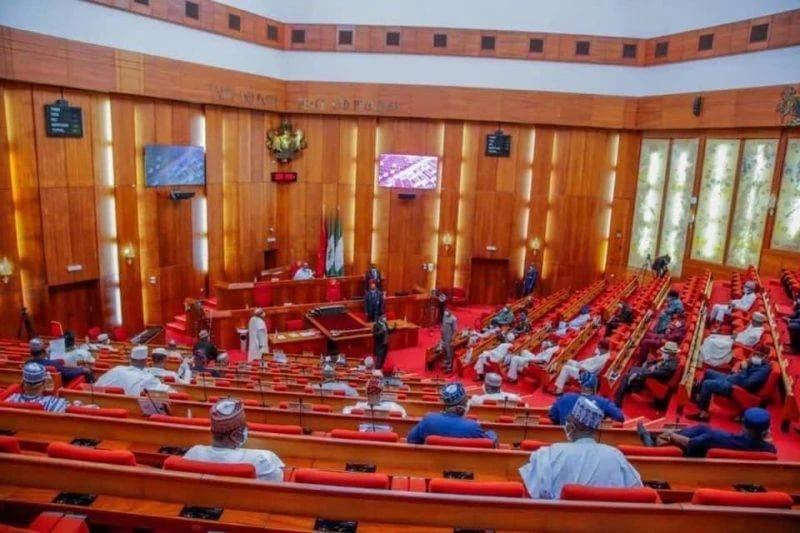
The Nigerian Senate is scheduled to reconvene on Tuesday, where a major agenda item will be the escalating controversy surrounding the N1.3 billion allocated to the alleged Presidential Foreign Intervention Promotion Council in the 2026 Appropriation Act. This development follows revelations by The PUNCH indicating that a fraudulent appointment letter, bearing a falsified signature of the President's Chief of Staff, Femi Gbajabiamila, was reportedly accepted without proper scrutiny at the Civil Service Headquarters. This oversight purportedly facilitated Prince Adeniyi Adeyemi Mathew in securing an office within the Federal Secretariat Complex in Abuja, thereby granting the contentious council an appearance of official government endorsement for over a year.
Sources within the Presidency and the civil service, who spoke anonymously to The PUNCH due to the sensitive nature of ongoing investigations, revealed that the scandal could have been averted if not for multiple failures in bureaucratic safeguards across the Budget Office, the House of Representatives, and the Civil Service Headquarters. These sources contended that the initial failure to thoroughly vet the appointment letter led to the controversial council's entanglement with diplomatic missions, various government ministries, the National Assembly, and private entities.
It was further gathered that the N1.3 billion allocation was approved despite neither Adeyemi nor any other official from the council appearing before the Senate Committee on Establishment and Public Service to defend the proposed budget. A National Assembly insider disclosed on Sunday that the budget entry was facilitated through a "backdoor arrangement." The official stated, "It was not brought in as a stand-alone item. It was done collectively with others that came in directly from the Presidency. So there was no defence or oversight." The source added that the Senate leadership intends to address the dispute on Tuesday to alleviate rising tensions and concerns about potential complicity among its presiding officers.
Presidency and civil service sources provided a detailed account of how the fraud bypassed established bureaucratic checks through the undetected forgery. "The mistake came from several areas, the House of Representatives, the Head of Service, the Budget Office. Most of them did not do due diligence. But you see where you can’t readily blame all of them is what we call grundnorm. There is a foundation. The appointment letter was fake. It was invalid," a Presidency source explained. This source clarified that in government, appointments are typically made by the President, with the Secretary to the Government of the Federation (SGF) issuing the official letter, a process allegedly violated by Adeyemi's forged document.
The constitutional appointment procedure, as detailed by the source, involves the SGF submitting a memo to the President for approval, after which the SGF issues the appointment letter for parastatals directly under the Presidency. For appointments within ministries, the SGF minutes the approval to the relevant minister, who then minutes it to the Permanent Secretary, who finally issues it to the appointee, enabling access to the government payroll. The source stressed that the Chief of Staff has no authority to make appointments at the level of Director-Generals or Permanent Secretaries, as such powers rest solely with the President.
A senior civil servant who reviewed the forged document post-Adeyemi’s arrest indicated that he "exploited the bureaucratic blind spot." This official revealed that Adeyemi forged a letter purportedly signed by the Chief of Staff, Femi Gbajabiamila, though it was not his actual signature, as the Chief of Staff lacks the mandate for such appointments. Adeyemi then presented this fake letter to the civil service headquarters, citing it as justification for an office based on his "terms of reference." The loophole, according to the official, was that while the President’s letter to the SGF or minister isn't usually attached to such requests, officials should have recognized that the Chief of Staff does not possess appointment powers.
The allocation of an office space at the Federal Secretariat, according to the source, significantly bolstered the alleged fraud's credibility. "Once you have an office there, it confers a very high level of legitimacy on you. You can meet big guests there. He had a letterhead and even a website," the official explained, adding that "Once he established that office at the Federal Secretariat, every other thing followed. Nobody tried to do the needful anymore until someone raised the alarm." The official confirmed that Adeyemi’s office was sealed and reallocated after his initial arrest, though he reportedly continued his operations away from the secretariat, with the source stating, "The man was still running the scam after he left the secretariat, but he doesn’t use that place anymore."
A second Presidency source confirmed that officials from the Nigerian Investment Promotion Commission (NIPC) initially uncovered the fraud in October last year, identifying it as "inter-agency rivalry" due to the fictitious council’s encroachment on their statutory mandate. The NIPC subsequently escalated the matter to the Chief of Staff, who disavowed any knowledge of Adeyemi and promptly alerted the Department of State Services (DSS). At a meeting concerning the issue, the Chief of Staff reportedly "swore that he has never met the man and doesn’t even know him. And that his conscience is clear. The Chief of Staff didn’t take it lightly. He followed up until Adeniyi was arraigned in court and put on bail."
However, this source noted that the prosecution’s momentum waned after the initial arrest. "You know, when no one follows the case bumper to bumper, it can become very slow at the police. It was since October last year and when it resurfaced in June, I was surprised, because I believed it had been dealt with." The official also mentioned that several civil servants had independently flagged the operation as a scam, and their reports contributed to alerting the authorities.
A third source offered insight into how Adeyemi might have secured a budget allocation without formal defence. This source attributed it to the high turnover of National Assembly members, suggesting that newer committee members, particularly those on treaties, might lack full awareness of such matters. "He probably knows someone in the National Assembly and told them ‘please allocate something to us too.’ So it appeared like a government organisation that had a letterhead, an office and other things," the official speculated, emphasizing that the fake appointment letter, office, and other elements collectively "conferred legitimacy on him. The whole problem stemmed from that oversight." The source also revealed that Adeyemi had since violated his bail conditions, and the police are expected to re-arrest him, adding, "There is a big document on him from the police."
The N1.3 billion budget allocation to the PFIPC has already sparked significant reactions from civil society organizations and opposition political parties.
Comments
(0)0/500 · No URLs or profanity allowed
Dis N1.3 billion budget wahala for one fake agency don scatter everywhere o! Senate wan finally look into am on Tuesday, make we see if dem go truly carry out justice for dis big fraud.
Source: Punch NG
Related Stories

Oyo APC Unveils Reconciliation Team Led by Lanlehin, Adedoja for 2027

Ondo Governor Aiyedatiwa: Appreciate Family, Friends While Alive

Kwara APC Launches 2027 Election Mobilization with Grand Unity Rally

Dr. Pat Oramah Makes History with Second Term at Abuja Sapphire Rotary Club Helm

Media, CSOs Launch Drive Against Election Misinformation Before Osun, 2027 Polls