Obasanjo: Nigeria Must Prevent Repeat of Civil War Horrors
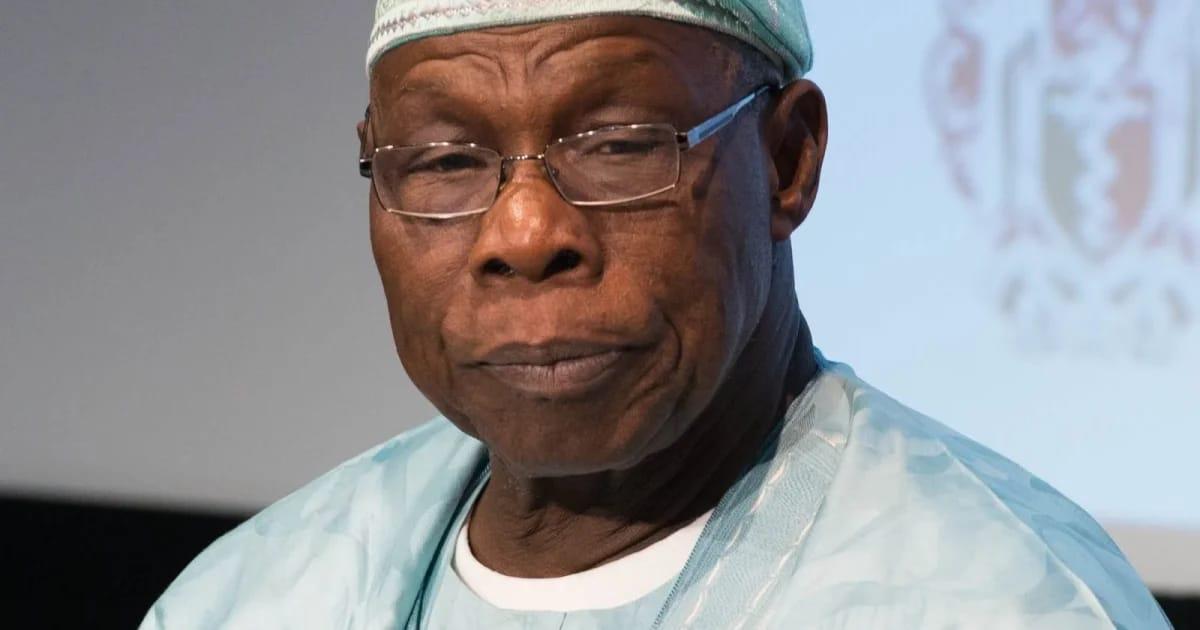
Former President Olusegun Obasanjo issued a stern caution on Wednesday, highlighting that many underlying issues that ignited Nigeria’s three-year civil war in 1967 persist within the country. He underscored the critical need for every possible measure to avert a recurrence of such a devastating conflict, which claimed countless lives and properties.
Obasanjo delivered these remarks at the Olusegun Obasanjo Presidential Library in Abeokuta, where he received a compilation of research materials, videos, eyewitness interviews, and a book documenting the Asaba Massacre and related occurrences. This extensive collection was presented by Chief Chuck Nduka-Eze, Chairman of the Asaba Memorial Trust and the Asaba Image Branding and Project Committee.
The former President described the notion of another civil war as unimaginable, asserting that Nigeria had already endured “one civil war too many.” He stated, “What went wrong in the past is essential to preventing a repeat. We must do everything humanly possible to prevent its recurrence.” He implored Nigerians to collectively adopt a firm “never again” stance against civil conflict. “Some of the things that led to the Civil War are still with us. How long will this remain so?” he questioned.
Recalling a conversation, Obasanjo quoted Gen Yakubu Gowon, who once said, “we would not survive a second civil war as a country.” Obasanjo added, “I believe we have fought one civil war too many already. To say that we will have a second civil war, God forbid. We must understand what happened, condemn what should not have happened, and do everything humanly possible to prevent its recurrence.” He further stressed the importance of understanding historical events to ensure they are never repeated, pledging his personal commitment: “I will do everything possible to ensure that there is never again a civil war in this country.”
Obasanjo lauded Nduka-Eze’s dedication to historical preservation, explaining that documenting the past is crucial for national understanding, learning from mistakes, and preventing future tragedies. He noted that the Olusegun Obasanjo Presidential Library (OOPL) is committed to preserving the past, capturing the present, and inspiring the future, emphasizing that comprehending the events surrounding the civil war, including the Asaba massacre, is vital for national healing.
While acknowledging his role as a soldier during the civil war, Obasanjo admitted he could not provide specific details about the Asaba incident, clarifying that operations in that region were under the command of the late former Head of State, Gen Murtala Mohammed. He recounted being assigned key responsibilities towards the end of the war to prevent further massacres, stressing that soldier abuses were not tolerated. He shared an instance where he personally intervened to stop a soldier from assaulting a civilian, highlighting the significance of leadership accountability during wartime. He also mentioned that Gen Gowon had publicly acknowledged and apologized for the excesses of the war, confirming that actions like the Asaba massacre were neither ordered nor condoned at the highest level.
Obasanjo commended Nduka-Eze’s work and promised to meticulously review the transcripts and audiovisual materials. He reiterated the OOPL’s mission: “At OOPL, we pride ourselves that we preserve the past, we capture the present, and we inspire the future. We capture the past, and this is the past; we want to capture it; we want to know about it.” He confessed, “I must confess, and you know that I was involved in the civil war. When people talk about the Asaba Massacre, I always confess that I cannot give details of it.” He also recounted preventing a soldier from raping a woman in Asaba, noting the vicarious liability such an act would have placed on him as a commander.
Obasanjo concluded by affirming that documenting and teaching the history of the civil war and the Asaba Massacre are indispensable for national unity, pledging to exert all his influence to ensure Nigeria never again experiences such a conflict.
Providing insight into the Asaba Massacre documentation, Nduka-Eze described it as a substantial and thoroughly cross-referenced body of evidence. This includes eyewitness testimonies, recorded interviews, archival materials, audio-visual documentation, and established historical scholarship. He explained that independent sources consistently paint a clear picture of events following the entry of federal troops into Asaba, then a civilian population center in the Mid-West Region.
“The evidence establishes a recurring pattern,” Nduka-Eze stated. Civilians were gathered in public spaces amidst fear and uncertainty, compelled to declare allegiance to the Nigerian state, often instructed to proclaim ‘One Nigeria’ to demonstrate loyalty. In a climate where identity and suspicion dangerously intertwined, these acts were perceived by those present as affirmations of belonging and safety. Subsequently, men were separated from women and children. Unarmed male civilians were then killed in a manner consistently described across multiple independent accounts. “Compliance with these demands did not secure protection,” he lamented. The sequence, repeatedly corroborated across testimonies, reveals a tragic paradox: individuals openly affirming their Nigerian identity and loyalty were nonetheless killed in the most undignified manner by the very state to which they pledged allegiance. This sequence, backed by testimonies, documents, and scholarly works, remains largely unchallenged.
While precise casualty figures remain difficult to definitively fix, Nduka-Eze noted that converging credible evidence points to a substantial loss of civilian life, exceeding a thousand men, and a profound rupture within the Asaba community. He attributed the Asaba Massacre and the 1967 civil war to deep-seated ethnic suspicion, unresolved grievances from Nigeria’s first military coup, and a failure to enforce accountability. Ethnic mistrust, he added, was entrenched even before independence, and many issues that fueled the civil war remain unresolved, with ethnic groups still relating to each other with suspicion.
Gallery
Comments
(0)0/500 · No URLs or profanity allowed
Baba Obasanjo don warn us say make we no allow another civil war for Naija, because the old issues still dey. Him talk say we don fight one too many already, and we gats learn from history to avoid wahala. Make we hope say our leaders go listen and do the right thing for peace.
Source: Punch NG
Related Stories
INEC Guarantees 2027 Elections Free from Ballot Snatching, Manual Manipulation
RMAFC Concludes Salary Review, Recommendations Forwarded to President Tinubu
Tinubu Backs NYSC Reforms, Calls Youth Nation's Driving Engine
INEC Hands Over Access Codes to Nine Parties for 2027 Election Nominations
Nasarawa State Council Sanctions N52 Billion Supplementary Funds for Rural Initiatives