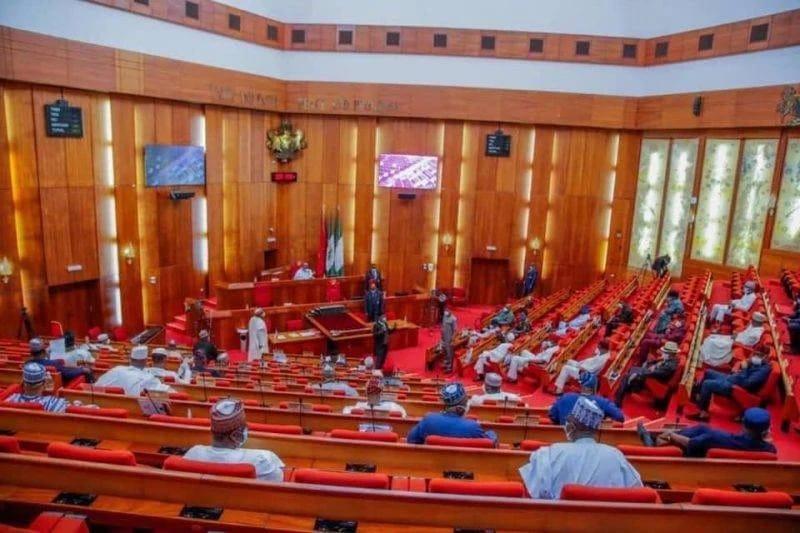
CSO Takes National Assembly to Court Over Electoral Act Party Dispute Clauses
A civil society organization, identified as the Registered Trustees of Constitutional and Democratic Justice Initiative, has initiated legal proceedings against the National Assembly, the Independent National Electoral Commission (INEC), and the Attorney General of the Federation. The lawsuit targets specific provisions within the Electoral Act, 2026, which the organization argues are unconstitutional.
The suit, lodged at the Federal High Court in Ilorin, Kwara State, seeks a judicial order to invalidate Sections 83(5) and 86(6)(b) of the Act. The group contends that these sections unlawfully prevent courts from exercising jurisdiction over matters concerning the internal operations of political parties. This legal action follows the recent enactment of the Electoral Act, 2026, by the National Assembly, which incorporated new clauses designed to bar courts from hearing cases related to political parties' internal affairs.
Central to this legal challenge is Section 83 of the Act, which also grants INEC the authority to oversee political parties and request explanations regarding their activities. Prof. A. O. Sambo, the Director of the organization, released a statement on Saturday, asserting that the National Assembly exceeded its constitutional authority by legislating these contentious provisions.
Sambo stated, “The National Assembly cannot legislate on what the Constitution forbids by shutting the courts out of electoral justice on matters relating to the internal affairs of political parties.” He further elaborated, “Sections 83(5) and 86(6)(b) of the Electoral Act, 2026 violate Sections 4(8) and 6 of the Constitution by overstepping the legislative powers of the National Assembly and limiting the jurisdiction of the courts.”
The claimant is requesting the court to declare these provisions unconstitutional and subsequently set them aside, citing their inconsistency with the 1999 Constitution. Sambo emphasized, “The provisions breach Section 4(8) of the Constitution by overreaching legislative power and Section 6 by choking off judicial oversight.”
The organization believes that if these disputed provisions are allowed to remain in effect, they would effectively deny aggrieved political party members access to justice, particularly in the lead-up to the 2027 general elections. “Political party members whose legitimate ambitions have been truncated without due process should be able to ventilate their grievances in court without the jurisdiction of the courts being ousted,” Sambo argued. He concluded by saying, “Ouster clauses were the forte of military regimes and should not be allowed to find their way into Nigeria’s democracy.”
The case, officially designated FHC/IL/CS/94/26, is scheduled for its first hearing on July 8.
Comments
(0)0/500 · No URLs or profanity allowed
Dis CSO don carry gbege go court say National Assembly do mistake for Electoral Act. Na to see if dem go win, make ordinary people fit get justice for party mata.
Source: Punch NG
Related Stories

NDC Leader Seriake Dickson Foresees Overwhelming 2027 Defeat for Tinubu's APC
After Accident, Kogi NUJ Calls for Journalists' Insurance Scheme

NDC Deregistration Ruling Sparks Appeal Efforts Led by Obi, Kwankwaso

Ekiti Governorship Poll Achieved Global Standards, Rights Watchdogs Affirm

FG Demands Performance Records for Senior Civil Service Promotions