How village diplomacy saved land use act from Agbekoya protests — Obasanjo
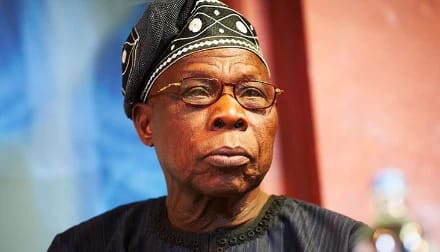
Former President Olusegun Obasanjo has disclosed how a pre-dawn tour of villages around Ibadan, undertaken on the advice of elder statesman Chief Adebo, helped defuse a planned protest by the Agbekoya movement against the Land Use Decree of 1978. He said the new decree survived stiff opposition from both the North and South to become one of the enduring pillars of Nigeria’s constitutional framework. Obasanjo made the disclosure on Saturday at the public presentation of three books in honour of the former Head of State, Gen. Abdulsalami Abubakar (retd.), held at the Banquet Hall of the Presidential Villa, Abuja, to mark Abubakar’s 84th birthday. Recalling the climate of resistance that greeted the decree when it was promulgated during his military administration, Obasanjo said both the north and south opposed the idea immediately. “When the Land Use Act was promulgated as a decree, a colleague came to me and said nobody liked it. The North didn’t like it, the South didn’t like it,” he recalled. He said the situation escalated when reports emerged that the Agbekoya movement in the South-West, a powerful farmers’ association with a history of confronting government policy, was mobilising for protests against the legislation. Faced with the prospect of unrest, Obasanjo said he turned to Chief Adebo for counsel. “The elder statesman advised me to engage directly with the people instead of relying on intermediaries,” he said. What followed, he explained, was a personal, overnight intervention that saw him travel into the heart of Agbekoya territory before sunrise. “I left Lagos at about 2 am, got to Ibadan before dawn and visited villages to meet Agbekoya leaders in their homes. “By about 8 am, I had visited more than a dozen villages explaining the policy to them,” he said. The direct engagement, he noted, achieved what intermediaries could not do. “That was how we were able to suppress the protest against the Land Use Decree, and that is why the Land Use Act has endured till today,” he said. Obasanjo who used the story to underscore the value of consultation and direct engagement in governance, the bulk of his remarks were devoted to situating Abubakar within a small group of military leaders he credited with shaping the survival and direction of modern Nigeria. He named former Head of State Gen. Yakubu Gowon, the late Gen. Murtala Mohammed, the late Lt-Col. Adekunle Fajuyi and Abubakar as the four military leaders whose actions were most instrumental to the country’s history. • NAFDAC issues safety alert on 90,000 bottles of US children’s Ibuprofen recall • Soludo’s wife, Fidelity Bank empower 2,000 Anambra women, children • Tinubu condemns death of retired general Rabe in kidnappers’ custody On Gowon, Obasanjo said his handling of the crisis that followed the 1966 counter-coup and the subsequent civil war was central to preserving Nigeria’s unity. Murtala Mohammed, he said, accelerated Nigeria’s return to democratic governance and elevated the country’s standing both domestically and internationally. He praised Fajuyi for what he described as uncommon courage and loyalty to national unity, recalling that the former military governor of the old Western Region chose to die alongside Head of State Gen. Johnson Aguiyi-Ironsi during the violence of 1966 rather than abandon him. Obasanjo also acknowledged the role of consultation with respected national elders during his time as military Head of State, citing the late Sultan of Sokoto, Sir Kashim Ibrahim, and Chief Adebo as figures whose counsel shaped his approach to difficult national decisions. He recalled that engagement with the Sultan of Sokoto helped the government navigate the politically sensitive question of state support for pilgrimage to Mecca during the economic downturn of the late 1970s, as well as concerns surrounding the participation of women in elections in Northern Nigeria. He said these experiences reinforced for him, decades later, the importance of dialogue, consultation and inclusive leadership in governance. These qualities, he said, were embodied in Abubakar’s own conduct in office. Obasanjo congratulated Abubakar on his 84th birthday and on the publication of his autobiography and the two accompanying volumes, describing the books as important contributions to preserving Nigeria’s political history and educating future generations on the country’s democratic journey. Saturday’s event, themed “The Legacy of a Statesman @84,” featured the public presentation of three books: ‘Call of Duty: An Autobiography of Gen. Abdulsalami Alhaji Abubakar,’ with a foreword by former military President Gen. Ibrahim Babangida; ‘Nigeria’s Grand Patriot: Gen. Abdulsalami Alhaji Abubakar’; and ‘Mediating for Peace in Africa: A Festschrift in Honour of Gen. Abdulsalami Abubakar,’ reviewed by Professor Ibrahim Gambari, CFR. The programme was chaired by Gen. Yakubu Gowon, GCFR, and featured a keynote address on “Democratic Transition and Peace Building in Africa: The Place of General Abdulsalami Alhaji Abubakar,” delivered by former South African President Thabo Mbeki. President Bola Tinubu attended as Special Guest of Honour and, in his remarks, directed the Minister of the Federal Capital Territory to allocate land along Airport Road in Abuja for an Abdulsalami Abubakar African Resource Centre, pledging federal funding for its construction. The Land Use Act, first promulgated as a decree in 1978 during Obasanjo’s military administration, vested ownership of all land in each state in the governor, to be held in trust for the people. Despite the controversy that initially greeted its introduction, the law was eventually entrenched in the 1999 Constitution. Abubakar, who served as Nigeria’s 11th Head of State following the death of Gen. Sani Abacha in June 1998, oversaw the transition that restored civilian rule, handing over to Obasanjo as elected President on May 29, 1999.
Comments
(0)0/500 · No URLs or profanity allowed
Former President Olusegun Obasanjo has disclosed how a pre-dawn tour of villages around Ibadan, undertaken on the advice of elder statesman Chief Adebo, helped defuse a planned protest by the Agbekoya movement against the Land Use Decree of 1978. He said the new decree survived stiff opposition from
Source: Punch NG
Related Stories

HEDA urges political actors to uphold June 12 legacy
Abdulsalami Says Abiola Was Never Set To Be Sworn In Immediately Despite June 12 Victory
Ekiti State Elders Urge Peaceful Governorship Election
Ekiti Governorship Election: ADC Exudes Confidence in Upset Victory
Security crisis result of poor governance, poverty – Bauchi gov