Abdulsalami Says Abiola Was Never Set To Be Sworn In Immediately Despite June 12 Victory
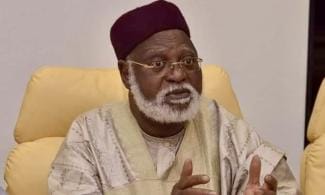
Former military Head of State, General Abdulsalami Abubakar (Retd.), has revealed that his administration was considering several political options following the death of General Sani Abacha in 1998, but did not plan to immediately swear in Chief Moshood Kashimawo Olawale Abiola as president despite widespread calls for his mandate to be recognised. In excerpts from his autobiography, Call of Duty, due for public presentation in Abuja, Abdulsalami disclosed that his government was consulting stakeholders on how to resolve Nigeria's prolonged political crisis after Abacha's death. According to him, various options were being considered regarding Abiola's future, including the formation of a Government of National Unity, the commencement of a fresh transition programme, or assigning Abiola a significant role in the incoming Fourth Republic. The former military ruler acknowledged that some stakeholders had advocated the immediate inauguration of Abiola based on his victory in the annulled June 12, 1993 presidential election. However, he said his administration preferred consultations before taking any decision. The revelation has renewed debate over whether the military establishment ever intended to transfer power to Abiola, whose victory in the June 12 election is widely regarded as Nigeria's freest and fairest poll. Abdulsalami also narrated the circumstances surrounding Abiola's death on July 7, 1998, during a meeting with a visiting United States delegation led by former US Ambassador to Nigeria, Tom Pickering, and Susan Rice. According to him, the American delegation had insisted on seeing Abiola during its visit to Nigeria following Abacha's death. "A U.S. delegation had visited Nigeria in July 1998 to assess the political situation after the death of General Abacha," Abdulsalami wrote. "They complained that they requested to see Abiola but were denied access to him. Meeting with Abiola was a major reason for their visit to Nigeria in the first place." The former Head of State said he was surprised to learn the request had been denied. "I immediately called my CSO, Abdulrasheed Aliyu, and instructed him to arrange for them to see Abiola," he stated. 'My head went blank' Abdulsalami recounted receiving a call informing him that Abiola had died during the meeting. "Aliyu, my CSO, called me. As soon as I picked, he said, in a shaky voice, that there was a problem. I asked: 'What problem again?' He said Abiola was dead. My head went blank." According to him, Abiola became restless during the meeting. "He said Abiola suddenly became restless and started coughing and sweating during the meeting and later died at the State House Clinic." The former military leader said the development left him devastated. "I started thinking of many things at the same time. This was the most unexpected turn of events. The peace we were building was still so fragile and now this happened. We did not bargain for this." "We were making progress trying to resolve the political crisis and this was going to be a spanner in the works. I wished it was a dream. I was devastated." Breaking the news to Abiola's family Abdulsalami said he informed Vice Admiral Mike Akhigbe, then his deputy, and Secretary to the Government of the Federation, Alhaji Gidado Idris, before contacting Abiola's family. "It was tough breaking the news to the family," he wrote. "When I did, one of his daughters started crying profusely and was shaking uncontrollably. I held her and placed her head over my shoulders. She was inconsolable." He added that Susan Rice helped comfort the grieving family member. "Rice said to me that she wanted to help. She took over, held the lady and consoled her." Reflecting on the circumstances of Abiola's death, Abdulsalami argued that allowing the US delegation to see him helped dispel potential suspicions. "If we had not allowed the American delegation to see him and he had died in custody, it would have been a different story. It would have been insinuated that he had long died and we were trying to cover it up." Rejects poisoning claims The former Head of State also dismissed long-standing allegations that Abiola was poisoned. "It did not stop the conspiracy theories in any case," he wrote. He referenced claims that vested interests had orchestrated the deaths of both Abacha and Abiola to resolve the political impasse but rejected such assertions. "It was also alleged that after they had taken Abacha out and NADECO insisted on Abiola being released and inaugurated as President, the supposed interests decided to take out Abiola a month later to 'balance the equation'." "Whoever came up with this theory was being uncharitable to both Abiola and the Federal Government," he added. Abiola, winner of the annulled June 12, 1993 presidential election, died on July 7, 1998, while in government custody, a month after Abacha's sudden death. His death triggered widespread protests and unrest, particularly in Lagos, amid persistent allegations that he had been poisoned, claims successive governments have denied.
Comments
(0)0/500 · No URLs or profanity allowed
Former military Head of State, General Abdulsalami Abubakar (Retd.), has revealed that his administration was considering several political options following the death of General Sani Abacha in 1998, but did not plan to immediately swear in Chief Moshood Kashimawo Olawale Abiola as president despite
Source: Sahara Reporters
Related Stories

HEDA urges political actors to uphold June 12 legacy
Ekiti State Elders Urge Peaceful Governorship Election
Ekiti Governorship Election: ADC Exudes Confidence in Upset Victory
Security crisis result of poor governance, poverty – Bauchi gov
National Assembly Fails to Deliver on 68 Key Promises