What Happens to Your Brain When You Scroll TikTok for Hours?
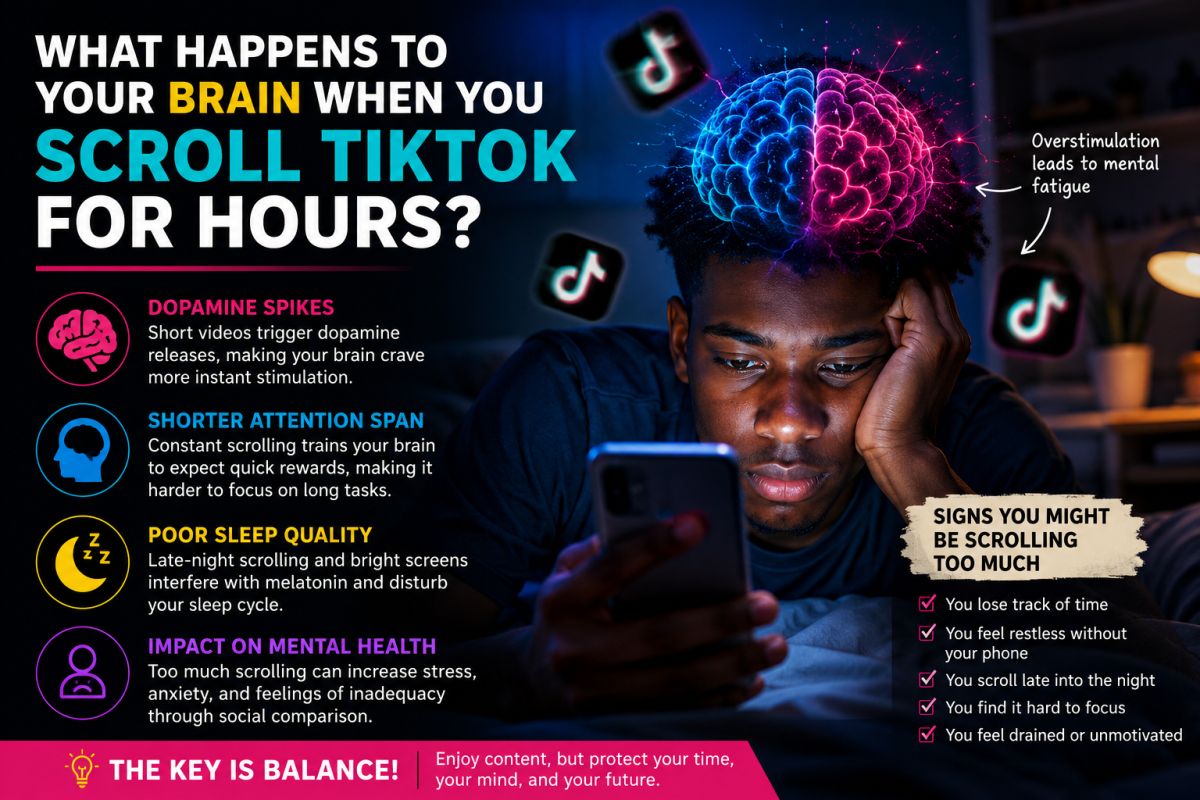
What Happens to Your Brain When You Scroll TikTok for Hours?
TikTok has become one of the most addictive social media platforms in the world. From comedy skits and dance videos to relationship advice, celebrity drama, and viral trends, millions of Nigerians spend hours scrolling through endless content every day.
What often begins as “just a few minutes” can quickly turn into hours without people realizing how much time has passed.
But experts say excessive scrolling may be affecting the brain in ways many people do not fully understand.
Why TikTok Feels So Addictive
One major reason TikTok keeps users engaged is its powerful algorithm. The platform studies viewing habits, likes, comments, and watch time to continuously deliver personalized content.
This creates an experience where users constantly encounter videos that match their interests.
Every swipe introduces:
New entertainment
Emotional reactions
Surprises
Trending discussions
The unpredictability keeps the brain craving “one more video.”
Psychologists compare this pattern to the reward systems linked to gambling and other addictive behaviors.
The Dopamine Effect
When people watch entertaining or emotionally stimulating videos, the brain releases dopamine — a chemical associated with pleasure and reward.
Dopamine plays an important role in motivation and enjoyment. However, constant stimulation from short-form videos may train the brain to seek continuous instant gratification.
Over time, this can reduce patience for slower activities such as:
Reading books
Studying
Long conversations
Deep work
Watching lengthy educational content
Some experts believe excessive short-form content consumption may weaken attention spans.
Attention Span Is Changing
One of the biggest concerns surrounding TikTok usage is its impact on concentration.
The platform’s fast-paced design encourages users to process large amounts of information rapidly. Videos often last only seconds before viewers move to the next one.
As a result, some people now struggle to stay focused during:
Meetings
School lectures
Work tasks
Long videos
Reading sessions
The brain gradually becomes accustomed to constant stimulation and quick entertainment.
This is why many users instinctively reach for their phones during moments of boredom.
Sleep Patterns Can Be Affected
Late-night TikTok scrolling has become common among many young Nigerians.
People often continue watching videos long after intending to sleep. The combination of bright phone screens and mental stimulation can interfere with healthy sleep patterns.
Poor sleep may contribute to:
Fatigue
Mood swings
Reduced concentration
Increased stress
Lower productivity
Many users also report waking up and immediately checking social media before starting their day.
Social Comparison and Mental Health
TikTok constantly exposes users to curated lifestyles, beauty standards, luxury experiences, and success stories.
While entertaining, continuous exposure can sometimes trigger:
Anxiety
Low self-esteem
Fear of missing out (FOMO)
Financial pressure
Unrealistic expectations
Young people are especially vulnerable to comparing their lives with influencers and online personalities.
Experts warn that social media can distort perceptions of reality because most users only share highlights of their lives.
TikTok Is Also Creating Opportunities
Despite concerns, TikTok has also become a major source of opportunity for many Nigerians.
The platform now helps people:
Build businesses
Promote music
Gain visibility
Create careers
Learn new skills
Earn income through content creation
Many small businesses use TikTok marketing to attract customers and increase sales.
For creators, the app has become a powerful tool for building audiences quickly.
Finding Balance Matters
Experts say the problem is not necessarily TikTok itself, but excessive and uncontrolled usage.
Healthy habits may include:
Limiting screen time
Taking social media breaks
Avoiding late-night scrolling
Prioritizing offline activities
Consuming educational content intentionally
Creating boundaries can help users enjoy entertainment without becoming overly dependent on constant digital stimulation.
Why This Conversation Is Growing
As social media usage continues rising globally, more researchers are studying how digital platforms influence mental health and brain behavior.
Parents, schools, and employers are also becoming increasingly concerned about:
Reduced attention spans
Digital addiction
Productivity challenges
Online anxiety
The conversation is likely to grow as short-form content becomes even more dominant online.
Final Thoughts
TikTok has transformed entertainment, communication, and internet culture in remarkable ways. The platform provides creativity, humor, education, and opportunities for millions of users worldwide.
However, excessive scrolling may also affect attention spans, sleep quality, mental health, and productivity if left unchecked.
As digital platforms become more powerful, learning how to balance online entertainment with healthy offline habits may become one of the most important challenges of the modern generation.
Gallery
Comments
(0)0/500 · No URLs or profanity allowed
TikTok has become one of the most addictive social media platforms in the world. From comedy skits and dance videos to relationship advice, celebrity drama, and viral trends, millions of Nigerians spend hours scrolling through endless content every day. What often begins as “just a few minutes” can quickly turn into hours without people realizing how much time has passed. But experts say excessive scrolling may be affecting the brain in ways many people do not fully understand. Why TikTok Feels So Addictive One major reason TikTok keeps users engaged is its powerful algorithm. The platform studies viewing habits, likes, comments, and watch time to continuously deliver personalized content.
Related Stories

A Nation Slowly Losing Its Soul: Nigerian at a cross road.

Who Is Really In Charge of Nigeria?

Nigeria Is Bleeding: How Many More Nigerians Must Die Before the Government Acts?

Sleeping With Married Women
Why More Young Nigerians Are Quitting Traditional Jobs