Trump's Ankara Visit Could Boost Turkey's Jet Engine Acquisition, Analysts Predict
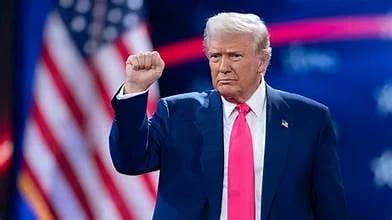
U.S. President Donald Trump's upcoming visit to Ankara for the NATO summit is generating buzz, with analysts suggesting it could pave the way for Turkey to acquire crucial fighter jet engines. However, experts believe the trip, scheduled for July 7-8 and hosted by Turkish President Recep Tayyip Erdogan, is unlikely to resolve the long-standing F-35 dispute that has strained U.S.-Turkey relations. The summit will bring together leaders from NATO’s 32 member nations.
Last month, President Trump hinted at a positive outcome for Erdogan, stating he would make him "very happy" when questioned about Turkey's interest in securing F110 jet engines and its potential readmission to the F-35 fighter jet program. According to observers, this likely signifies the unblocking of a supply of fighter jet engines that Turkey intends to utilize for its ambitious KAAN stealth fighter project.
Sinan Ulgen, who directs the Istanbul-based Edam think tank, confirmed this outlook to AFP, saying, "It’s likely to be the green light for the F110 GE engines for the KAAN fighter plane, about 40 of them. There had been obstacles to that supply, and very possibly those are now being removed." He further explained that while Turkey has already flown a couple of KAAN prototypes with F110 engines, it has been awaiting further engine supplies to scale up its KAAN production. The KAAN, a twin-engine stealth fighter, is being developed by Turkish Aerospace Industries (TAI) to eventually replace the Turkish Air Force's F-16 fleet. Ankara aims to join the elite group of nations, including the U.S., China, and Russia, that produce fifth-generation combat aircraft.
Although Turkey plans to eventually equip the KAAN with its own domestically manufactured engine, a project Defence Minister Yasar Guler stated in September is still in its preliminary design phase, the F110s are crucial in the interim despite lacking stealth capabilities. Guler also revealed that Turkey received an initial batch of 10 F110s in September, with discussions to procure an additional 80 units currently "ongoing" with the U.S. government.
However, progress on these acquisitions has been stalled due to a lack of political clearance, stemming from Turkey's controversial 2017 purchase of Russia's S-400 missile defense system. Foreign Minister Hakan Fidan, speaking in September, highlighted this impediment. Washington reacted strongly to the S-400 deal, expelling Turkey from the F-35 fighter jet program in 2019 and imposing CAATSA sanctions a year later, which have since hampered Turkish defense initiatives and strained bilateral ties.
Fidan reiterated the necessity of resolving the CAATSA issue, stating, "The CAATSA issue must be resolved. The US needs to take steps both regarding the F-35 and the engines for KAAN. KAAN’s engines are currently awaiting approval in the US Congress." These comments reportedly raised eyebrows in Turkey, given the government's previous emphasis on the KAAN being entirely domestically produced. Ankara's exclusion from the F-35 program has undeniably driven its focus towards achieving greater self-sufficiency in defense.
Ozgur Unluhisarcikli, head of the German Marshall Fund in Ankara, supports this view: "Some argue we should not buy F-35s and invest that money into our own fifth-generation fighter jet programme. And that’s exactly what’s happening with President Trump’s decision to export jet engines." He emphasized the critical role of these engines, adding, "Without those engines, Turkey cannot produce the KAAN jet."
While a full KAAN delivery is still many years away, Indonesia has already placed a significant order, signing a $10 billion contract for 48 fighters. The upcoming NATO summit could potentially generate further international interest. Ulgen noted, "Looking at the failure of the German-French FCAS initiative, there may be some interest. Spain could potentially become a partner, and there may be interest from the Gulf as well… But there are more obstacles to be overcome for it to become a credible offer on the international stage."
Despite the potential for engine deals, experts foresee minimal progress on the lingering F-35 dispute. For Congress to lift the CAATSA sanctions, Ankara would typically need to divest itself of the S-400 system. However, selling it to a third country would require Moscow's consent, and returning it to Russia is not considered a viable option. Professor Mustafa Aydin, an international relations expert at Istanbul's Kadir Has University, commented, "The US administration might wish to… put this issue behind it and sell Turkey some F-35, but that will go to Congress and changing the congressional decision won’t be easy."
Conversely, Matthew Bryza, a retired U.S. envoy and former senior White House and State Department official, suggested that Trump, as an executive decision, could easily reverse the F-35 matter. He clarified, "President Trump can certainly declare that the S-400/F-35 dispute is finished. It’s the CAATSA sanctions that require congressional action. Whether he can persuade Congress to do that depends on how much political capital he’s willing to expend." Bryza cautioned that such a move could be "politically costly in the lead-up to the midterm elections," particularly due to opposition from the Greek and Armenian diaspora in the U.S.
Comments
(0)0/500 · No URLs or profanity allowed
Dis matter of Trump and Turkey jet engines na big one for international politics. Dem say Trump fit help Turkey get their jet engines, but the real wahala with F-35 still dey. We go dey watch if dis political dance go finally settle anything or na just talk.
Source: Punch NG
Related Stories
Meghan, Children Skip Prince Harry's London Trip Amid Security Row
Tragedy Strikes Florida Beach as Lightning Claims One Life
Tibetan Protester Self-Immolates Near UN Headquarters in New York
Tehran Prepares for Grand Funeral of Supreme Leader Khamenei After US-Israeli Strikes

Phakel Umthakathi, SA Anti-Migrant Activist, Plans African Tour to Spur Accountability