Toronto Chokes as Canadian Wildfires Bring Worst Air Quality Globally
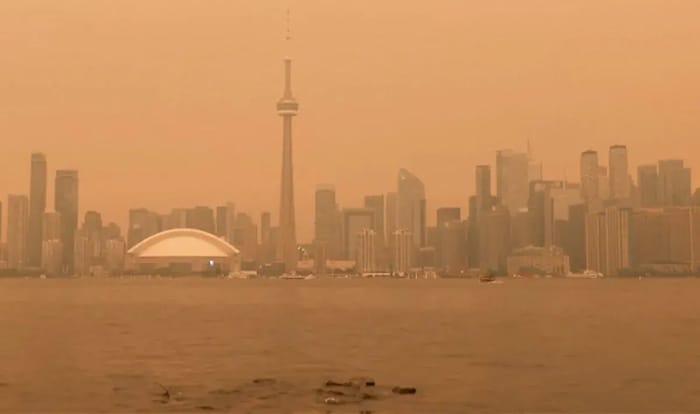
A thick blanket of smoke from raging wildfires in northwestern Ontario has engulfed Toronto, rendering the city's air quality the worst among major cities worldwide. This hazardous condition has prompted widespread health warnings and disruptions to public events. Environment Canada has issued an Air Quality Health Index reading of 10+, categorizing the situation as 'very high risk,' with the smoke expected to persist through Thursday night. The origin of the smoke is hundreds of wildfires burning across sparsely populated areas of northwestern Ontario and other central Canadian provinces, although none of these fires directly threaten major cities. Despite this, the smoke has spread across vast areas, significantly reducing air quality. According to IQAir, a Swiss air quality technology company, Toronto surpassed Kinshasa and Delhi to become the city with the worst air quality globally. New York City ranked fifth, with the deteriorating air conditions also affecting the city and neighboring states ahead of the FIFA World Cup final in New Jersey. Local authorities have issued air quality alerts, advising residents to reduce strenuous outdoor activities. Dan Westervelt, Lamont associate research professor at Columbia University, warned, 'We probably haven’t seen the worst of it yet for New York City. We probably haven’t seen the worst of it yet for the Great Lakes and upstate and New England yet either.' The worsening air quality has forced Toronto officials to cancel the FIFA Fan Festival and the England-Argentina World Cup watch party. New York Governor Kathy Hochul has encouraged vulnerable residents to exercise caution and minimize outdoor exposure due to the unhealthy air conditions. The Canadian wildfires have also disrupted transportation and outdoor recreation in northern Ontario, with a video showing a Canadian National freight train surrounded by flames. Two groups of children from Minnesota participating in a YMCA wilderness camping trip were stranded but have since been rescued. The Government of Canada noted that the 2026 wildfire season started more slowly than the devastating seasons of 2023 and 2025 but warned that above-average temperatures would increase wildfire risks. About 1.9 million hectares of land have already been destroyed, with most fires concentrated in Manitoba, Saskatchewan, and Ontario. Experts warn that severe smoke events will become increasingly common due to climate change. Professor Greg Evans of the University of Toronto stated that the city is experiencing the combined effects of extreme heat and wildfire smoke, expecting such events to occur more frequently. Toronto resident Paula Oreskovich expressed concern over climate change, saying, 'I think you have to be silly if you’re not going to be concerned about climate change. It’s definitely here, it’s definitely happening, and it’s happening globally.'
Comments
(0)0/500 · No URLs or profanity allowed
Wildfire wey dey Canada don make air for Toronto worse pass any city for world, and e dey affect US cities too - na climate change be dis, and we must take am serious.
Source: Arise TV
Related Stories

US Military Introduces Mandatory Testosterone Checks for Troops Over 30
Mpox Resurgence: What Nigerians NEED to Know to Stay Safe!

Dele Oye Warns Nigeria Needs $2.3 Trillion To Tackle Infrastructure Crisis

56yrs old man was arrested for illegally dumping refuse into a drainage in Lagos

Yobe State Government Expands Health Insurance to Retirees