Security Bills for Nigerian Crude Outstrip Production Costs, Duke Alleges
Full Story
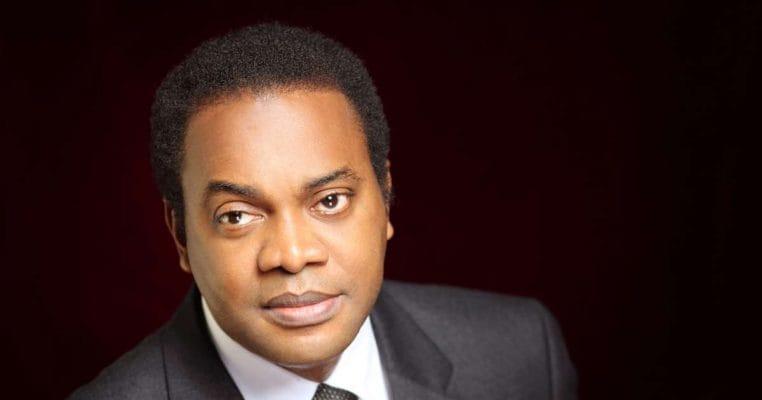
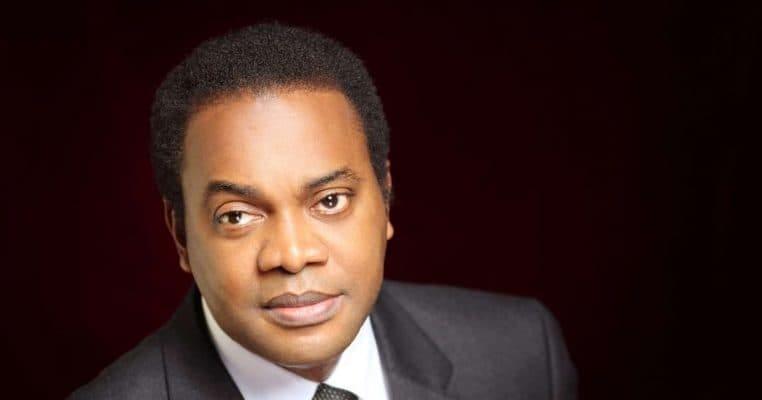
Former presidential candidate of the People’s Redemption Party, Donald Duke, has asserted that Nigeria allocates more resources to safeguarding its crude oil assets than to the actual process of extracting them. Speaking on Thursday during an interview with ARISE NEWS, Duke contended that the substantial expenditure on security, coupled with the deteriorating state of infrastructure, has inflated production costs and contributed significantly to the high price of petrol in the country.
Duke, who previously served as the governor of Cross River State, posited that a strategic reduction in the expenses associated with crude oil production and refining could lead to lower petrol prices, thereby alleviating the prevailing cost of living for Nigerians. He elaborated, stating, “The actual production cost of a crude in Nigeria is anywhere between $12 and $15. What takes it up to $25 or $45 is security costs and dilapidated infrastructure. So you’re paying more for security than producing the oil and even the NNPC says that they’re trying to bring it down to $20 a barrel. So in other words, the oil producing companies have added the security. You can’t tell me that you pay about $10 or $15 to secure one barrel that is produced actually between $12 and $15.”
The politician stressed the importance of government prioritizing the economic productivity of its citizens. This, he argued, would necessitate addressing the underlying factors that escalate the cost of essential commodities and services. Duke remarked, “I think the fundamental objective of government is the productivity of its citizens. So you’ve got to tackle all the things that are inimical to the productivity of your citizens.”
He identified energy as a pivotal element for economic output, questioning why Nigerians continue to bear high petrol costs despite the nation's abundant crude oil reserves. "Now, energy is a kernel of it. Energy, capital, those things are very important. You’re an oil producing country. Supposedly you produce 1.7, 1.8 million barrels a day,” Duke pointed out.
**Clarification on N300 Petrol Price Proposal**
Duke also took the opportunity to clarify his earlier proposition regarding petrol pricing, stating that his target was N300 per litre, not N200. He suggested that revenue generated from other petroleum products could be utilized to further subsidize and reduce the price of petrol. According to him, “The point is, the margins that you make from other products, you can even use it and further dampen the price.”
Detailing his proposed model for calculating refined petroleum product prices, Duke outlined specific cost components. He mentioned, “Transportation takes it to $38. The refining costs about $10 a barrel. So that gives you $48.” He further advocated for leveraging additional income from petroleum by-products as part of his strategy to lower petrol prices.
However, Duke conceded that achieving the N300 per litre target might now be impractical due to existing crude oil forward sale commitments made by the government. He explained, “The 300 figure is not tenable because the APC government, right, did a forward sale that didn’t make sense. But the reality is that you now have to blend. And if you blend it to say 700, 700 is still far better than 1,300.”
To mitigate transportation expenses, he proposed that the government should acquire available domestic crude oil and procure supplementary supplies from producers currently operating within Nigeria. “If you don’t have the Nigerian crude, which is the fault of the same government, it’s APC. I’m coming, I’m coming. If you don’t have that crude, then you now go into the blended. What do you have and what can you buy? And try and buy it from the producers in Nigeria if they will allow you. So that at least you gain on freight,” Duke elaborated.
He also put forward a "contract-refining" framework, where the government would provide crude oil to a refinery, pay an agreed processing fee, and then take ownership of the resulting refined products. Duke stated, “Now, you contract refine. Recall, several years back, we used to swap crude for products, right? So it’s literally the same thing. You swap this, and I gave you my breakdown that it’s $10 maximum. I’m using the maximum here, $10 per barrel for refining. So it’s not, and it’s your crude. So you’re giving the refinery and saying, look, we agree on a price. I pay you that price. The product is mine. I know the by-products and how I distribute it, how I sell it, you know, it is left to me.”
Duke reiterated his belief that a substantial reduction in petrol prices remains feasible, even if the N300 goal is no longer realistic. He affirmed, “If you take what you have and buy it back from your JV, JV partners and blend and put it together and blend the prices, the average, it will not be 300. It will be far less than what you’re paying today.” When queried about a more realistic price point, Duke suggested, “Benchmark. Yes. If you’re not, if the crude is not yours,” implying N700 or N800 per litre could be a benchmark in such a scenario.
**Tackling Smuggling with Fuel Dyeing**
Regarding concerns that lower domestic petrol prices could encourage smuggling to neighboring countries, Duke dismissed this argument. He instead proposed fuel dyeing as a solution to deter illicit cross-border movement of petroleum products. He challenged the premise, saying, “Are you going to punish your citizens for your inability to map your borders? Let me give you another solution. You see, as a government, you must constantly think of solutions to pr[oblems].”
Gallery
Comments
(0)0/500 · No URLs or profanity allowed
Donald Duke don yarn say Nigeria dey spend too much money to guard oil pass the money dem dey use produce am. E say na why petrol price high, and e drop some ideas on how dem fit bring am down. We go see if government go listen and try any of these solutions.
Source: Punch NG
Related Stories
IMF Labels Nigeria's Petrol Subsidy Reinstatement 'Regressive'
Shettima Affirms Transparency in Oil Block Awards, Cites Friend's Case
Federal Government Targets Uninterrupted Electricity in Key Demand Centres

Nigerian Refinery Owners Urge Halt to Fuel Imports, Push for Export Ambition

Governor Otti Defends Fuel Subsidy End, Warns Reversal Will Hurt Nigeria