Power Sector Fix: REA Chief Highlights Nigeria's $23 Billion Funding Gap

Full Story
Nigeria’s electricity challenges are set to intensify as a booming population, the advent of artificial intelligence, widespread digitalization, and the increasing electrification of critical sectors like transportation and agriculture are fueling an unprecedented surge in demand. This stark warning was issued by the Rural Electrification Agency (REA).
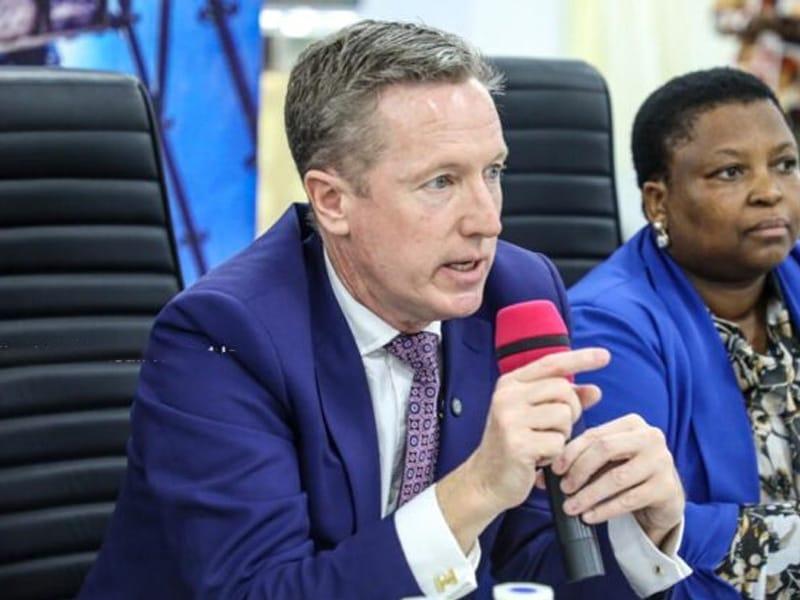
Abba Aliyu, the Managing Director of the REA, delivered this crucial message on Friday in Abuja during the formal signing of a collaborative agreement between the agency and Alpha Morgan Bank. Under this new partnership, Alpha Morgan Bank has committed up to N50 billion in financing specifically for developers focusing on renewable energy projects. Aliyu explained that this agreement is a strategic move to bridge the substantial funding deficit plaguing Nigeria's electricity sector, especially in remote and underserved communities where millions of homes and businesses still lack consistent power supply.
Under the terms of the arrangement, eligible developers participating in REA initiatives, including the Distributed Access through Renewable Energy Scale-up project, will gain access to revolving loans, with individual limits of up to N10 billion. These loans are contingent on the bank's standard credit assessment and approval processes. Alpha Morgan Bank will also contribute up to 70 percent as counterpart funding for qualifying projects, with proposed loan repayment periods ranging from 12 to 24 months.
However, Aliyu emphasized that the N50 billion facility represents only a fraction of the total investment needed to tackle Nigeria's power scarcity. He revealed that the nation requires an estimated $23 billion in additional capital to significantly enhance electricity access and ensure supply reliability. He stated, “Currently, this era is being termed as the era of electricity. Electricity is going to drive almost every single thing that we are going to do. Electricity will drive transportation, electricity will drive agriculture, electricity will drive health, education and everything we do.”
Aliyu further elaborated on future demand drivers, saying, “So, when you look at the future, three factors are going to be the main drivers of increasing electricity demand. Population growth is one. Beyond that, there are the two other factors: electrification of everything, digitisation, AI and data centres. And this is profound. This is one of the things that will make the need for electricity continue to grow drastically, beyond any level that we have seen.”
The REA boss highlighted that Nigeria's population is expanding at a faster pace than its electricity infrastructure, exacerbating the country’s existing power access issues. He noted that the increasing adoption of artificial intelligence and the proliferation of data centers would place additional strain on power grids, asserting that dependable and affordable electricity would increasingly become a vital economic advantage.
According to Aliyu, the global shift towards electricity is also accelerating investments in renewable energy, driven by the continuous decline in the costs of solar generation and battery storage. He remarked, “One of the things that keeps making renewable energy continue to grow and remain the fastest-growing source of electricity generation is that the cost of using solar to generate electricity has kept going down. This is going to continue because technology keeps improving, particularly in photovoltaic manufacturing and battery storage. Solar will continue to be a dominant source of electricity generation.” He pointed out that numerous countries are already making substantial investments in electricity infrastructure to support AI, manufacturing, and data centers, urging Nigeria to similarly prioritize electricity as a strategic element of its infrastructure and economic development strategies.
President Bola Tinubu has already approved a $750 million renewable energy intervention program aimed at deploying 1,350 mini-grids and extending electricity access to approximately 2.5 million Nigerians, a program currently in its second year of implementation. Despite these efforts, the REA boss underscored that the available financing remains insufficient. “But still, what is required to address the electricity challenge in Nigeria and to enhance reliability of supply is about $23bn. What we currently have is less than $2.5bn,” he disclosed. The agency also anticipates an additional $119 million in funding from the Japan International Cooperation Agency (JICA) to support the deployment of both interconnected and isolated mini-grids.
Aliyu explained that many of the REA's interventions are structured around a performance-based framework, requiring private developers to achieve agreed project milestones before accessing catalytic grants. This mechanism, he noted, creates opportunities for Nigerian financial institutions to offer bridge financing, enabling developers to execute projects and unlock subsequent grant funding. He observed, “We have seen how Nigerian local financing has moved from not knowing or not seeing renewable energy as an infrastructure project to now becoming active members of the financing ecosystem.” He also hinted that the REA plans to launch a renewable asset management company, while the World Bank aims to provide electricity to 32 million Nigerians by 2032.
Videos
Comments
(0)0/500 · No URLs or profanity allowed
Na serious matter REA oga don yarn say we need $23 billion to fix our light palaver for Naija. Even with Alpha Morgan Bank N50 billion push, e still small for the big problem. We go just dey hope say all dis money dem dey talk go truly bring stable light to our communities.
Source: Punch NG
Related Stories
Dangote Refinery Eyes Local Listing, Delays Foreign IPO Plans

Lagos-Ibadan Expressway Fuel Spill: Residents Risk Lives Scooping Contents

NUPRC Mulls Crude Oil Swap to Enhance Refinery Supply Chain
Vandals Bring Down Five Power Towers in Akwa Ibom, TCN Laments

Ondo State Gets Boost in Electricity Sector with New Law