ABUAD VC Advocates Joint Efforts to Drive Clean Energy Solutions
Full Story
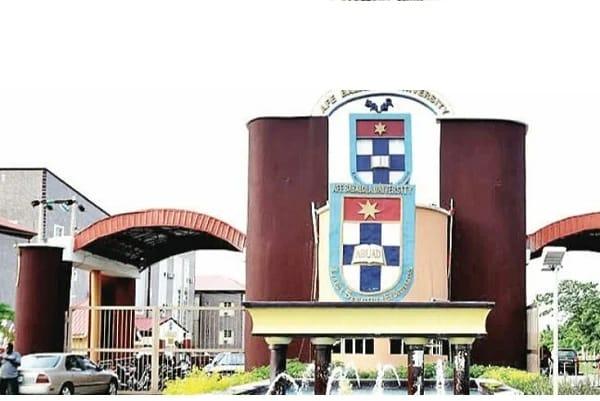
Professor Smaranda Olarinde, the Vice-Chancellor of Afe Babalola University, Ado Ekiti (ABUAD), has underscored the critical need for robust collaboration between government, academic institutions, and industry players. Her call aims to transform scientific discoveries into practical, implementable clean energy solutions for Nigeria.
Speaking at the second International Green Hydrogen Summit hosted at ABUAD, Prof. Olarinde highlighted that achieving a successful shift towards sustainable energy sources necessitates continuous investment in research, the formulation of effective policies, fostering industrial innovation, and developing a skilled workforce. She firmly stated, as per a release issued in Ado Ekiti on Sunday, that "There is need for stronger collaboration among government, academia and industry to translate scientific research into practical clean energy solutions."
Olarinde implored all participants to ensure the summit yields tangible solutions and enduring partnerships essential for advancing Nigeria’s clean energy aspirations. Her sentiments were echoed by Joshua Dauda, the Chief Executive Officer of CrossAfrique Hydrogen Limited, Netherlands, who also stressed the importance of synergy among universities, industries, and international partners to bolster Nigeria's clean energy sector.
Dauda disclosed that his company is currently collaborating with industrial partners and the German development agency, GIZ, to establish a pioneering Green Energy Hub at ABUAD. This ambitious project will commence with the installation of a solar photovoltaic system to power the university campus, alongside the creation of a dedicated hydrogen classroom for advanced research and demonstration purposes.
He elaborated, "The proposed project, Green Energy Hub at ABUAD, is a potential first-of-its-kind initiative in Nigeria. It will support training for researchers, lecturers and other professionals in hydrogen technology." Dauda further explained that the project is designed to integrate expertise and insights gained from international collaborations, adapting them specifically to address Nigeria's unique energy requirements. The initiative also seeks to promote curriculum enhancement and knowledge exchange, enabling other educational and research institutions to adopt and replicate this innovative model. "A subsequent phase can explore green ammonia production for fertiliser, potentially expanding the project’s contribution to agriculture and industrial development," he added.
Dr. Mustapha Abdullahi, the Director-General of the Energy Commission of Nigeria (ECN), also championed collaboration among the Federal Government, academia, and industry. Delivering a speech on the theme, “Nigeria’s Pathway to Clean Energy: The Science, Policy and Industry Nexus,” Dr. Abdullahi, represented by Bolaji Sulu-Ibrahim, emphasized the potential to harness Nigeria's vast renewable energy reserves.
He revealed that the Federal Government has set a target of 2060 for Nigeria to establish a power system predominantly reliant on solar energy and storage, with green hydrogen slated to serve as backup power and contribute to reducing carbon emissions in heavy industries. To meet this ambitious goal, the Director-General stressed the urgent need for accelerated investment in renewable energy technologies, scientific research, and local manufacturing capabilities.
Abdullahi pointed out, "The country has significant renewable energy resources, but needs innovation and stronger collaboration between government, academia and industry to harness them." He highlighted the substantial solar radiation in parts of the North-West, particularly Sokoto, Kebbi, and Zamfara states, which record between 6.0 and 7.0 kilowatt-hours per square metre daily, offering immense opportunities for solar power generation. Nigeria also possesses considerable hydropower resources, wind potential in northern regions, and abundant biomass. However, its current installed renewable energy capacity stands at merely 2,638 megawatts as of 2024.
"The gap between the country’s renewable energy potential and its existing capacity underscored the need for investment in research, technology development and infrastructure," Abdullahi stated. He detailed the ECN's ongoing solarisation programme for public facilities, focusing on the health and education sectors, and mentioned the role of its six energy research centres across the geopolitical zones in boosting research and innovation.
Identifying key challenges, Abdullahi listed dependence on imported solar components (modules, inverters, batteries), inadequate grid infrastructure, a shortage of skilled personnel, prevalence of substandard equipment, and limited access to finance. He advocated for local manufacturing, improved grid integration, stringent quality standards, and innovative financing models, asserting that resolving these issues demands more than just laboratory inventions. He concluded by urging universities and research institutions to partner with the ECN on pilot projects and research, while calling on industries to invest in technologies that can mitigate emissions from sectors like fertiliser production, refining, cement, and steel manufacturing.
Comments
(0)0/500 · No URLs or profanity allowed
Na serious matter be this o! ABUAD VC wan make everybody join hands to push clean energy for Naija. If we no invest well and collaborate, dis 'green future' fit just be story for the gods. Make we hope say dem go walk the talk!
Source: Punch NG
Related Stories
Bauchi Federal University Urges Government for Perimeter Fence Amid Security Concerns

Sanwo-Olu Cautions Lagosians: Wetland Construction Raises Flood Vulnerability

Kaduna Polytechnic Gains University Status, Rep. Amos Lauds Speaker Abbas's Role

Peshawar School Tragedy: Building Collapse Claims 32 Young Lives, One Educator
Ovaries Take On New Vital Role Post-Menopause, Study Reveals