Ovaries Take On New Vital Role Post-Menopause, Study Reveals
Full Story
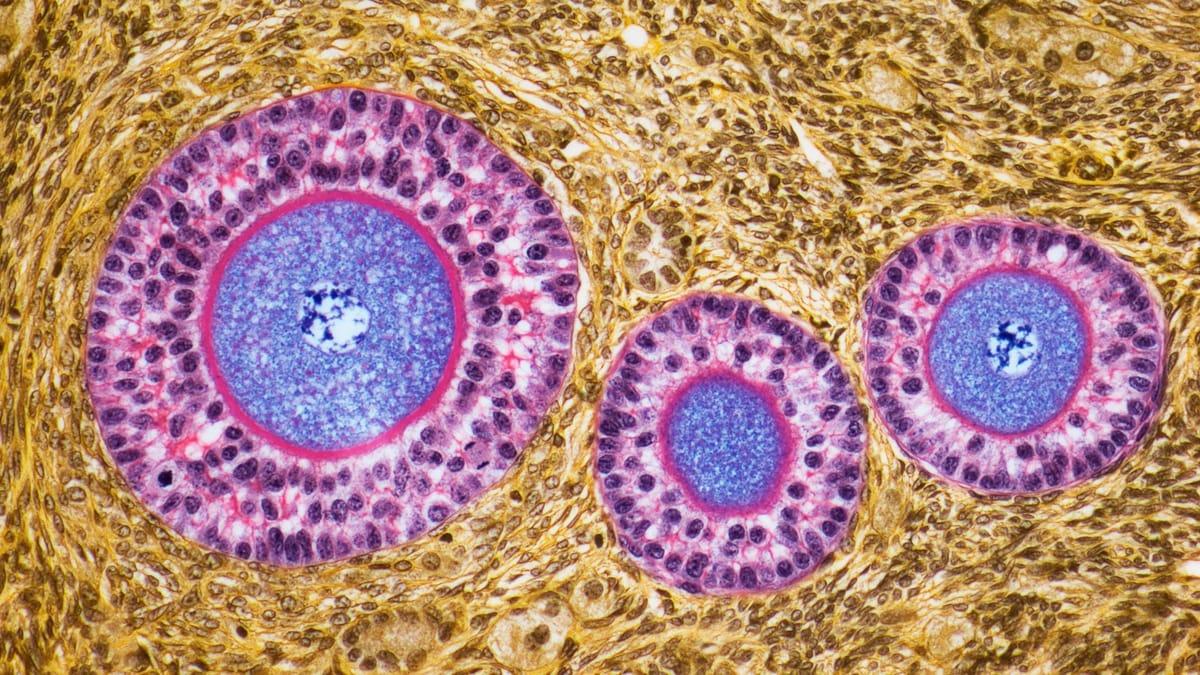
For a long time, menopause was seen as the end of the line for the female reproductive system, with the widespread belief that ovaries simply cease egg production and become inactive. However, recent in-depth research into these organs after menopause is now challenging this simplified view of ovarian retirement.
Francesca Duncan, a reproductive biologist at Northwestern University, noted that while fertility might reach a 'point of no return' where eggs are no longer produced, most people assume the ovaries then sit idle, much like the appendix. But Birgit Schilling, a proteomics expert from the Buck Institute, emphasized that the ovary is more than just a reproductive organ. She stated, "It really influences how somebody ages because it speaks to all these other organs, such as the brain, and also to the bone, and women after menopause experience often a lot of bone problems. So, we think there is a connection between all these organs."
Schilling and Duncan spearheaded a new study, published in the scientific journal *Aging Cell*, suggesting that menopause signifies a 'career change' for the ovary rather than full retirement. The researchers employed mass spectrometry to examine active proteins within healthy ovaries from 28 postmenopausal women. These women were grouped by age: 50-59 years, 60-69 years, and 70 years and older. The ovaries, which had been surgically removed for various medical reasons, were confirmed to be free of disease.
Their findings echoed Duncan's earlier research on mouse ovaries, published earlier this year, which showed that the protein profiles generated by ovarian tissue progressively alter with age. In the human samples, a distinct set of seventeen proteins notably characterized this shift. Ovaries from the 50-59 age bracket exhibited a higher concentration of proteins involved in regulating RNA and DNA, alongside maintaining tissue structure and cellular integrity. Conversely, ovaries from women aged 70 and above displayed more proteins linked to lipid metabolism, innate immunity, and inflammation. If ovaries were indeed 'inert' after their reproductive years, such dynamic changes would not occur.
Duncan admitted her initial expectation: "I was predicting that if we took a 50-year-old ovary, a 60-year-old ovary, a 70-year-old, an 80-year-old ovary, they would all look exactly the same, have no eggs, and basically be non-functional." The consistency of these observations across different species provides strong evidence that this phenomenon is not a random occurrence but signifies a truly significant biological process.
With human life expectancies generally increasing, there are now more postmenopausal individuals whose bodies are not yet fully understood. This new study sheds light on why ovarian cancer risk significantly rises after menopause. The age-related alterations in ovarian tissue and immune cells at the protein level create an environment conducive to tumor growth by increasing collagen within the extracellular matrix. While the ovarian tissue samples used in this study were free of tumors, proteins previously associated with ovarian cancer were found in abundance, particularly in the ovaries of women in their 60s.
"It's not that all postmenopausal women get ovarian cancer, but we know that that fibrotic inflammatory environment is certainly an environment that cancer cells prefer to home in on," Duncan explained. She added that ovarian aging could represent a 'third hit' for ovarian cancer, following genetic predispositions and environmental factors. This raises crucial questions: "So can we target the aging ovary therapeutically to lower the risk of ovarian cancer, or can we develop novel biomarkers of ovarian cancer?"
With this initial 'roadmap' of ovarian aging now established, researchers are better equipped to explore these complex questions. These discoveries hold significant implications for healthcare strategies for individuals in their post-reproductive years and for those who have undergone ovary removal. The full research findings are available in *Aging Cell*. The article was fact-checked and edited by Fiona MacDonald.
Gallery
Comments
(0)0/500 · No URLs or profanity allowed
No be small thing o! Dem say ovaries no just retire after menopause, dem get new work to do for body. This research fit open door for better ways to take care of women's health for old age, especially for cancer prevention. Na serious discovery be dis!
Source: Google Trends Nigeria
Related Stories

Peshawar School Tragedy: Building Collapse Claims 32 Young Lives, One Educator

Nigeria's Correctional Facilities Join Global Chess Tournament for Inmate Rehabilitation

Amex Platinum Card Hotel Credit May Soon Mandate Two-Night Stays

Lady Alleges Date Stole Her Phone After Social Media Meet-Up

Nigerian Lawmakers Advocate Practical Skills Focus in Blockchain Curriculum