Okebukola: Nigerian Varsities Must Elevate Global Standing, Research Output

Full Story
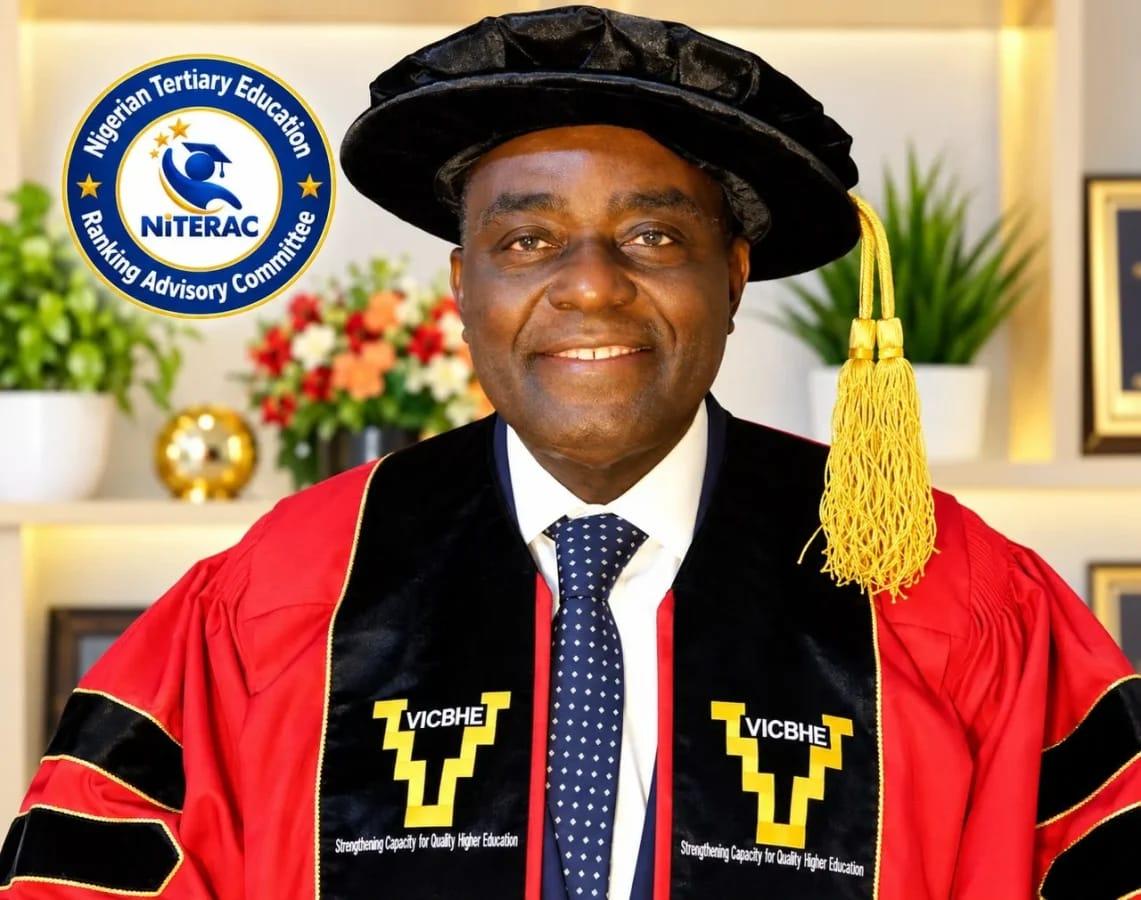
Professor Peter Okebukola, who chairs the Nigerian Tertiary Education Ranking Advisory Committee under the Federal Ministry of Education, has emphasized the critical need for Nigerian higher institutions to bolster their worldwide academic standing, research productivity, and international partnerships. This call comes as part of his review of Nigeria’s performance in the recently released 2027 Times Higher Education World University Rankings.
The 2027 edition of the rankings evaluated a total of 2,297 universities spread across 118 nations and territories. Nigeria saw an increase in its representation, with 29 universities making the list, a rise from 24 institutions in the 2026 assessment. Notably, Nigeria emerged with the highest count of ranked universities within sub-Saharan Africa, which collectively featured 69 institutions in the latest ranking.
According to Professor Okebukola, while the increased presence of Nigerian universities in the global ranking is positive, it should simultaneously draw more focus to persistent areas of underperformance. He specifically highlighted global academic reputation as the most significant factor for enhancing Nigeria's overall standing, noting that measures related to reputation contribute a substantial 33 per cent to the total ranking score.
He further elaborated on strategies for improvement, stating, “Nigerian universities could improve their international academic standing by participating more actively in international conferences, undertaking joint research, attracting visiting professors and strengthening links with academics and alumni in the diaspora.” Professor Okebukola, who previously served as the Executive Secretary of the National Universities Commission (NUC), also advocated for enhanced research funding and output, more precise institutional data submission, a greater number of doctoral graduates, deeper international partnerships and exchange programs, alongside stronger engagement with industries and increased patenting activities.
His analysis indicated that 'Research Quality' stood out as Nigeria’s strongest pillar in the ranking framework, achieving a mean score of 43.3. In contrast, 'Research Environment' and 'Teaching' recorded considerably lower mean scores of 13.9 and 20.6, respectively.
The most recent ranking positioned Covenant University, the University of Ibadan, and the University of Lagos collectively in Nigeria's leading spot, within the 801–1000 global ranking bracket. Covenant University demonstrated progress, moving up from the 1001–1200 band in the 2026 assessment, while both the University of Ibadan and the University of Lagos maintained their previous positions. An additional four Nigerian institutions—Ahmadu Bello University, Bayero University, Landmark University, and the University of Ilorin—were placed in the 1001–1200 band, bringing the total number of Nigerian universities within the global top 1,200 to seven.
Professor Okebukola observed that federal universities consistently dominated the higher ranking tiers, with five out of the seven institutions in the top 1,200 being federal entities: the Universities of Ibadan, Lagos, and Ilorin, alongside Ahmadu Bello University and Bayero University. The number of federal universities within the top 1,200 increased from three in 2026 to five in 2027, consequently raising their proportion of Nigeria's institutions in that band from 60 per cent to 71.4 per cent. Across the entire ranking, 19 federal universities, seven state universities, and three private universities were recognized.
Beyond the 29 institutions that achieved a ranked position, an additional 32 Nigerian universities were categorized as "Reporters." These institutions had submitted their data but did not meet the full criteria for inclusion in the final ranked table. Among these Reporter institutions, 16 were private universities, 12 were state-owned, and four were federal.
Okebukola asserted that these ranking outcomes should serve as a crucial diagnostic instrument for Nigeria's higher education system, supplying empirical data to guide the work of NiTERAC. He highlighted that global university rankings increasingly evaluate institutions based on various indicators encompassing teaching quality, research output, knowledge transfer, and international perspective. Times Higher Education describes its World University Rankings as a comprehensive assessment of research-intensive universities across their fundamental missions.
In response to this global context, Professor Okebukola revealed that NiTERAC has commenced the development of a national ranking system for Nigerian universities, polytechnics, and colleges of education. This initiative, directed by the Minister of Education, Dr. Tunji Alausa, is projected for completion before December 15, 2026. Its primary objectives are to foster healthy competition among tertiary institutions nationwide and to ultimately help Nigeria enhance its performance in international rankings.
He further explained that this forthcoming national ranking would complement existing international assessments, aiding institutions in identifying specific deficiencies in areas such as research environment, doctoral degree production, and overall academic reputation.
Gallery
Comments
(0)0/500 · No URLs or profanity allowed
Education committee don yarn say our universities need to shine well-well for global ranking, especially for research and reputation. Na good talk, and dem even dey plan national ranking. We go see if dis one go ginger our schools to do better and bring more funding.
Source: Punch NG
Related Stories

Covenant, UI, UNILAG Shine as Nigeria's Best in 2027 Global University Rankings

House Speaker Abbas Bankrolls Education for 120 FCT Inmates

Obasanjo Charges Ogun Students: Prioritize Studies, Develop Strong Character
Anambra: Worker Dies Following Building Demolition Collapse in Nnewi

Veteran Actor RMD Calls for Solutions, Not Condemnation from Nigerians