FG Won't Disclose Spending Plans for $5bn Abu Dhabi Loan, Oyedele Insists
Full Story
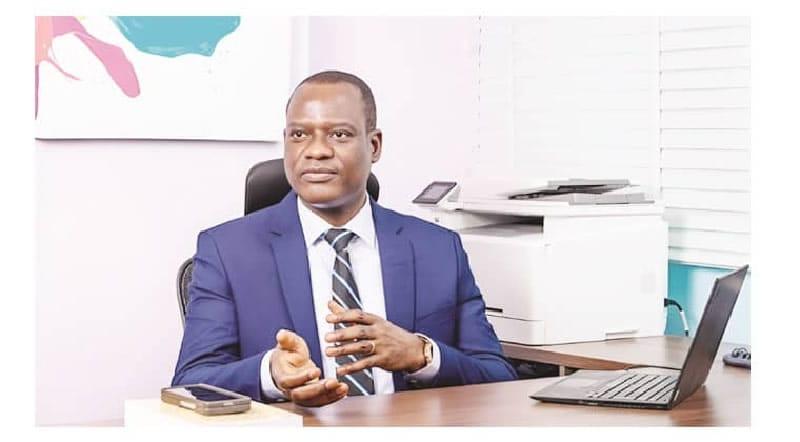
Nigeria’s Minister of Finance and Coordinating Minister of the Economy, Taiwo Oyedele, has dismissed demands for the Federal Government to publicize the specifics of how it intends to utilize the capital from its $5 billion financing arrangement with First Abu Dhabi Bank. Speaking at a press briefing in Abuja on Wednesday, Oyedele contended that the deal had faced undue examination, asserting that the National Assembly had sanctioned the facility, which was designed to assist the government in refinancing costlier existing debts.
This development follows the Federal Government’s recent draw of approximately $1.5 billion, marking the initial segment of the $5 billion Total Return Swap facility secured with First Abu Dhabi Bank. This move occurred despite expressed reservations from both the International Monetary Fund (IMF) and Fitch Ratings regarding the transparency and inherent risks linked to such financing mechanisms. The National Assembly had given its approval for the $5 billion facility on March 31, 2026, with the initial funds slated to bolster the 2026 national budget, finance infrastructure initiatives, and facilitate the refinancing of current debt commitments.
When questioned about the government's borrowing strategy and the potential release of information concerning the First Abu Dhabi Bank transaction, Oyedele affirmed that the government would disclose its overall public spending. However, he queried the heightened focus on this specific facility. He stated, “We will not publish how we are spending it. We will publish how we spend government money. There’s nothing special about that loan.”
The Minister further elaborated, asking, “Nobody has asked us whether we’re going to publish the money we took from the World Bank, whether we publish the one from Eurobond, whether we publish the one from Sukuk. Why is this one special?” Furthermore, Oyedele refuted allegations that the deal lacked proper procedure, emphasizing that it had been duly presented to the National Assembly for approval. He stressed, “The loan was approved not only by FEC, it was taken to National Assembly because what some people are doing is they comparing with other countries where they did it under the table.” He then challenged critics, asking, “What else can be more public than what you gave to the National Assembly?”
According to the minister, the government meticulously evaluated the transaction and is drawing the funds incrementally to prevent avoidable expenses. He explained, “We’re assessing it in phases. You don’t want to take all the money at once because if you don’t spend it at once, you incur cost on the extra amount you’ve taken.”
Oyedele clarified that this particular financing structure deviates from Nigeria's conventional fixed-rate borrowing methods, as the First Abu Dhabi Bank facility features a flexible interest rate. He urged a deeper understanding of the deal, stating, “You need to understand the transaction. You know, there’s always the textbook analysis and there’s the real life of what you’re doing.” He contrasted it with past practices, adding, “So, we’re used to raising bonds on fixed interest rate terms. You see, I can tell you our Eurobond, for example, they were raised when the coupon was double digits. Today, our yield is down to around seven, 7.5 per cent.”
He noted that Nigeria could not capitalize on the reduced yield associated with its current fixed-rate debt instruments. Oyedele explained, “This First Abu Dhabi Bank transaction is flexible rates. It means if rates go up, we pay more. If rates come down, we benefit more.” He asserted the need for diverse financial strategies, adding, “There’s nothing that says we must always do one thing. And the all-in rate for this transaction is lower than our existing portfolio.”
The Finance Minister highlighted that the core purpose of the facility is to refinance more costly debts and thereby diminish the government's overall borrowing expenditures. He summarized, “So the objective is to use it to refinance expensive debt so you can save money.”
Under the terms of the agreement, the Federal Government is mandated to offer securities equivalent to approximately 133 percent of the drawn amount as collateral. Previously, both the International Monetary Fund (IMF) and Fitch Ratings expressed apprehension regarding this financing model, specifically citing concerns over transparency and the potential for increased sovereign debt risks. The IMF cautioned that derivative financing instruments, like total return swaps, could prove challenging to monitor and assess in real-time, potentially clouding the true scope of a nation’s financial commitments. Similarly, Fitch Ratings warned that Nigeria’s proposed $5 billion arrangement might elevate sovereign debt risks and diminish clarity in the reporting of public debt.
Despite these concerns, Oyedele stated that the government plans to release a Frequently Asked Questions (FAQ) document about the transaction shortly to offer more comprehensive explanations. He announced, “In the next few days, you will see on the website both the Ministry of Finance and DMO the frequently asked questions about this particular debt or bond, just so everybody can please themselves.” He reiterated his stance that the loan holds “nothing special” despite the scrutiny it has attracted from both critics and the international press.
Comments
(0)0/500 · No URLs or profanity allowed
Minister Oyedele say e no go publish how dem go spend dat $5bn loan from Abu Dhabi Bank. E say National Assembly don approve am, so no need for plenty noise. We just hope say dis one no go turn another 'story that touches' later.
Source: Punch NG
Related Stories

IMF Warns Saudi Economy Shrinking Amidst Rising Middle East Conflicts
Headline Inflation in Nigeria Registers Slight Dip to 15.39% for August 2026
Nigeria's Road Coverage Places It Second Among African Nations

Lagos State Embarks on Ambitious Waste Management Overhaul
Nigeria's Oil-Rich States Reap Bulk of Derivation Funds in Q1