DSS DG Pushes for Stricter Cybercrime Sentences, Cites Sowore's Ongoing Trial
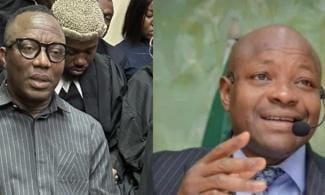
Oluwatosin Adeola Ajayi, the Director-General of the Department of State Services (DSS), has urged for more stringent enforcement and penalties against individuals who violate the Cybercrimes Act, 2024, particularly those who express criticism or dissent against public officials or private citizens. This appeal was made by Ajayi in Abuja during the launch of "Electronic Evidence, Second Edition (With Evidence Act, 2011)" and "A Compendium of Cases on Electronic Evidence (Volume II, 2020–2025)," publications by a retired High Court judge. He emphasized the necessity of enhanced cooperation among investigators, prosecutors, and the judiciary to guarantee the law's effective implementation and appropriate sentencing for culprits.
Ajayi revealed that the DSS is intentionally pursuing certain cybercrime cases chosen specifically to act as a deterrent. He stated, "What we are pleading for here is support to make sure the rules are enforced and offenders receive the punishment they deserve. If you convict one, that has an impact. Others will be deterred." He further explained that the Service is currently prosecuting numerous individuals under the Cybercrimes Act, with investigators strategically selecting high-profile cases to bolster public trust in legal enforcement. "We have picked one, or two, or three, four, five, six that will give impact," he added.
The DSS Director-General also confirmed that among the cases being prosecuted is one involving a presidential candidate facing charges for alleged online remarks directed at the President. He refrained from naming the individual, citing that the case is sub judice. Ajayi quoted, "There is one of them who is a presidential candidate and disparaged a sitting President. We chose that one. I can't talk about him because he is in court." This statement was understood to reference the ongoing trial of Omoyele Sowore, the African Action Congress (AAC) presidential flagbearer, whom the secret service is prosecuting for posts made on social media.
Activist Sowore is currently being prosecuted by the DSS on charges of cyberstalking and criminal defamation. These charges stem from social media comments where he allegedly referred to President Tinubu as a "criminal." A court has since ordered him to present his defence, having dismissed his no-case submission. The legal action, which also includes accusations of inciting public disturbance, requires a ₦200 million bail bond and signifies a heightened stance against critical online commentary.
The DSS DG cautioned that cybercrime encompasses more than just internet fraud, emphasizing that unchecked online incitement and irresponsible digital behaviour could escalate into violence and pose a threat to national security. He warned, "What I know is that if you allow these crimes to go on, you are going to wait for a bigger act. If a man wakes up and says, 'You are this, you are that,' and nobody punishes it, somebody will proceed to carry a weapon and kill one of them." He reiterated his call for improved collaboration between investigators, prosecutors, and the judiciary, asserting that successful convictions under the Cybercrimes Act would deter potential future offenders.
In a related development, Wole Olanipekun (SAN), a former President of the Nigerian Bar Association, advocated for a judicial review of Section 24 of the Cybercrimes Act, which has been a subject of controversy. Olanipekun encouraged judges, legal scholars, and practitioners to rigorously scrutinize the Act instead of considering it infallible. He maintained that laws impacting citizens' fundamental rights must be consistently evaluated against constitutional provisions. He remarked, "We are dealing with the Cybercrime Act. We must not leave this place without challenging and interrogating ourselves about that area of our law."
Highlighting Section 24 of the Act, which has sparked significant legal debate regarding its implications for online expression, Olanipekun implored the judiciary and legal academic community to conduct a thorough review of this particular section. He declared, "I must draw attention now to the Cybercrime Act, Section 24. It's a vital area of our law." He then assigned this task to the book's author, stating, "We are giving you that assignment." Olanipekun stressed that the law must achieve a delicate equilibrium, shielding Nigerians from cyber-enabled crimes while simultaneously upholding constitutionally guaranteed liberties, especially freedom of speech.
During his address, EFCC Chairman Ola Olukoyede connected cybercrime and financial offenses to Nigeria's escalating insecurity and economic difficulties. He contended that illegal financial operations fuel terrorism, kidnapping, and organized crime. Olukoyede remarked, "There is no doubt that one of the major problems we have in this country is financial crime. Talk of insecurity, talk of lack of economic development, talk of poverty, I think the time has come for us to join hands." He expressed regret that many Nigerians only grasp the severe impact of cyber-enabled financial crimes once they become victims, citing an instance where a judge reportedly lost approximately ₦7.2 million, accumulated over six years, to an online fraudulent scheme.
Furthermore, Olukoyede disclosed that the anti-graft commission recently prosecuted around 70 individuals for allegedly facilitating terrorism financing, separate from traditional cyber fraud. He stated, "Recently, we had to prosecute close to about 70 people who were involved in helping terrorists and bandits launder ransom. This is the foundation of the problems."
The EFCC Chairman also announced the Commission's adoption of artificial intelligence (AI) in criminal investigations. However, he cautioned that Nigeria's current legal framework lacks adequate provisions for AI-generated evidence. Olukoyede explained, "We have already started deploying AI for investigations. What I'm cracking my brain about is how to generate evidence and make it admissible." He called upon legislators and legal experts to formulate laws that would govern the application of artificial intelligence in both criminal investigations and judicial processes.
Mrs. Beatrice Ejodamen Jedy-Agba, the Solicitor-General of the Federation and Permanent Secretary for the Federal Ministry of Justice, speaking on behalf of the Attorney-General of the Federation and Minister of Justice, Lateef Fagbemi (SAN), highlighted the critical role of electronic evidence in modern justice administration. She remarked, "The importance of electronic and digital evidence in our legal architecture cannot be overstated. In today's age, where transactions, communications and disputes are increasingly conducted electronically, the ability of our courts to admit and interpret electronic evidence is indispensable to the administration of justice." She praised Justice Ajileye for his academic contributions, noting that his works would significantly enhance Nigeria's legal understanding of electronic evidence and bolster the justice system's capacity to address cybercrime and other tech-related offenses.
Comments
(0)0/500 · No URLs or profanity allowed
DSS DG don yarn say dem go pursue cybercrime offenders, especially those wey dey 'insult' leaders online, even using Sowore's case as example. But some legal minds dey warn say dem need to balance am with freedom of speech. E be like say wahala dey for this Cybercrime Act matter.
Source: Sahara Reporters
Related Stories
Digital trails lead UK police to 150 suspects in hidden abuse networks

Secrets Reporters Journalist Allegedly Abducted Amidst CBN DG Emem Usoro Investigation

Oba Ewuare II Unleashes Ancestral Curse on Kidnappers, Robbers, Evil Doers in Edo State

Ogoni Family Sues FG, Rivers Over Son's 18-Year Detention Without Trial

Kano Federal High Court Remands Two for Alleged Bandit Support in Katsina