EXCLUSIVE(SAHARA REPORTERS): Abuja Border Communities Terrorized by Kidnappers Amidst Failed $460M CCTV

Yemisi's routine trip to her farm along Fulani Road in Madalla, a community bordering the Federal Capital Territory (FCT), tragically ended in her abduction. Family members, who spoke anonymously to SaharaReporters, recounted the harrowing days following her disappearance. "She went to the farm like every other day around Fulani Road in Madalla and we did not hear from her again. Just for someone to reach out to us asking for ransom payment. They told us they had kidnapped her and we needed to pay before they would release her," a relative disclosed. The family faced immense fear and uncertainty, struggling to raise the N10 million demanded by the abductors. After five days in captivity, an undisclosed ransom was eventually paid for Yemisi's release. The kidnappers then provided her with transport fare and directions to reach an expressway. It was later discovered she had been held in the Imi area of Zuba, within the FCT, before making her way to Kaduna Road via a shortcut. The traumatic experience forced Yemisi to leave Madalla, returning to her village for recovery and family support.
Residents now describe Fulani Road, which connects Madalla to Zuba in the FCT, as a notorious hub for criminal activities, with many fearing movement after 7 p.m. This surge in kidnappings isn't isolated to Fulani Road; other FCT border communities are equally affected. Residents across Nigeria's capital express constant fear for their safety due to relentless attacks.
In May, SaharaReporters detailed the release of Eunice Ameh, an NYSC member and lawyer, after several days in captivity and the payment of a ransom, as confirmed by lawyer Festus Ogun on X. Ogun's post on Sunday, May 10, 2026, highlighted the cost of Ameh's freedom, criticizing the "incompetency of Bola Tinubu and the APC regime." He wrote: "It’s Eunice, it could be anyone tomorrow." Ogun further lamented the country's alarming security situation, questioning the President's apparent indifference.
Earlier in June, SaharaReporters reported a second kidnapping in less than a month in the Paze community of Kubwa, Bwari Area Council, Abuja, where suspected bandits invaded a residential home. The FCT has been plagued by such incidents for some time; in March 2025, four residents of Chikakore in Kubwa, Bwari Area Council, remained captive for over 44 days after being abducted on Sunday, January 26, 2025, from a Health Centre Extension. June 2023 saw four managers kidnapped from Mashafa, Mpape, in Abuja, during early morning raids. Furthermore, on February 21, kidnappers demanded N100 million for the release of John Shekwogaza, father of the incumbent Bwari Area Council Chairman. Some Bwari residents have been forced to relocate deeper into the city, stating, "We had to move to town and rent houses there because it then looked like the bandits were more powerful than the government."
Numerous kidnapping reports have left FCT residents in perpetual fear. SBM Intelligence data reveals that FCT residents paid a staggering N153.5 million in ransom to kidnappers between June 2024 and June 2025. This worsening security crisis persists despite the presence of numerous Nigerian security agencies' headquarters within the Federal Capital Territory.
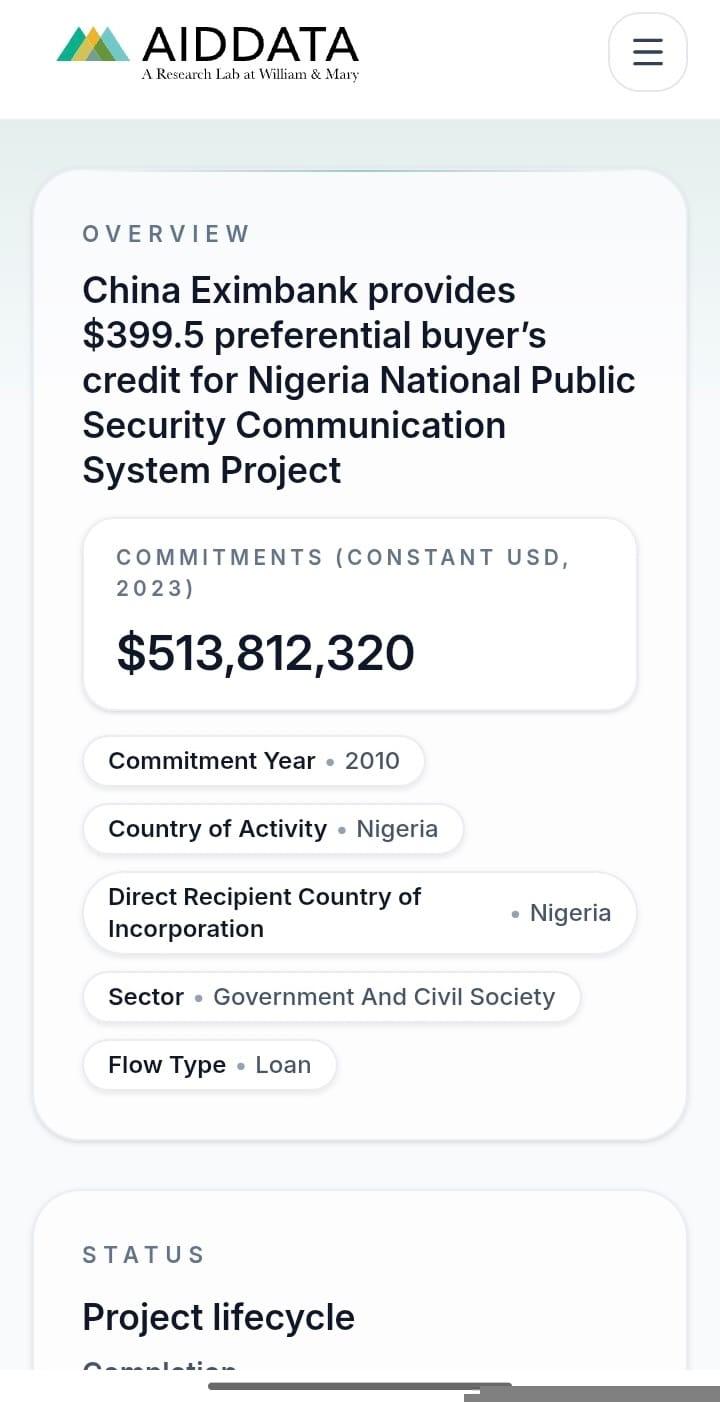
Amidst this, a $460 million Abuja CCTV project has faced scrutiny. On May 15, 2023, the Federal High Court mandated the Ministry of Finance to disclose the total amount disbursed under the loan, the identities of local and Chinese contractors, and the project's implementation status. In May 2026, the Socio-Economic Rights and Accountability Project (SERAP) called on Finance Minister Taiwo Oyedele to reveal all contractors, subcontractors, consultants, and vendors who benefited from the "controversial $460 million Abuja CCTV project."
SaharaReporters' findings indicate the project was funded via the National Public Security Communication System (NPSCS) through a Chinese government loan. China Eximbank's website shows a $470 million commercial contract with ZTE for the project, signed on August 7, 2010. By December 31, 2020, Nigeria's Debt Management Office (DMO) reported a 100% disbursement rate ($399.5 million), with $89.04 million in interest and $92.19 million in principal repayments made. The outstanding principal as of that date was $307.31 million. Project documents reviewed by SaharaReporters outlined a Video Surveillance Subsystem, intended to install approximately 2,000 solar-powered CCTV cameras in Abuja and Lagos to curb criminal activities. Despite the massive public funds committed and loan repayments expected until 2030, the effectiveness and execution of Abuja's solar-powered CCTV system remain shrouded in mystery.
Gallery
Comments
(0)0/500 · No URLs or profanity allowed
Abuja border communities don turn kidnappers' den, and wetin pain pass na say dem spend plenty money on top CCTV wey no even work. Na wa for Naija o, security suppose be paramount but it looks like criminals get upper hand.
Source: Sahara Reporters
Related Stories
Cross River: Fake Pregnancy, Baby Sale Syndicate Busted; Newborn Rescued, Four Arrested
Abuja’s N172.9 Billion FAAC Inflow Questioned Amidst Unabating Insecurity

Rivers Court Imposes Seven-Year Jail Term for Child Defilement

Louisville Woman Accused of Boyfriend's Fatal Attack with Nailed Plank
ICPC Takes Custody of Ex-Minister Uche Nnaji After Abuja Airport Arrest