Federal Government Gears Up for Single Window Export System Trials

Full Story
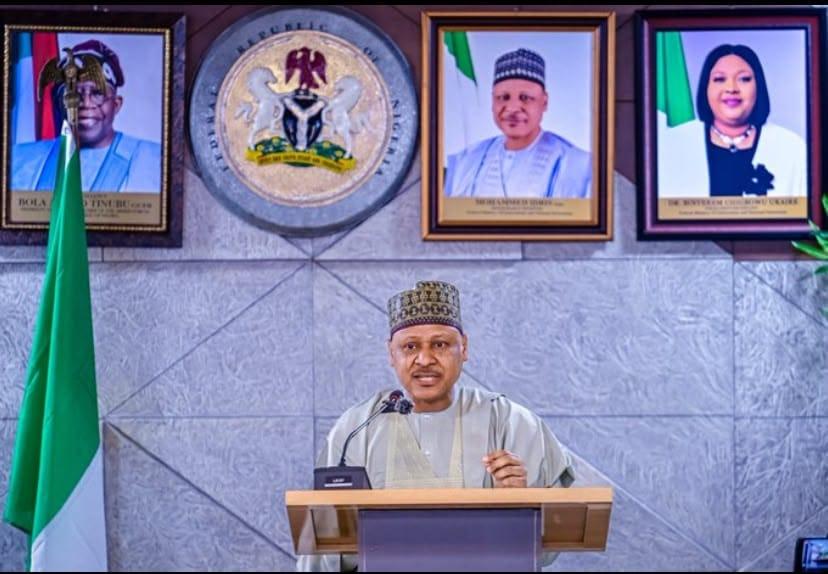
Nigeria's Federal Government is set to commence user acceptance testing for the second phase of its National Single Window project next week. This move aims to simplify export processes, building on the success of the platform which has already handled 156,026 import licences and permits since its initial rollout in March. Tola Fakolade, the National Single Window Project Coordinator, announced this development during a press briefing held in Abuja on Tuesday, indicating the government's intention to introduce the initial group of agencies for this second phase before the close of the year.
This upcoming second phase will specifically address export operations, encompassing the centralised handling of various documents such as export licences, permits, and certificates. It will also cover export-related forms mandated by the Central Bank of Nigeria (CBN) and applications for import duty exemption certificates.
According to Fakolade, the project team has concluded the initial assessment of current procedures, identified areas for improvement, and designed more efficient methods. User acceptance testing (UAT) is slated to commence next week. He stated, “We are starting our user acceptance testing for phase two next week, which is where we are actually bringing a sample of these agencies and some of our users to come and test the processes that have been customised and developed on the Single Window platform.” He further clarified that this testing period would allow involved agencies and users to offer their insights and suggest enhancements before the full system deployment.
Fakolade further elaborated, stating, “After that, we’ll do training, and then we’ll also work hard as a team to ensure that we deliver around the timeline and the mandate that we’ve been given.”
The National Single Window serves as a unified electronic trade platform, consolidating various government bodies engaged in international commerce onto a single digital system. Its primary objectives include streamlining import and export processes, minimising redundant tasks, enhancing transparency, and ultimately establishing Nigeria as a prominent regional trade centre. President Bola Tinubu officially launched this initiative on April 16, 2024, with its initial phase becoming operational on March 27, 2026.
Giving an update on the project's first phase, Fakolade revealed that the platform has successfully registered 12,112 importers and agents, and provided training to over 8,000 users. Furthermore, the system has maintained an impressive 99.98 percent uptime, demonstrating its high reliability and accessibility.
During its first phase, the platform automated the entire process for submitting, processing, and approving licences, permits, and certificates from key regulatory bodies. These include the National Agency for Food and Drug Administration and Control (NAFDAC), the Standards Organisation of Nigeria (SON), the National Environmental Standards and Regulations Enforcement Agency (NESREA), and the Nigeria Agricultural Quarantine Service (NAQS). Additionally, the system facilitates payments for these permits and certificates, alongside managing air and sea cargo manifests submitted by various airlines and shipping companies, with the exception of operations related to oil and gas.
Fakolade noted that the platform has processed 104,956 documents for SON, 50,622 for NAFDAC, and 398 for NAQS. These figures contribute to the total of 156,026 licences and permits recorded since the system’s inception. He highlighted a significant increase, stating that the volume of licences and permits issued by SON and NAFDAC has risen by 20 to 30 percent when compared to the same period prior to the platform's implementation.
“The number of licences and permits that have been issued compared to the same period last year has gone up between 20 to 30 per cent. So, for us, that gives us the assurance that the Single Window is delivering, which is blocking some of the loopholes that existed before and really driving compliance in the issuance of licences and permits,” Fakolade stated. He further suggested that this rise indicates the platform's effectiveness in enhancing compliance by simplifying the processing and oversight of regulatory approvals.
Despite its successes, Fakolade admitted that the system’s initial rollout faced hurdles, primarily due to some users’ unfamiliarity with the updated procedures. To address this, the project team has intensified stakeholder engagement, incorporating feedback from importers, clearing agents, and other users to refine the platform. Fakolade noted, “By the time we launched in March, we had trained about 5,000 people, but I think the lesson we’ve learned there is that Nigeria is a big country. There are a lot of importers in the country, so we need to extend the reach of our training.” He also confirmed that technical challenges related to data migration and system integration emerged during the transition, but these have since been resolved.
The second phase of the project is slated for implementation in two distinct batches. The first batch, anticipated in the fourth quarter of 2026, will integrate key bodies such as the Nigerian Export Promotion Council (NEPC), the Federal Ministry of Industry, Trade and Investment (FMITI) via its Federal Produce Inspection Service (FPIS) and Registered Exporter System (RES), along with SON, NAFDAC, and the Nigerian Association of Chambers of Commerce, Industry, Mines and Agriculture (NACCIMA). Details for the second batch are yet to be fully disclosed.
Comments
(0)0/500 · No URLs or profanity allowed
Federal Government don dey prepare to test new part of Single Window wey go helep exports. We just dey hope say dis one go truly make trade easy for Nigerians and boost our economy, not just plenty talk.
Source: Punch NG
Related Stories
Digital Platform from FG Set to Unlock $100bn from Tourism, Creative Industries — full story

FG Finance Minister Slams Global Credit Agencies Over High Loan Costs
FG Insists NNPC Petrol Discount Isn't a Return to Subsidy

ADC's Abdullahi Questions Oyedele's Suitability for Economic Policy Role

Dangote Refinery Plans 1.4 Million BPD Expansion by 2029, Prioritizes Small IPO Investors