Ekiti State Empowers 30 Experts for Large-Scale Livestock Genetic Upgrade

Full Story
The Ekiti State Government is urging livestock producers across the state to embrace modern techniques, such as artificial insemination and advanced breed improvement programs, to enhance their animal production. The Commissioner for Agriculture and Food Security, Ebenezer Boluwade, reaffirmed the government's dedication to assisting livestock farmers and agribusiness owners, emphasizing sustainable practices through targeted investments and interventions.
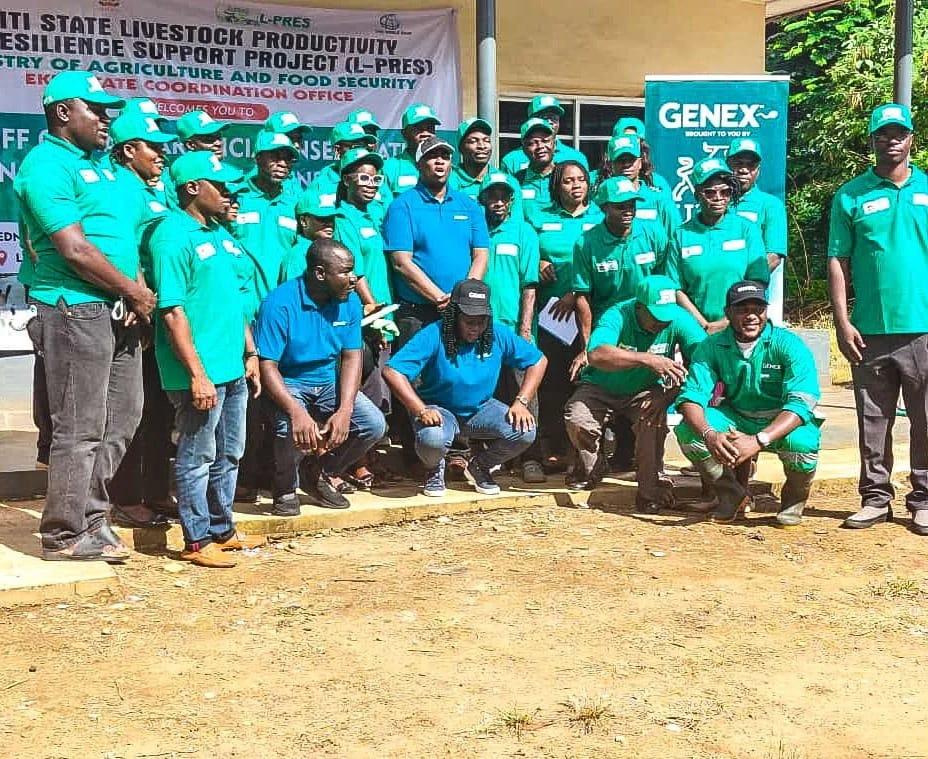
Commissioner Boluwade made these remarks in Ado Ekiti on Friday during the ongoing “Mass Artificial Insemination, Training and Induction of Inseminators in Ekiti State.” This initiative is spearheaded by the state's Livestock Productivity and Resilience Support Project (L-PRES). He elaborated that the artificial insemination scheme by the state L-PRES is specifically designed for genetic enhancement and multiplication of livestock, aiming for superior productivity.
“Ekiti State plans to target 850 cows and 150 goats, while 30 professionals, predominantly from the Animal Husbandry and Veterinary Departments, are undergoing training and will be certified as Artificial Insemination Technicians,” Boluwade stated. He stressed the importance of developing skilled personnel in artificial insemination technology, particularly experts who can train others, ensuring the continuity and transfer of these crucial skills within the state. Boluwade expressed his expectation that the program would lead to “a marked genetic improvement in our local ruminant breeds that is capable of driving economic growth and improving livelihoods.”
A survey highlighted that livestock productivity among L-PRES beneficiary farmers in Ekiti State suffers from poor genetic quality and limited access to enhanced breeding services. This results in reduced milk production, slower growth rates, and lower market value. To tackle this challenge, Ekiti State is backing the L-PRES key results indicator on artificial insemination, which includes boosting yields in milk output, live weight gain, and carcass yield, thereby increasing incomes and strengthening the resilience of beneficiary households.
Boluwade further explained that artificial insemination yields “improved hybrid vigour with better yield and performance through cross of local breeds with exotic breeds with good pedigree.” He added that “artificial insemination as a technology is a better channel for genetics upgrading and multiplying in livestock, eliminates the spread of s*xually transmitted disease among the flock, reproductive materials and semen of good stock can also be stored for a long period of time.” He advised participants to pay close attention due to the technical nature of the sessions, noting that the acquired knowledge would significantly improve local ruminant breeds in terms of faster growth, efficient feed conversion, good carcass yield, and disease resistance. He concluded by reiterating the Ekiti State Government's commitment to supporting livestock producers and agribusiness entrepreneurs through strategic investments in infrastructure, capacity building, market development, access to finance, and institutional strengthening.
Olayiwola Adekunle, the Lead Consultant for Genex Urus Company, remarked that the training aims to ensure that Ekiti State citizens can perform artificial insemination independently, rather than relying on foreign expertise. Adekunle confirmed that Genex would provide three years of support to the 30 trained and qualified inseminators, as part of the L-PRES project's sustainability strategy in the state. He projected that they would inseminate “a lot of animals from 1000 upwards and also goats around the different local government areas in Ekiti State,” adding, “We want to see sustainability and improved livelihood. At the end of the day, we want to see more animals, more milk in Ekiti State and of course the beef programme will also go on according to plan for the state.”
Similarly, Olumuyiwa Adelodun, the Ekiti L-PRES Animal Husbandry Officer, stated that the primary objective of the mass artificial insemination, training, and induction of 30 technicians is “breed improvement and multiplication of livestock.” Adelodun observed a recent decline in the production of local breeds and expressed the intention to “improve their quality through artificial insemination in order to have more productive livestock in terms of meat production and meat production.”
Gallery
Comments
(0)0/500 · No URLs or profanity allowed
Ekiti State don carry serious matter for livestock farming o! Dem dey train pipo for artificial insemination so our local animals go produce better meat and milk. Na good step to make sure say food plenty and farmers dey smile to the bank.
Source: Punch NG
Related Stories

Newlywed Caught Trafficking 72 Cocaine Wraps at Enugu Airport, Blames Wedding Debt

SERAP Gives CBN Ultimatum on $6.23m Election Funds, N1.63tn Accountability

Coca-Cola Unveils $1 Billion Nigeria Investment Plan for Half-Decade
SMEDAN Pushes for Traditional Rulers' Role in Grassroots Development — full story

Nigeria and US Seal Deal to Boost Solid Minerals Investment
