New World Bank Framework Targets 32 Million Nigerians for Electricity Access by 2032

The World Bank has unveiled an ambitious plan to connect 32 million Nigerians to electricity and extend broadband internet access to an additional 58 million people by 2032. This initiative is part of its newly launched Country Partnership Framework (CPF) for Nigeria, which spans from 2026 to 2032. Furthermore, the framework aims to benefit 9.5 million farmers through various activities designed to enhance agricultural production, increase value addition, and strengthen market linkages. The World Bank Group also projects mobilizing a substantial $4.1 billion in private capital to bolster infrastructure and agribusiness sectors.
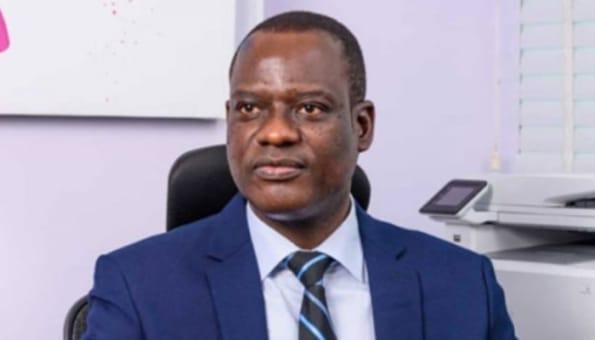
Mr. Taimur Samad, the Acting Country Director for the World Bank, officially presented the CPF on Wednesday in Lagos. The presentation took place during the Industrialisation & Competitiveness Forum, an event organized by the Nigerian Economic Summit Group. The core objective of this new framework is to foster the creation of more and superior private-sector jobs by cultivating an environment conducive to competitiveness and growth. It also seeks to unlock a more productive and healthier populace, build resilience within communities and ecosystems, and maximize the utilization of private capital for infrastructure and agribusiness development.
The World Bank emphasized that the CPF's strategy will concentrate on job creation, growth driven by the private sector, and the mobilization of private investment. Key programs under this framework will cover critical areas such as distributed renewable energy, broadband infrastructure, improved access to finance for micro, small, and medium enterprises (MSMEs), and agribusiness.
According to a fact sheet accompanying the framework, specific targets include: “32 million provided with electricity (M300)”, “58 million more people are using broadband internet (Digital)”, “9.5 million farmers benefiting from activities that improve production, value-addition, and market linkages (AgriConnect)”, and “$4.1bn in private capital mobilised.”
Beyond these specific metrics, the framework sets a broader goal of generating more and better private-sector employment, identifying enhanced competitiveness and growth as a primary outcome. Under the competitiveness and growth pillar, the World Bank aims for a 30 percent increase in the non-oil revenue-to-GDP ratio, the enablement of $6 billion in private capital, and an additional 250,000 SMEs utilizing financial services. For human capital development, the framework targets 40 million beneficiaries of quality health, nutrition, and population services, support for 19.4 million students to achieve better educational outcomes, and an eight-percentage-point reduction in the prevalence of stunting among children under five. Additionally, it seeks to provide social safety-net programs to 41 million more beneficiaries and enhance the climate change resilience of 11.7 million individuals.
The World Bank stated that its updated approach would channel support into fewer, high-impact areas capable of yielding significant and measurable results. The framework explicitly states, “A focus on jobs aligned with the World Bank Group Job Creation Strategy,” and affirmed the institution’s commitment to intensify efforts on private-sector-led growth and the mobilization of private capital. Distributed renewable energy, broadband infrastructure, MSME access to finance, and agribusiness are identified as sectors slated for expanded support.
Specific financial commitments include a $750 million World Bank program, complemented by a $200 million International Finance Corporation (IFC) facility, both dedicated to distributed renewable energy to boost electricity access. There is also a $500 million program earmarked for resilient digital infrastructure and another $500 million pipeline program for sustainable agricultural value chains.
This new CPF builds upon the World Bank Group’s ongoing engagement with Nigeria. The presentation highlighted that the preceding CPF had provided over $12 billion in support for national programs, with a particular emphasis on state-level and results-based financing. Currently, the World Bank manages an active portfolio in Nigeria valued at $15.9 billion, comprising 30 projects. Two-thirds of this portfolio is implemented through national programs at the state level, with half employing results-based financing.
The presentation also noted an increase in the World Bank’s average loan size from $415 million in 2021 to $580 million in 2025, alongside a reduction in the total number of projects from 36 to 30. The new framework also mandates closer collaboration among the World Bank, the International Finance Corporation (IFC), and the Multilateral Investment Guarantee Agency (MIGA), with annual business planning designed to ensure flexibility. The World Bank affirmed its continued engagement with states and its focus on resilience, encompassing climate adaptation, gender considerations, and interventions in conflict-affected regions. The CPF outlines macroeconomic stability and governance, the business-enabling environment, early childhood development, social protection, human capital and skills development, digital transformation, power and energy access, climate resilience, agriculture, and access to finance as key pathways to achieving its desired outcomes.
Comments
(0)0/500 · No URLs or profanity allowed
World Bank don drop big plan for Nigeria o, dem say dem go light up 32 million people and give many more internet. Na good news be dat, but we go dey watch to see if all dis fine-fine targets go truly manifest for ground.
Source: Punch NG
Related Stories

Farmers Flee Fields: Insecurity Undermines Nigeria's Food Security

Niger Delta Stability Fuels Nigeria's Rising Oil Production

Private Sector Demands Clarity on N15.8tn Subsidy Gains' Real Value
Nigerian States Receive N435bn Special FAAC Funds for Security, Infrastructure

Speed Darlington Foresees Dire Outcomes for Poco Lee Over R@pe Allegation