Private Sector Demands Clarity on N15.8tn Subsidy Gains' Real Value

The Organised Private Sector (OPS) has acknowledged the Federal Government's transparency in detailing the funds accrued from fuel subsidy removal and other economic adjustments. However, while appreciating the disclosure, key players within the OPS, such as the Lagos Chamber of Commerce and Industry (LCCI), expressed dissatisfaction with the specifics regarding how these funds have genuinely improved the lives of Nigerians. Their primary concerns centered on what they perceived as excessive government expenditure, significant allocations to debt servicing, and a noticeable lack of tangible evidence of investments that could boost productivity. The OPS collectively urged the government to prioritize the enhancement of citizens' welfare and economic well-being through the judicious deployment of these savings.
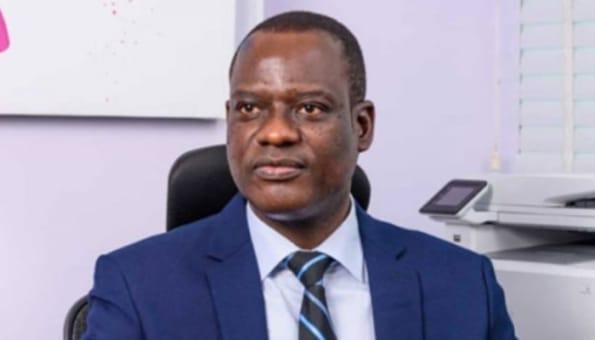
Earlier, the Minister of Finance and Coordinating Minister of the Economy, Taiwo Oyedele, had revealed in Abuja on Wednesday that the nation's coffers accumulated N15.8 trillion from subsidy removals between June 2023 and December 2025. According to Oyedele, the Federal Government alone secured N5.4 trillion, with the remaining N10.4 trillion distributed among state and local governments. Furthermore, the government generated an additional N3.1 trillion from independent revenue sources and procured N11.9 trillion through fresh borrowing. During the same timeframe, Oyedele noted that total government expenditure reached approximately N30.64 trillion. This sum included N9.39 trillion for wage increases, N9.37 trillion to offset the exchange rate impact on external debt servicing, N6.47 trillion for crucial infrastructure projects, and N3.14 trillion allocated to electricity subsidies.
In an interview with The PUNCH, Dr. Chinyere Almona, the Director-General of the LCCI, voiced her concerns, stating that the presented figures indicated Nigeria's continued trajectory on an unsustainable spending path, characterized by recurrent expenses surpassing capital investments. Dr. Almona remarked, “The minister’s efforts to address public concerns about subsidy savings and spending are commendable and should be sustained. It answers where the money went, but not what changed for businesses or households.”
While the LCCI welcomed the N6.47 trillion earmarked for infrastructure, Dr. Almona pressed for detailed, project-specific information to ascertain if these investments genuinely tackled critical business needs, particularly within the power, transportation, and port sectors. She outlined four significant issues highlighted by the report: firstly, wage-related expenditures surpassed the Federal Government’s actual subsidy savings. Secondly, the N9.37 trillion dedicated to external debt servicing exceeded the N6.47 trillion allocated for infrastructure development. Thirdly, the N11.9 trillion in new borrowings appeared to contradict the government's stated aim of curbing non-essential spending. Lastly, the N3.14 trillion in electricity subsidies was criticized for seemingly undermining the rationale behind recent electricity tariff adjustments, further emphasizing the persistent high energy costs faced by businesses.
Dr. Almona concluded by stating, “In all, we call for more prudent fiscal spending, widening of the fiscal space to raise revenues, and regular reporting on the business of the government. The availability of government statistics supports robust business planning and decisions. It creates a more stable and predictable business environment.”
Dr. Muda Yusuf, the Chief Executive Officer of the Centre for the Promotion of Private Enterprise (CPPE), similarly applauded the government's disclosure, viewing it as a significant stride towards greater transparency and accountability. He remarked, “One must commend the transparency and accountability that this report has demonstrated, because this is about accounting for the resources of the state, for citizens and all of that. So it’s good for transparency, it’s good for accountability. But this is what governance is all about.”
While acknowledging that the report clarified the government's receipts and resource deployment, Dr. Yusuf stressed the necessity for a subsequent evaluation to determine the actual value derived from these expenditures. He elaborated, “The other issue is the quality of spending of the money, because you can spend X, Y. But as to the quality of spending, that’s a different conversation, which we also need to have.” Dr. Yusuf further emphasized that the government now bears the responsibility of proving that funds directed towards sectors like infrastructure, agriculture, and transportation have indeed yielded tangible value for money.
Adding to the discourse, Dr. Femi Egbesola, President of the Association of Small Business Owners of Nigeria (ASBON), asserted that mere transparency would not suffice for businesses and households unless the expenditure directly translated into discernible economic advancements. Dr. Egbesola stated, “The disclosure is useful, and we welcome the transparency. However, for the average Nigerian and the Small and Medium Enterprises community, the bigger question is not only ‘where did the money go?’ but ‘what has the money done for Nigerians?’”
Egbesola articulated that the N15.8 trillion savings should manifest in tangible benefits for Nigerians, such as reduced business operating costs, enhanced electricity provision, upgraded infrastructure, accessible credit facilities, increased job opportunities, and bolstered purchasing power. He concluded by highlighting, “Today, many SMEs are still battling high energy costs, expensive finance, weak consumer demand and rising operating expenses. So, the fiscal numbers are encouraging, but the benefits have not yet sufficiently reached the shop floor and the household.” According to Egbesola, the government's focus must transition from simply achieving fiscal stability to actively ensuring that economic reforms translate into widespread prosperity for all citizens.
Comments
(0)0/500 · No URLs or profanity allowed
Government don show us how dem spend N15.8 trillion wey dem save from subsidy, but private sector people no too happy. Dem say dem wan see wetin change for ground, not just figures. We hope say dis money go truly touch common man pocket soon.
Source: Punch NG
Related Stories

New World Bank Framework Targets 32 Million Nigerians for Electricity Access by 2032

Farmers Flee Fields: Insecurity Undermines Nigeria's Food Security
Niger Delta Stability Fuels Nigeria's Rising Oil Production
Nigerian States Receive N435bn Special FAAC Funds for Security, Infrastructure

Speed Darlington Foresees Dire Outcomes for Poco Lee Over R@pe Allegation