Nigerian Woman, Ogechi Amajuoyi, Details 'Baby-Making Machine' Ordeal in Marriage
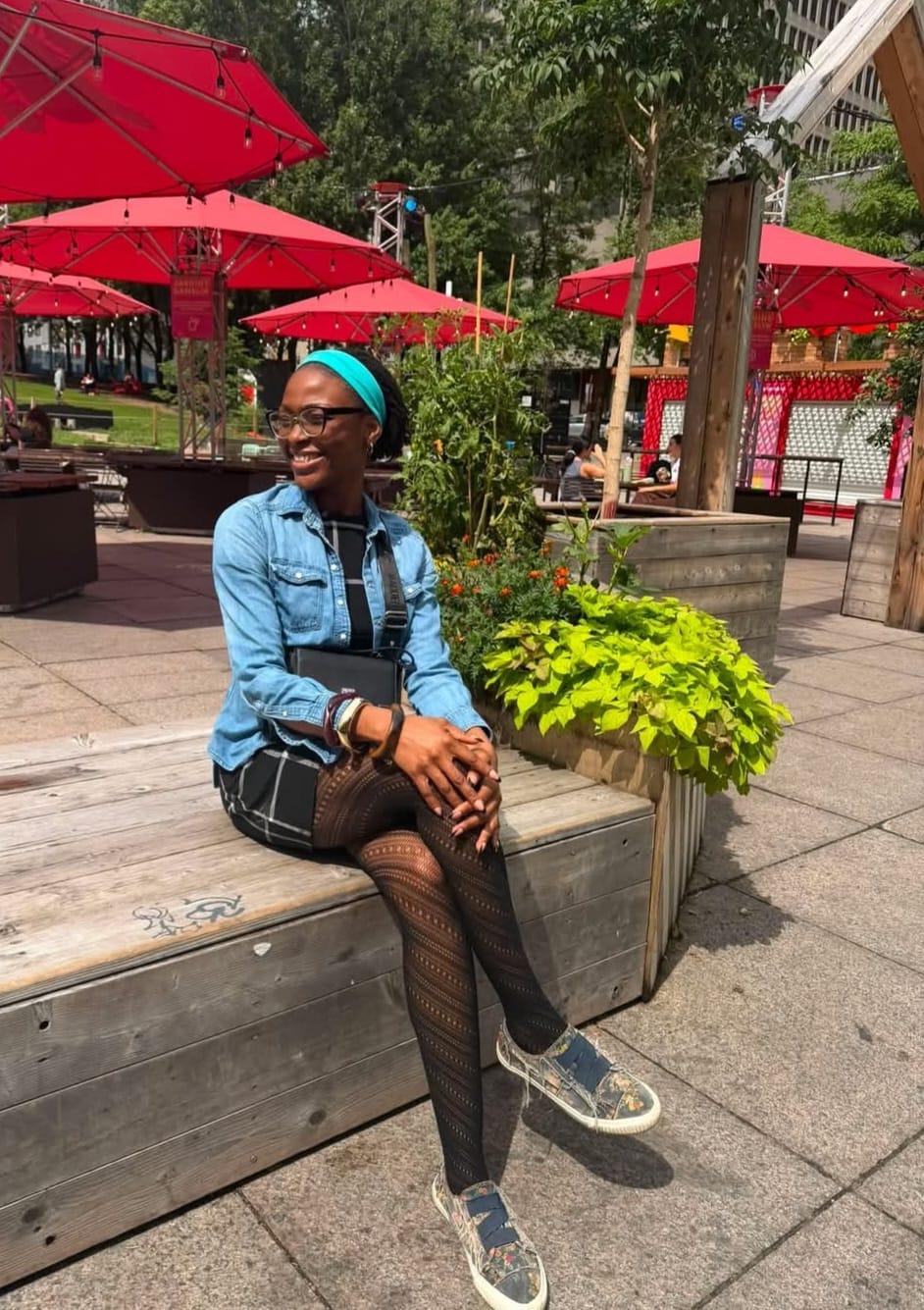
Ogechi Laura Amajuoyi has openly shared her painful journey, recounting how she came to see herself as merely a 'baby-making machine' within her marriage.
Amajuoyi explained that she first encountered her husband in February 2016, and by May of the same year, just three months later, she was already pregnant. At that time, she was unaware of his age or that he had been previously married and divorced. Despite these unknowns, she married him shortly after and began having children while still pursuing her university education. However, she asserts that she navigated all three pregnancies largely on her own, receiving little to no assistance from her children's father or his family.
Taking to Facebook to share her story, Amajuoyi wrote, "One of the pains I carry to this day is the fact that I was nothing but a baby-making machine to the family I married into."
She elaborated on the solitary nature of her pregnancies: "I carried all three of my pregnancies alone. My first, I carried while I was still a student at UNN, tummy growing while I kept up with my regular school activities. It’s thanks to my mother that dropping out never became the answer." Her second pregnancy coincided with her final months at UNN in 2018 and preparations for the compulsory NYSC program for Nigerian graduates. The third pregnancy was discovered after a night she spent locked out of her home following an argument with her husband.
Amajuoyi lamented her husband's absence during these crucial times: "Three pregnancies. No husband rubbed my feet. No husband massaged my tummy. No husband showed up for any of it. I did every single one of them without a husband, physically and emotionally, from the nausea to the labor to the recovery."
While her husband was 'technically present' for the first two deliveries at the government-run Parklane Hospital in Enugu, where overnight stays for husbands were not permitted, Amajuoyi wished he had shown more care. She recalled seeing other men stay with their partners through the night. "But mine was in a hurry to leave almost as soon as he arrived," she stated. He would then join his friends, the same group that regularly kept him out late, to brag about his wife giving birth, leaving her to manage the aftermath alone. She reflected, "My supposed husband was somewhere drinking Heineken and eating fish with people who, in the grand scheme of things, meant nothing."
The issue of naming her children also caused significant distress. Amajuoyi expressed disbelief that someone else felt entitled to name the children she carried alone. She specifically pointed out her ex-mother-in-law's insistence on naming every child, viewing it as a "fundamental human right" rather than a request. "As if my body did the carrying, alone, so her family could do the naming," she remarked.
The chosen name for her last baby, Ifunanya (meaning 'love' in their language), was particularly painful, as it belonged to another woman her ex-husband had been involved with in Enugu. Amajuoyi questioned if her mother-in-law remembered or cared about this connection.
When she confronted her mother-in-law about her husband's infidelity, the response was not accountability for her son. Instead, her mother-in-law shared a story about her own husband's similar actions, which Amajuoyi found deeply unhelpful. "As if that history was supposed to comfort me, or prepare me, or quiet me. It did none of those things. It just told me everything about what she’d normalized in her own marriage, and what she now expected me to normalize in mine."
This experience led Amajuoyi to a profound realization: "Women who spend their marriages absorbing the failures of irresponsible men aren’t just enduring something privately. They’re raising the next version of it." She believes sons learn from their fathers' actions, and mothers then expect new wives to bear the same burdens. "That’s how the cycle stays a cycle. Not because anyone is forced to keep it going, but because everyone around it agrees to call it strength."
Amajuoyi concluded by stating her belief that a peaceful one-parent household is always preferable to a toxic two-parent one. "A child doesn’t need two parents under one roof. They need at least one parent who isn’t teaching them, by example, what to accept." She signed off, "My name is Ogechi Amajuoyi, and this is one of the sacrifices I carry that I no longer call noble."
Videos
Comments
(0)0/500 · No URLs or profanity allowed
Na wa oh! Dis Ogechi Amajuoyi matter just dey show say some marriages na pure struggle, especially for women wey dey carry all di load. E go make person tink if true true love still dey some relationships or na just for pikin sake.
Source: Linda Ikeji's Blog
Related Stories
Father's Love Prevails: Woman Freed from Abusive Marriage in Dramatic Traditional Ceremony

Miraculous Reunion: Nigerian Man Found in US After 10-Year Search

Miraculous Reunion: Lister Mathew Osas Finds Long-Lost Siblings After 30 Years
Canadian Mother's Unconscious Delivery: Nurses Find Newborn Under Blankets
Brave 11-Year-Old Avory Woolery Rescues Drowning Man in Kentucky