Premier League Club Emblems: Unveiling Their Unique Histories and Symbols
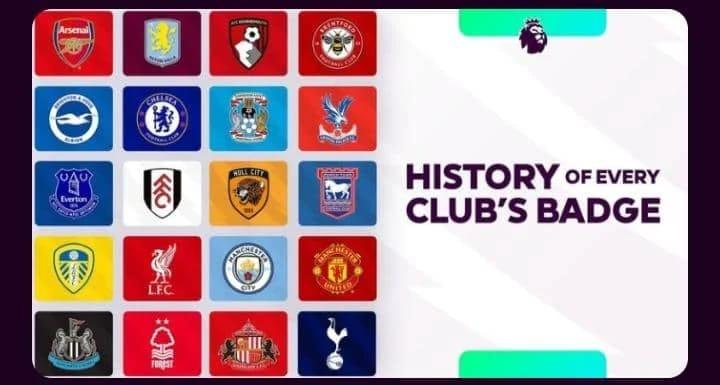
Full Story
A football club's emblem goes beyond mere identification; for numerous Premier League teams, the symbols, colours, and imagery on their crests narrate compelling tales of their origins, local heritage, popular nicknames, significant victories, and deep ties to their respective cities. Have you ever wondered why Arsenal's badge features a cannon? Or who the player depicted on Bournemouth's crest is? What significance does the elephant on Coventry City's shield hold? And why does Liverpool proudly display a Liver Bird? This piece delves into the fascinating stories behind the badges of the 20 Premier League clubs slated for the 2026/27 season, drawing on information released by the Premier League on Sunday.
**1. Arsenal – The Cannon's Legacy**
Arsenal's current badge, introduced in 2002, showcases an eastward-facing cannon. This symbol directly references the club's foundation in 1886 by a group of munitions workers at the Royal Arsenal in Woolwich, a historical link that also gave rise to their enduring nickname, 'the Gunners'. The crest incorporates two shades of red, reflecting the club's traditional colours from its earliest days. Before its redesign in 2002, the badge also included Arsenal’s Latin motto, 'Victoria Concordia Crescit' (meaning “Victory through harmony”), alongside the coat of arms of the Borough of Islington.
**2. Aston Villa – The Scottish Lion**
Aston Villa's current badge, unveiled in 2024, prominently features a lion derived from the Scottish coat of arms. This emblem is connected to former Villa chairman, William McGregor, who hailed from Scotland. Above the yellow lion, a white star commemorates Villa’s historic 1982 European Cup triumph over Bayern Munich. The club's founding year, 1874, is also inscribed on the badge. The crest reverts to a shield design, utilizing Villa’s traditional claret and sky blue colours, after the club temporarily adopted a circular badge during the 2023/24 season.
**3. Bournemouth – The Striker's Silhouette**
The silhouette gracing AFC Bournemouth’s badge is none other than former striker Dickie Dowsett. Dowsett played for the club during the 1950s and 1960s before transitioning to a role as Bournemouth’s commercial manager. He was instrumental in the club’s badge redesign in 1972, at which point his image was incorporated. His profile has remained a core part of the crest, with the exception of a brief period between 1981 and 1983 when a cluster of cherries replaced it. The red and black stripes on the badge signify Bournemouth’s home colours, originally inspired by Italian club AC Milan.
**4. Brentford – The Buzz of the Bees**
Brentford’s badge features a buff-tailed bumblebee, a direct representation of the club’s widely known nickname, 'the Bees'. This nickname originated in the 1890s when a group of students from Borough Road College, attending a Brentford match, reportedly chanted “Buck up Bs”. Journalists seemingly misheard this as “Buck up Bees”, solidifying the nickname. The club’s contemporary circular badge also displays its name and founding year, 1889. This modern design replaced an earlier four-part shield that included three seaxes from the coat of arms of Middlesex.
**5. Brighton – The Soaring Seagull**
Brighton & Hove Albion’s circular badge showcases a white seagull against the club’s traditional blue and white colours. While the club was once known as the 'Dolphins', supporters adopted the 'Seagulls' nickname in the mid-1970s. This change reportedly occurred after Brighton fans responded to Crystal Palace supporters chanting “Eagles”. A seagull has been a consistent feature on Brighton’s badge since 1977, only absent during the club’s centenary season in 2001/02.
**6. Chelsea – The Abbot's Lion**
Chelsea’s badge is dominated by a blue lion, depicted looking backwards and clutching a staff. This lion was adopted after Ted Drake became Chelsea manager in 1953, drawing inspiration from an element of the coat of arms of the former Metropolitan Borough of Chelsea. The staff symbolizes the Abbot of Westminster, who were historical landowners in the area. The badge also features two red Tudor roses, representing England, and two footballs.
**7. Coventry City – The Mighty Elephant**
Coventry City’s badge is rich with symbolism, containing an elephant carrying a castle, alongside a phoenix and an eagle. These symbols are directly derived from Coventry’s coat of arms. The castle represents Coventry Castle, while the elephant stands as a symbol of strength. A red cross on the elephant is the St George’s Cross, reflecting the historical belief that St George was born in the region. The phoenix, depicted rising from flames, symbolizes Coventry’s resilience and rebirth following the devastation of the Second World War. The eagle represents Leofric, Earl of Mercia, who was responsible for founding monasteries in Coventry. The football at the heart of the badge incorporates Coventry’s traditional sky blue and white colours.
**8. Crystal Palace – The Perched Eagle**
Crystal Palace’s badge features an eagle perched atop the iconic iron-and-glass roof of the historic Crystal Palace exhibition building. This magnificent structure was originally built for the Great Exhibition in 1851. The eagle has been a prominent element on Palace’s badge since 1973, when manager Malcolm Allison changed the club’s nickname from the 'Glaziers' to the
Comments
(0)0/500 · No URLs or profanity allowed
Walahi, dis Premier League club badges get deep stories o! E no just be small artwork; na history dem dey carry for chest. E show say football for these clubs get serious roots, no be just kicking ball.
Source: Punch NG
Related Stories

At 11, British Prodigy Bodhana Sivanandan Makes History as Youngest Woman Grandmaster

Vozinha, Cape Verde's World Cup Hero, Laments Fame's Impact on Privacy

Harry Kane Affirms England's Proximity to Spain's Elite Football Standard

Haaland Sets New Nations League Scoring Record, Leaves Ronaldo and Mitrović Behind

AFCON 2027 Qualifiers: First Round Delivers Shocks, Comebacks, and Major Victories