Natasha Akpoti-Uduaghan Calls for Robust Checks on State Police Power
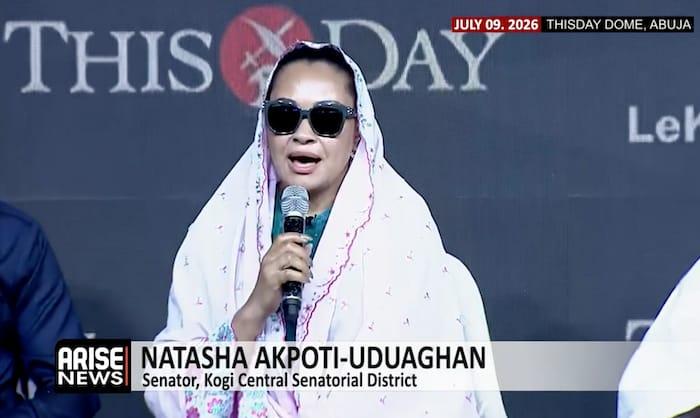
Senator Natasha Akpoti-Uduaghan, who represents Kogi Central District, has issued a strong caution regarding the proposed state police system in Nigeria, emphasizing the critical need to shield it from political manipulation. She stressed that lawmakers must embed robust accountability mechanisms within the legal framework to guarantee that ordinary citizens have avenues for redress in cases of abuse.
During her participation in the ARISE NEWS Townhall discussion on State Police, Akpoti-Uduaghan, who revealed her involvement in drafting constitutional provisions for the reforms, voiced her support for decentralizing the police force. However, she insisted that the proposed system must thoroughly address concerns about political interference, recruitment processes, funding models, disciplinary procedures, and independent oversight before it is made operational.
“My primary concern is the potential for abuse of this state police by both state and national political actors,” she stated. “If the police commander is in default of compliance, who do ordinary citizens report to?” The senator further argued that Nigeria's current centralized policing structure has fostered a significant gap between local security realities and the responses from national authorities.
“I, personally, am in support of this centralising the police force, because, let’s be very honest, in most democratic societies, whether it’s America or the United Kingdom, they do operate a decentralised system of policing. And in Nigeria today, if we are being honest with ourselves, there’s a huge disconnect,” Akpoti-Uduaghan explained.
She reiterated that her paramount worry remains the prospect of governors or other political figures misusing state police for partisan objectives if adequate legal safeguards are not firmly established. “I’m mentioning this in capital, the abuse, the concern of abuse, of the state police, by the state and national political actors.”
The senator also questioned how Nigerians would seek justice if high-ranking officers abused their authority. She urged lawmakers to ensure that complaints against state police commanders are investigated independently, rather than through politically compromised structures. “Who do you report to? How do you trust that your petitions will be addressed? If the police commander is in default of compliance, who do ordinary citizens report to? And how do you trust that a national police council would not be a boys’ club of some sort, or a political club of some sort, that will turn a blind eye to genuine complaints of Nigerians?”
Regarding funding, Akpoti-Uduaghan warned that the wide disparity in revenue generation among states makes it unrealistic to expect uniform policing finance without federal support. “We do know that the economic opportunities of states in Nigeria vary. We have some big states, like Lagos. You can’t compare the revenue generated by Lagos with states like Kogi and Zamfara.”
She additionally called on security agencies to intensify the deployment of technology against criminal elements, citing an instance where bandits allegedly conducted a live TikTok giveaway of large sums of money without being apprehended. “I have spoken loudly about the need to deploy smart technologies to curtail the excesses of insecurity in our country.”
Recounting a personal experience, the senator shared how a fully equipped police station she helped establish in her constituency remained non-operational despite repeated communications to the former Inspector-General of Police. It only became active following the appointment of the current police chief. “There was no response In less than two weeks, in less than two weeks, the police station was made operational.” She commended the current Inspector-General for activating the facility, highlighting that the contrasting responses from two different police leaderships underscore the importance of competent leadership within security institutions. “The same government, same office, different response.”
Akpoti-Uduaghan emphasized that no legal framework alone can guarantee effective policing unless the individuals implementing it are patriotic and committed to the rule of law. “No matter the laws we deploy, no matter how beautiful the literatures are in our Constitution, we still are going to rely on human beings to effect this.” Her concerns, she noted, are partly informed by her experiences during past elections in Kogi State, where she was told by police officials that “his hands were tied, they would tell me to please reach the national police.”
She further alleged a disturbing encounter with a former police commissioner after presenting evidence of armed political thugs operating openly. The commissioner reportedly advised her: “Madam, why don’t you recruit your own thugs too? To balance power?”
Despite these concerns, the senator expressed optimism that ongoing constitutional and legislative reforms could lead to a more effective policing system if lawmakers, security agencies, civil society organizations, traditional institutions, and citizens collaborate. “I do believe that my office, and the entire National Assembly, will walk in harmony with the state governors, with the police to ensure that every Nigerian’s life and properties are properly secured and the state police will walk harmoniously with the federal, to bring safety to Nigeria.”
Videos & Gallery

Comments
(0)0/500 · No URLs or profanity allowed
Senator Akpoti-Uduaghan don yarn say make dem no use state police carry out political agenda. She dey ginger say make strong laws dey to check abuse, especially as some governors fit just turn am to personal security. We just pray say dis advice no fall for deaf ears.
Source: Arise TV
Related Stories
Beyond Constitution: Moghalu Says Policing Bill Key to State Police Rollout
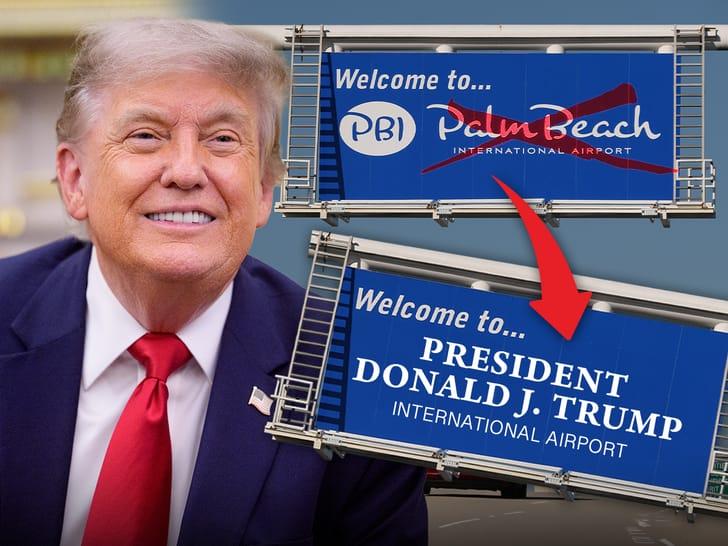
Viral Memo Alleges Palm Beach International Airport to Bear Donald J. Trump's Name
Nothing Must Happen to Obi and El-Rufai, Atiku Warns Tinubu
Presidency Addresses Peter Obi's Security Worries
Man Accused of Running ‘Fake’ Agency Confused by Presidency’s Denial