Isale Eko Union Fought 'Gangs of Lagos' to Preserve Eyo Heritage
Full Story
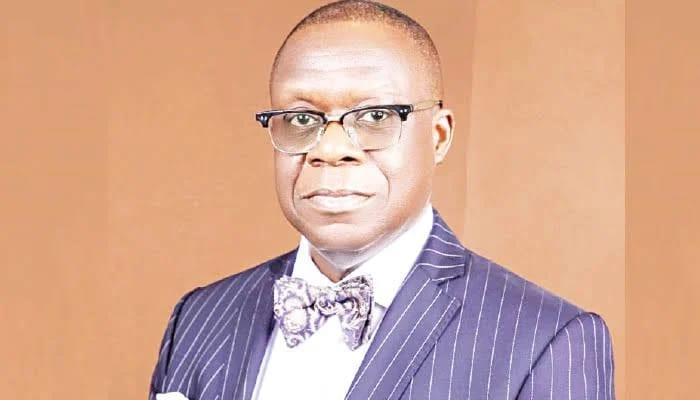
Kazeem Adeniji, the outgoing Chairman of the Isale Eko Descendants’ Union, has revealed that the group’s strong stance against the portrayal of the Eyo Masquerade in the film “Gangs of Lagos” was primarily to uphold the sanctity of Lagos's cultural legacy from misrepresentation. The 2023 release of “Gangs of Lagos” sparked significant controversy, leading to accusations from Isale Eko descendants that the filmmakers had committed defamation and sacrilege by depicting the Eyo masquerade as a violent gang of killers and portraying Isale Eko as a hub for criminals.
Adeniji explained that the union's firm response culminated in legal proceedings initiated on May 30, 2023, against the Attorney General of Lagos State and the Lagos State Film and Video Censors Board. This legal action ultimately led to a resolution with Greoh Limited and Amazon Prime, resulting in an apology and an acknowledgment of the concerns raised. He emphasized that this intervention, which included a formal apology from the film's producers, was crucial for protecting the respect, historical narrative, and cultural identity of the Isale Eko community for future generations.
The union’s position, Adeniji clarified, is part of a broader commitment to ensure that indigenous cultural emblems are not distorted or inaccurately presented in public discourse. He stated, “The Eyo Masquerade is one of the most revered cultural symbols of Isale Eko and indeed Lagos. We considered it our duty to defend the integrity of that heritage against misrepresentation.” He further noted that the dispute surrounding the 2023 movie highlighted the ongoing necessity for vigilance in safeguarding indigenous culture, issuing a warning that cultural symbols must not be treated lightly or subjected to distortion without consequences.
“For us, the issue was never merely about a film; it was about protecting the dignity, history and cultural identity of our people for future generations,” Adeniji remarked. He added, “Through constructive engagement and legal action, the matter was brought to a satisfactory conclusion, culminating in an apology and acknowledgement by those responsible for the portrayal.” He underscored that this incident demonstrated the deep emotional and historical connection communities have to their cultural symbols, with the reaction proving that heritage remains fundamental to identity.
“The episode taught us that culture must never be taken for granted. Many people often assume that cultural symbols can be appropriated, altered or portrayed without consequence. The reaction to the portrayal of the Eyo Masquerade demonstrated that our people remain deeply attached to their heritage and are prepared to defend it when necessary,” he elaborated. According to Adeniji, the successful resolution of the conflict reinforced the significance of lawful engagement, dialogue, and structured advocacy in defending cultural rights. He asserted, “We were not seeking confrontation; we were seeking respect for our history and traditions.”
Adeniji also highlighted that the experience emphasized the need for continuous vigilance in cultural preservation, cautioning that communities must actively participate in preserving their identity. “The lesson for me is that cultural preservation requires vigilance. It requires institutions, community leaders and ordinary citizens to remain actively engaged in protecting the narratives that define who we are,” he said. He further observed that the incident heightened awareness of the Eyo Masquerade's importance as a Lagos cultural icon and reinforced the responsibility of stakeholders to treat indigenous heritage with sensitivity and reverence.
Adeniji emphasized the crucial balance between urban development and cultural preservation, warning that progress should not erase historical memory. While acknowledging that urbanization is inevitable, he insisted that cultural extinction is not. “Urbanisation is inevitable; cultural extinction is not. The challenge is not whether Lagos will continue to grow. It certainly will. The challenge is whether growth will occur in a manner that respects the communities and traditions that gave Lagos its identity in the first place,” he articulated. He maintained that development should not come at the cost of memory, stressing that traditional institutions, historic landmarks, indigenous languages, festivals, and cultural practices must be preserved even amidst modernization. “Development should not require the sacrifice of memory. We must preserve our traditional institutions, historic sites, indigenous languages, festivals and cultural practices even as we embrace modernity. A city that loses its heritage loses part of its soul,” he stated.
Adeniji further posited that cultural preservation is an investment in identity, emphasizing that economic advancement without cultural continuity is incomplete. “Because culture is the soul of a people. When we support Eyo, celebrate our festivals, preserve historical sites, document our history and honour our traditional institutions, we are not engaging in nostalgia. We are investing in identity,” he explained. He also highlighted the vital role of community organizations as intermediaries between government and citizens, asserting that sustainable development necessitates collaboration across all sectors. “Community organisations serve as bridges between government and the people. Civil society, traditional institutions and community organisations all have critical roles to play,” he noted.
Adeniji identified sustainability, youth engagement, succession planning, and the dynamic tension between tradition and modern realities as significant challenges facing community-based organizations. He urged younger generations to view indigenous identity as a valuable asset for the future, rather than an outdated relic. “The younger generation must see indigenous identity not as a relic of the past but as an asset for the future,” he advised.
As he concludes his tenure without seeking re-election, Adeniji recounted that his administration prioritized unity, cultural preservation, and community development through initiatives such as the Isale Eko Day Walk and various cultural festivities. He mentioned that the union also backed welfare and development schemes, including medical outreach and potable water projects, while enhancing participation in key cultural institutions like the Eyo Festival and the White Cap Chieftaincy traditions. Adeniji proudly stated, “One of our key accomplishments was bringing the community together around shared cultural and developmental objectives. The Isale Eko Day Walk and Isale Eko Day Celebration became important platforms for promoting unity and showcasing our rich heritage. We also supported potable water distribution initiatives and facilitated medical outreach programmes through strategic partnerships. These interventions demonstrated that community organisations can make meaningful contributions to improving the quality of life of residents. In addition, we expanded membership, promoted employment opportunities for younger members and maintained active participation in important cultural institutions such as the Eyo Festival and the White Cap Chieftaincy traditions.”
He spoke of a strong rapport with the Oba of Lagos, Oba Rilwan Akiolu, Femi Okunnu (SAN), former Chairman of the Board of Trustees of the Isale Eko Descendants’ Union, and Mr. Akin Kekere-Ekun, who initially served as Trustee before succeeding Alhaji Okunnu (SAN) as Chairman of the BoT. He urged the incoming executives to uphold tradition while embracing innovation. Adeniji's advice included, “Stay focused on providing excellent service. Maintain the unity of our Union. Honour our elders while empowering younger members. Preserve our traditions while also welcoming innovation. Most importantly, remember that leadership is about stewardship. We are custodians of an institution that existed before us and will continue long after we’re gone. I also urge our people never to lose sight of the importance of preserving our heritage.”
Comments
(0)0/500 · No URLs or profanity allowed
Na serious matter say film producers go just dey portray our cultural heritage anyhow. Dis Isale Eko Union don show say we gats always stand gidigba to protect wetin be our own. Make dem no dey take our culture play!
Source: Punch NG
Related Stories

Nollywood Legend Taiwo Hassan, Ogogo, Laid to Rest in Ogun

Nollywood Film 'The Night of June 7th' Hits Cinemas August 28, Inspired by Apo Six Tragedy

Linda Ikeji Media Unveils 'The Night of June 7th', A Film Inspired by the Apo Six Killings

IK Ogbonna Pays Emotional Tribute to Late Friend Alex Ekubo

Junior Pope's Widow, Jennifer Awele, Laments Life Without Husband