Trump Promises 'Hard' Retaliation As US-Iran Tensions Escalate Anew
Full Story
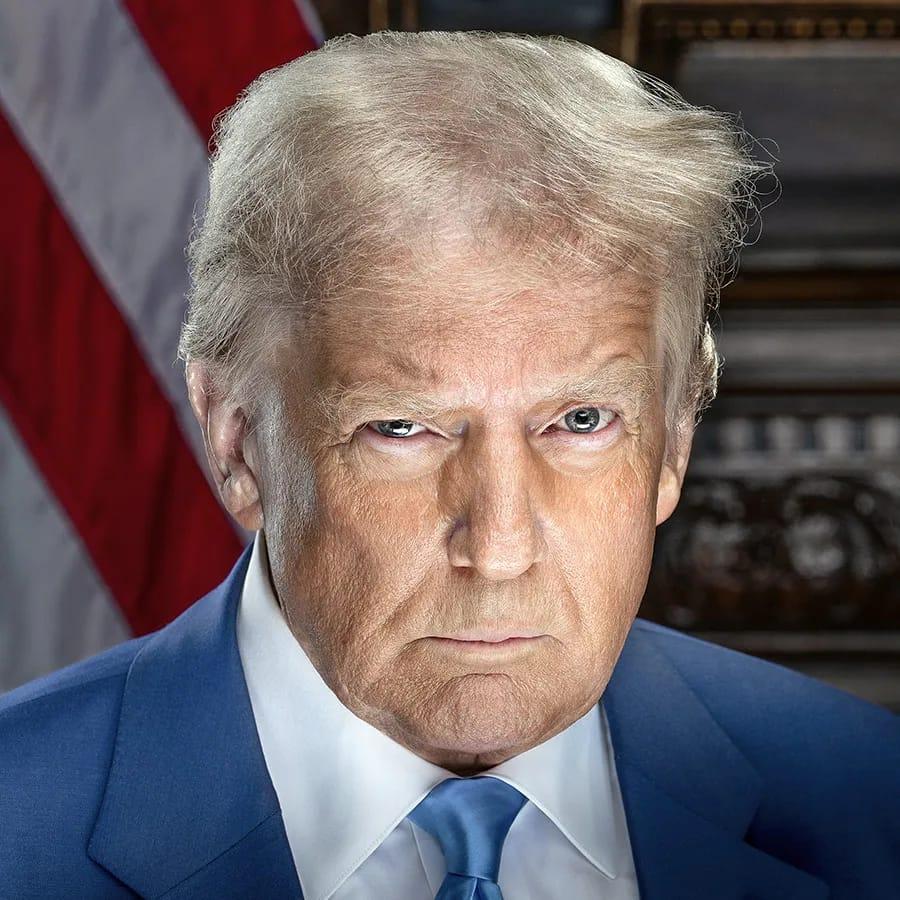
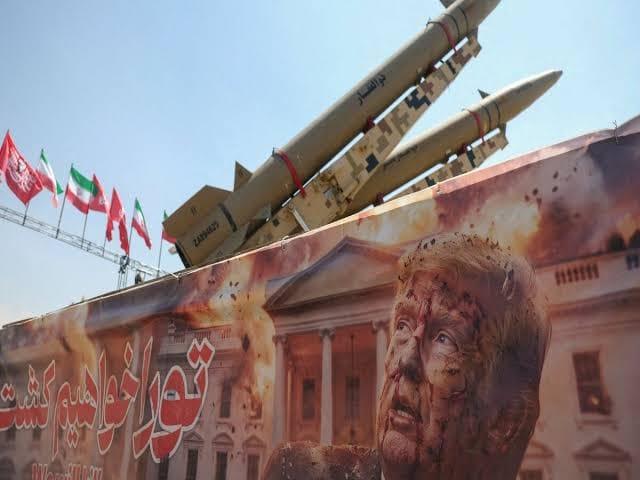
Following the first direct exchange of fire between the United States and Iran in several weeks, US President Donald Trump issued a stern warning, promising to strike Iran "hard." This declaration comes as his Treasury Secretary reaffirmed the administration's commitment to an economic pressure strategy designed to cripple Tehran's finances.
Six months into the ongoing conflict, both nations find themselves in a deadlock. Iran continues to maintain a blockade on the crucial Strait of Hormuz, while the US sustains its counter-blockade targeting Iranian ports.
Sunday saw an escalation when the United States launched strikes against an Iranian island situated within the Strait of Hormuz. Tehran swiftly responded by targeting US military installations across the Middle East. This rapid succession of attacks has reignited concerns about a full-scale return to conflict, prompting President Trump to pledge further action. "We're going to hit them hard," Trump told a Fox News reporter in a brief interview, adding, "There will be a response."
Washington justified its assault on Iranian rocket launchers on Larak island, asserting it was a preemptive measure to stop Tehran from deploying mines in the vital shipping channel. In retaliation, Iran claimed responsibility for missile and drone strikes directed at Jordan and the United Arab Emirates, stating these were aimed at US forces stationed in those countries.
Despite the heightened aggression, Iranian President Masoud Pezeshkian, during a summit in Kyrgyzstan on Monday, urged for a return to dialogue. Pezeshkian emphasized, "We continue to strive for a path of agreement and understanding, and we believe that continuing the war is neither in our interest, nor in the interest of the region," concluding that "the solution to the existing problems is dialogue and cooperation."
Iranian state media confirmed that the US attack on Larak on Sunday resulted in three fatalities and several injuries. Meanwhile, Iran's formidable Revolutionary Guards asserted that their ballistic missile strikes on two US air bases in Jordan inflicted "heavy damage."
Countering these claims, President Trump informed Fox News that nearly all missiles launched at US forces were intercepted, with one exception deemed non-threatening. Jordan's military subsequently verified the interception of eight missiles, though it refrained from specifying their point of origin.
Furthermore, Iran alleged that it had targeted US personnel at an air base in the UAE and successfully downed an American drone above Hormuz. However, Abu Dhabi acknowledged intercepting a drone over its territorial waters but vehemently rejected the assertions that Al Minhad Air Base was hit, labeling them "baseless."
On Monday evening, the Revolutionary Guards reported bringing down a second US drone over Hormuz. Concurrently, Iran's central command for its armed forces issued a renewed caution to neighboring countries against permitting the US to utilize their land for launching assaults.
Late Monday, the UK Maritime Trade Operations agency disclosed that a tanker exiting the Strait of Hormuz reported being struck by three "unknown projectiles" near the northeastern coast of Oman. The agency confirmed no environmental damage or casualties were recorded.
These recent skirmishes follow a period of relative tranquility, during which the Trump administration had primarily focused on economic warfare. Earlier on Monday, President Trump took to social media to label Iran a "failed nation," claiming its military was decimated, its financial system was collapsing, and "their leadership is in total disarray."
US Treasury Secretary Scott Bessent pledged the continuation of economic sanctions against Iran. Speaking to journalists at a G20 meeting in North Carolina, Bessent stated, "We are going to continue exerting pressure, and we've had very good discussions here already," suggesting that a significant breakthrough in this pressure campaign might materialize "within weeks or months."
Iran, for its part, is applying economic pressure through its ongoing blockade of the Strait of Hormuz. This action has destabilized global markets and contributed to rising energy costs for American consumers, particularly sensitive in a tight midterm election year. Prior to the conflict, approximately one-fifth of the world's oil transited this strait. Six months later, despite restricted traffic, President Trump asserts the US Navy maintains "total control" of the strait, with Washington announcing last week the completion of explosive clearing operations in the waterway. Iran, however, maintains its authority over the sea lane.
On Monday, the Revolutionary Guards reported that a "rogue" oil tanker caught fire close to the strait after allegedly striking two mines while attempting to navigate an "illegal route." The US military, however, dismissed this assertion as "disinformation," affirming that no vessels had encountered mines in the Strait of Hormuz.
For several months, mediators have attempted to negotiate a ceasefire, but previous truce agreements and memorandums of understanding have collapsed. Recently, Iran has been urging the US to revert to the original framework. Foreign Minister Abbas Araghchi stated on state television on Monday that "the solution is completely clear and straightforward: the United States must return to its commitments." He further added, "In that case, everything can be put back on the right track."
Comments
(0)0/500 · No URLs or profanity allowed
Dis US and Iran wahala don start again o, after small peace. Dem don dey exchange fire and still dey vex with economic pressure. We just pray say dis tension no go boil over into something wey go affect everybody for global market.
Source: Linda Ikeji's Blog
Related Stories
UK-Based Nigerians to Benefit from Passport Processing Drive
Nicolás Maduro Releases US Detention Images After Months in Custody
Fresh Military Clashes Erupt Between US and Iran, Fueling Oil Price Hikes

Bianca Odumegwu-Ojukwu Calls on AU for Fresh Peace Funding Strategies
UK Dispatches Emergency Personnel to Aid Nepal Flood Victims