Pretoria Implements Strict Measures Ahead of June 30 Anti-Foreigner Demonstration
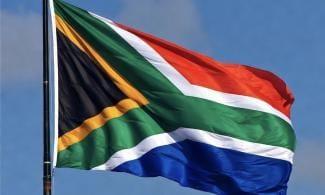
Officials in South Africa's capital city, Pretoria, have announced significant road closures and enhanced security protocols in anticipation of a large-scale demonstration against foreign nationals scheduled for Tuesday, June 30. Motorists have been warned to prepare for considerable traffic disruptions across the city.
As the June 30 deadline approaches, set by the anti-immigrant collective 'March and March' and associated groups demanding the departure of all 'illegal' foreign nationals, South Africa is witnessing growing instability and unrest. The City of Tshwane, through its Metropolitan Police Department (TMPD), issued a media advisory on Friday, confirming that the protest, orchestrated by 'March and March,' will commence at Church Square in Pretoria Central at 10:00 am, before proceeding to the Sunnyside Police Station.
According to police statements, the march is organized to protest against undocumented foreign nationals residing in South Africa. The TMPD's statement explicitly noted: "Take note that there will be a march on Tuesday, 30 June 2026, by March and March." It further clarified the objective: "Purpose: They will be marching against undocumented foreign nationals."
Regarding logistics, the TMPD stated that buses transporting participants would only be permitted to drop off passengers at the junction of WF Nkomo Street and Bosman Street, near the Church Square entry point, before relocating to the Old Putco Depot in Marabastad for parking. Private vehicles belonging to participants will be directed to an open area at the corner of Kgosi Mampuru Street and Madiba Street. Authorities emphasized that: “No vehicles will be allowed at the gathering point (Church Square).”
The planned march route includes: starting from Church Square, joining Paul Kruger Street, turning left onto Francis Baard Street, then left to Lillian Ngoyi Street, right at Madiba Street, right onto Nelson Mandela Drive, left at Kotze Street, left onto Van Boeschoten Avenue, right to Robert Sobukwe Street, and finally left at Leyds Street, continuing until the Sunnyside Police Station. Motorists have been advised to utilize alternative routes such as Nana Sita Street, Visagie Street, Justice Mahomed Street, Jeff Masemola Street, Bosman Street, Johannes Ramokhoase Street, Struben Street, Bloed Street, Kgosi Mampuru Street, and Eskia Mphahlele Drive.
Demonstrators are expected to disperse from the Sunnyside Police Station around 3:00 pm. The police also announced that personnel from both the Tshwane Metropolitan Police Department and the South African Police Service would be deployed throughout the event to oversee proceedings and maintain public order. "The Tshwane Metro Police Department and South African Police Service officers will be deployed to monitor the march and all affected streets," the statement confirmed.
This impending mass protest is set against a backdrop of recurrent xenophobic violence in South Africa. Foreign nationals, particularly migrants from other African countries including Zimbabwe, Nigeria, Ghana, Mozambique, Somalia, Ethiopia, and Malawi, have frequently been targeted during outbreaks of anti-immigrant unrest. South Africa has experienced several waves of deadly xenophobic attacks over the last two decades. Notably, in 2008, nationwide violence resulted in over 60 fatalities and the displacement of tens of thousands, as mobs attacked foreign-owned residences and businesses. Similar assaults re-emerged in 2015 and 2019, leading to deaths, injuries, widespread looting, and the destruction of migrant-owned shops.
In recent years, anti-immigration groups have organized marches and campaigns advocating for the deportation of undocumented migrants, asserting that illegal immigration exacerbates unemployment, crime, and strains public services. Conversely, critics accuse these movements of fostering xenophobia and collective animosity towards foreign nationals, many of whom run small businesses or sought refuge from conflict and economic hardship in their home countries.
Despite repeated condemnations of xenophobic violence by the South African government, which maintains that law enforcement should address illegal immigration through legal channels rather than vigilante actions, tensions surrounding immigration remain a politically sensitive issue. Periodic protests continue to garner significant public attention and necessitate substantial police deployment. The June 30 declaration, though ostensibly targeting undocumented migrants, has practically implicated anyone perceived to be of African or Asian origin, irrespective of their legal standing in South Africa.
Comments
(0)0/500 · No URLs or profanity allowed
Dis matter of anti-foreigner wahala for South Africa don dey too much. Dem say dem dey target 'illegal' immigrants, but na everybody wey no be white South African dey suffer. Government suppose find lasting solution, no be just dey deploy police every time.
Source: Sahara Reporters
Related Stories
Venezuela Earthquake Disaster: Fatalities Hit 235, Thousands Injured

Lagos State Commissioner Calls for Increased Climate Finance for At-Risk Cities

Trump Warns Iran: Stop Hezbollah or Face US Strikes

Japan Quadruples Visa Costs for Nigerians, Other Foreigners
Dublin Repatriates 42 South Africans in Illegal Residency Clampdown