New Mineral Discoveries Could Bring 'Oil Curse' Repeat, Experts Caution Nigeria
Full Story
A group comprising environmental specialists, community elders, and scholars issued a strong caution on Tuesday, asserting that Nigeria risks falling into a familiar resource trap unless it fundamentally reforms the management of its expanding solid minerals sector. They warned that the global pursuit of critical minerals might replicate the environmental destruction, conflicts, and socio-economic disparities that have characterized decades of crude oil exploitation in the Niger Delta region.
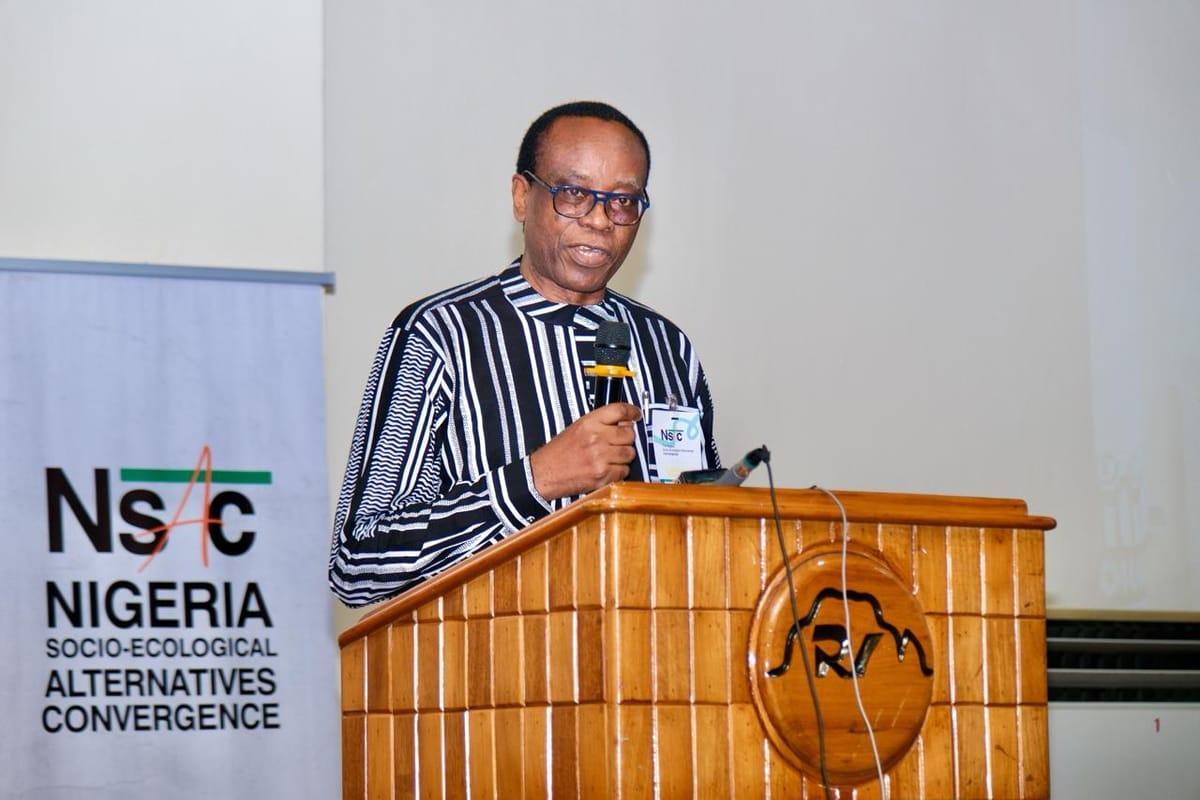
This urgent advisory was delivered during the Third Nigeria Socio-Ecological Alternatives Convergence (NSAC) in Abuja. Participants at the event emphasized that the nation’s renewed excitement over recent findings of lithium, rare earth elements, gold, platinum group metals, and other vital minerals must be accompanied by enhanced environmental safeguards, robust community rights, and transparent governance frameworks. The conference, themed “Deforestation, Mining and the Crisis of Human Security in Nigeria,” gathered traditional rulers, environmental advocates, academics, civil society organizations, and community representatives to deliberate on the ramifications of Nigeria’s increasing significance in the global energy transition.
The discussions followed the Federal Government’s recent announcement of a 'world-class polymetallic mineral province' in Kaduna State, reportedly containing lithium, rare earth elements, gold, copper, nickel, and platinum group metals. This discovery is part of Nigeria's strategy to become a key supplier of critical minerals essential for electric vehicle batteries, renewable energy technologies, and advanced manufacturing. However, speakers at the convergence firmly stressed the importance of avoiding the mistakes made in the country’s oil industry.
Leading the discourse, Professor Omolade Adunbi, an Anthropology and African Studies expert from the University of Michigan, cautioned that critical minerals are rapidly emerging as 'the new oil.' He warned that without a revised governance model, they could reproduce similar patterns of ecological damage, elite capture, and violent clashes. "The world must decarbonise," Professor Adunbi stated. "But the deeper question is what kind of decarbonisation, governed by whom, for whose benefit, and at whose cost?" He elaborated that while renewable energy technologies are promoted as eco-friendly, they heavily depend on minerals extracted from communities whose natural landscapes, including forests, rivers, and farmlands, could become the next 'sacrifice zones.'
Drawing parallels with the Niger Delta, Adunbi asserted that Nigeria’s prior experience with oil should serve as a cautionary tale against pursuing mineral wealth without ensuring environmental justice. "Critical minerals may become the new oil. If they are governed through the same extractive logic that shaped oil extraction in the Niger Delta, they will reproduce dispossession, deforestation, insecurity, elite capture and ecological degradation," he explained. He strongly advocated for the government to implement a comprehensive 'Just Minerals Strategy,' which would legally mandate community consent, prohibit mining in ecologically sensitive regions, guarantee environmental restoration, and ensure host communities receive an equitable share of the benefits.
Also speaking, Nnimmo Bassey, a renowned environmentalist and Director of the Health of Mother Earth Foundation (HOMEF), questioned the country’s enthusiasm for new mineral discoveries without first addressing the systemic governance failures that led to the Niger Delta’s environmental devastation despite decades of oil wealth. "Have we learned the lessons of almost seven decades of oil extraction in the Niger Delta?" he asked. "We are yet to have serious conversations on what sort of development we desire." Bassey contended that Nigeria’s forests, rivers, and communities are increasingly being compromised in pursuit of an extractive development model that prioritizes natural resources over human lives. He highlighted the alarming rate at which Nigeria’s forests are disappearing, estimated at 250,000 to 300,000 hectares annually, leaving primary forests to cover only about 1.3 percent of the nation’s landmass. At this pace, he warned, Nigeria could lose almost all its forests by 2052.
Beyond commercial logging and agricultural expansion, Bassey criticized emerging carbon credit projects, labeling them a form of 'carbon colonialism' that risks dispossessing local communities under the guise of climate action. He referenced plans involving hundreds of thousands of hectares of forests in Delta and Niger states designated for carbon credit initiatives, arguing that such projects often exclude indigenous communities from ancestral lands they have managed for generations. The environmentalist also linked uncontrolled mining to the escalating insecurity, noting that degraded forests are increasingly serving as operational bases for criminal gangs. "Some forests have become habitats not for wildlife but for wild humans—bandits and terr*rists—who disconnect communities from their forests and turn the territories into criminal fiefdoms," he stated.
The event’s Chairman, Alhaji Ibrahim Usman Jibril, the Emir of Nasarawa, echoed these concerns, identifying illegal mining and deforestation as significant contributors to banditry, insurgency, and organized crime across Nigeria. The monarch observed that criminal organizations have increasingly taken control of mineral-rich areas, funding their activities through illicit mining and timber trafficking while displacing local populations. "The nexus between mining, forest extraction, insecurity and Nigeria’s socio-ecological crisis forms a vicious cycle of resource plunder, environmental degradation and violent conflict," he said.
Drawing from his experience as a ruler in one of Nigeria’s most mineral-rich states, the Emir acknowledged that resources like lithium, tantalite, and rare earth elements present immense economic prospects. However, he insisted that development must never come at the expense of communities and the environment. "Our natural resources are a blessing, but only if they are governed with justice, accountability and sustainability," he affirmed. The Emir attributed the rampant illegal exploitation of natural resources, with host communities bearing the brunt through pollution, displacement, and declining livelihoods, to weak environmental governance, corruption, and political patronage. He called for stricter regulation, improved environmental enforcement, and greater involvement of traditional institutions in protecting forests and mediating resource-related conflicts.
A recurring theme throughout the conference was the intensifying connection between environmental degradation and national security. Speakers asserted that forests ravaged by illegal logging and unregulated mining have become safe havens for bandits and kidn*ppers, while competition over natural resources is exacerbating communal conflicts in various parts of the country. Participants also warned that declining global demand for fossil fuels might tempt Nigeria to replace its dependence on crude oil with a similar reliance on solid minerals, without undertaking the necessary institutional reforms to prevent another resource curse.
Instead of pursuing what speakers described as a 'dig now, regulate later' approach, they advocated for stronger environmental governance, mandatory community consultation, domestic mineral processing, transparency in licensing and contracts, and the restoration of degraded ecosystems. The conference also challenged the notion that renewable energy automatically equates to environmental justice. Participants stressed that the transition to cleaner energy must not create new 'sacrifice zones' in Africa to support low-carbon economies elsewhere. They firmly insisted that communities should retain the right to reject mining projects affecting their ancestral lands and called for legally enforceable Free, Prior and Informed Consent (FPIC) before any mining licenses are issued. The convergence concluded that as global competition for critical minerals intensifies, Nigeria faces a crucial decision: either perpetuate the extractive model that left the Niger Delta scarred by pollution, or embrace significant reforms.
Comments
(0)0/500 · No URLs or profanity allowed
Na serious warning be dis o! Experts don talk say make Nigeria no go fall inside another resource curse with dis new minerals wey dem dey find. We go see if government go listen and do wetin right, or if na just to dig and forget community people again.
Source: Arise TV
Related Stories

Plateau Community Mourns Three Young Herders Slain in Mangu Attack

Bandits' IED Blast on Zamfara Road Claims Two Lives

Governor Mutfwang Blasts Plateau Attack, Pledges Enhanced Security

Plateau: Nigerian Army Seizes Weapons Cache, Foils Attack
Francis Origa: Aid Worker Attacks Cripple Northeast Nigeria Relief Operations