Lagosians Express Growing Unease Over Fufu Safety and Handling
Full Story
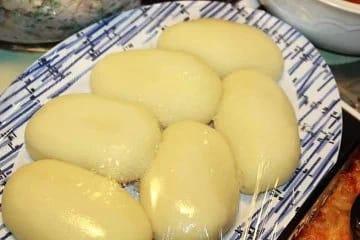
A number of individuals residing in Lagos State have voiced serious apprehensions regarding what they suspect to be unhygienic methods in the production and storage of fufu. These concerns were articulated during separate interviews conducted by the News Agency of Nigeria (NAN) on Sunday in Lagos. Fufu, a widely consumed local staple in Nigeria, also known as akpu or santana, is derived from fermented cassava. Its traditional preparation involves peeling cassava, steeping it for several days to facilitate fermentation and eliminate toxins, then blending, straining, and cooking it into a smooth, malleable dough. Notably, the market trend shows that portions of ready-to-eat fufu, which previously consisted of 13 balls for N1,000, are now sold for the same price but in significantly smaller quantities.
Over time, some consumers have gradually ceased purchasing fufu prepared in Lagos, citing worries about its processing, preservation techniques, and the potential for food poisoning. Miss Omena Udonwa, a resident of Ajegunle, shared that her past encounters with commercially prepared fufu compelled her family to begin making their own at home. Udonwa expressed profound dissatisfaction with the practices employed by some fufu producers. She recounted, “I discovered a piece of rubber inside a fufu I bought recently, and it was only due to my carefulness that I did not consume it.” She further added, “On another occasion, I witnessed a producer washing cassava with detergent and saw nothing wrong with their actions.”
Mr. Adedayo Falade, who lives in Costain, admitted his fondness for fufu, attributing it to the sustained energy it provides for demanding physical work. However, Falade lamented the preparation standards of certain processors, which often result in fufu that is both foul-smelling and excessively sticky. “I rarely consume fufu these days,” he stated. “Some fufu remains on sale for days, even weeks, without being bought, largely due to poor preparation methods.” He emphasized, “Despite my affection for fufu, I would rather procure it from outside Lagos because I no longer trust how it is made here. Some processors in Lagos are driven by sheer greed for additional profit, leading them to bypass proper practices just to sell their product.”
Conversely, Mrs. Anuoluwapo Ayeni, an Agege resident, suggested that while some fufu processors are reliable, consumers must exercise diligence in selecting their purchase points. “Fufu is a nutritious meal, but I urge Lagosians to be discerning about where they buy it,” Ayeni advised. She stressed the importance of knowing the origin and preparation methods of the fufu one consumes to proactively avoid future health complications. “We still have reputable processors, but they are few. Everyone should be certain about what they are eating,” she concluded.
Offering insight into the process, Mrs. Hope Aniekan, a fufu processor at Santana International in White Sand, Oyingbo, detailed the various stages involved in preparing and storing the staple. Aniekan explained that cassava is initially peeled and thoroughly washed with clean water before being left to soak for approximately two days. She elaborated that the soaked cassava is then taken to a mill for grinding, subsequently filtered to remove any undesirable particles. According to her, after about 30 minutes, the resulting paste is placed into a sack, covered with plantain leaves, and weighted down with a heavy stone.
“We adhere to traditional procedures when processing our fufu here. Our fufu is trustworthy, and our customers can vouch for it,” Aniekan asserted. She clarified, “We only incorporate salt into our fufu as a preservative to prevent maggot infestation. No other harmful additives are present in our fufu, but I can only speak for my own operations. I am unaware of how others process theirs.” She also acknowledged, “We have heard whispers of some unethical processors using harmful substances to accelerate the fermentation of their fufu.”
Another resident and fufu vendor, known simply as Mama Chinonso, at Costain, shared her method of preserving fufu using a warmer. She indicated that this technique allows her fufu to remain fresh for three days in warm conditions and up to a week during colder weather. “I don’t add anything to keep my fufu fresh for extended periods. When I receive my supply, I simply store it in my warmer to maintain its freshness,” she stated. “In warm weather, the fufu can last for three days and still be edible, but in cold weather, it can last up to a week. My family and I consume this fufu, so I would never sell something I wouldn’t eat myself,” Mama Chinonso affirmed.
Comments
(0)0/500 · No URLs or profanity allowed
Dis fufu matter for Lagos don cause serious wahala o, as many pipu dey complain say dem no trust how dem dey prepare am. Na make producers for mind dia work well, because health no get duplicate and quality food na everybody right!
Source: Punch NG
Related Stories

Kano's Kurmawa Prison: Cholera Outbreak Claims Two Inmate Lives

Over 3,000 Livestock in Kaugama LGA Receive Lung Disease Vaccine

Ekiti Boosts Surveillance, Public Education Against Ebola and Diphtheria

Details emerge: Ogun Hospital Achieves Robotic Surgery First with Pastor Idachama

Details emerge: Full List: 37 Suspected Miners Die in Niger NSCDC Custody