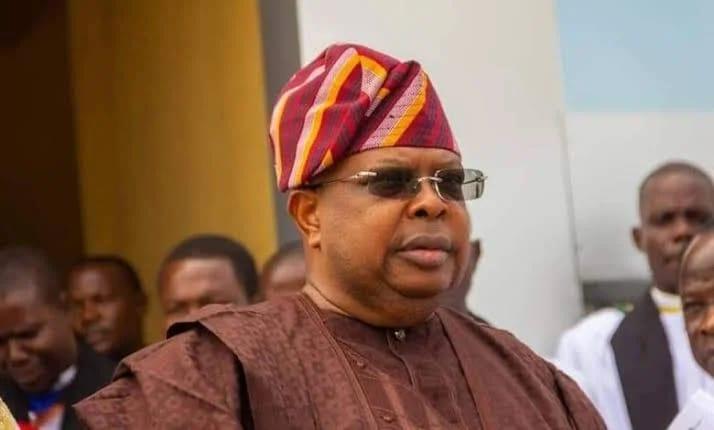
FCT Families Battle Mounting Hardship Amidst Fuel Price Jumps

Full Story
Households and businesses in various Federal Capital Territory communities are expressing deep concern over the escalating economic hardship, attributing it primarily to the relentless increase in fuel prices. This surge has directly led to a significant rise in transportation fares, food costs, and overall living expenses.
During interviews conducted by the News Agency of Nigeria (NAN) on Monday across Dei-Dei, Kubwa, and Dutse, residents detailed how the continuous hike in petrol prices has translated into higher transport fares, more expensive food items, and inflated costs for a broad spectrum of essential goods and services. NAN's investigations revealed that petrol is now being sold for between N1,450 and N1,500 per litre at numerous filling stations in Abuja. This marks a significant jump from the previous prices of approximately N1,200 to N1,280 per litre before the recent increments.
Mr. Sunny Peter, a commercial driver operating in Dei-Dei, attributed the hike in transport fares directly to the escalating cost of petrol. He explained that drivers are left with no choice but to adjust their fares, as fuel now constitutes a much larger portion of their operational expenses.
"Fare from Dei-Dei to Berger, which previously ranged between N900 and N1000, now costs about N1,200 to N1,500, depending on traffic and demand," Peter stated. He further noted that commuters traveling from Kubwa to Wuse, who once paid N700 to N800, are now required to pay between N1,000 and N1,200. Peter acknowledged the difficulties faced by passengers, saying, "We understand the challenges passengers face, but we also have to survive. Fuel is expensive, and maintaining our vehicles is becoming more difficult."
Mrs. Adaeze Okoli, a civil servant residing in Kubwa, lamented that the rising transport fares have made her daily commute to work increasingly challenging. She explained that a substantial part of her monthly salary is now allocated to transportation, leaving insufficient funds for food, rent, and other basic needs. "The cost of living keeps rising while our income remains the same. Every fuel increase affects everything we buy," Mrs. Okoli remarked.
Another resident, Mr. Abdullahi Sani, echoed similar sentiments, stating that getting to work has become more difficult due to the continuous increase in transport costs. "My salary has remained the same, but transport costs continue to rise. I now spend far more than I did a few months ago just getting to work. Many families now struggle to meet their basic needs because a larger share of their income is spent on transportation and household expenses," Mr. Sani emphasized.
In Dutse, Mrs. Esther Okeke, a mother of six, highlighted how the fuel price surge has impacted nearly every facet of her family's life. "Food prices, school, transportation and electricity costs have all increased. Managing the family budget has become more difficult," she stated, appealing to the government to implement measures to ease the burden on both transport operators and commuters.
Mr. Muhammed Lawal, another resident, pointed out that many families are finding it exceedingly hard to meet their daily necessities. He called on the government to improve public transportation and work towards stabilizing fuel prices to alleviate the hardship experienced by residents. Several respondents also advocated for the introduction of affordable mass transit buses on key FCT routes to lessen the financial strain on commuters. They expressed optimism that reducing transport costs would also lead to a decrease in the prices of food and other essential commodities.
NAN recalled that the Federal Government had, in August, launched 100 Renewed Hope Mass Transit electric buses specifically for civil servants. These buses aim to provide safer, more affordable, and dependable transportation options for federal civil servants nationwide. During the commissioning event in Abuja, Mrs. Didi Walson-Jack, former Head of the Civil Service of the Federation, noted that this initiative serves as a tangible demonstration of the Federal Government's dedication to the welfare of its civil servants. She confirmed that 37 out of the 100 electric buses had already been delivered as the initial phase of the project, with the remaining vehicles slated for deployment as planned. It is anticipated that the rollout of these buses will help mitigate transportation expenses for workers.
Gallery

Comments
(0)0/500 · No URLs or profanity allowed
Dis fuel price wahala don too much! FCT residents dey cry say dem no fit cope again as everything don cost. Government sha don bring electric buses, but we go see if e go really reach everybody wey dey suffer.
Source: Punch NG
Related Stories

Governor Otti Defends Fuel Subsidy End, Warns Reversal Will Hurt Nigeria

Lokpobiri: Nigeria's Petrol Price Lower Than US, Many African Nations

Public Servants Demand N500 Fuel, N500k Minimum Wage from President Tinubu
Minister Joseph Tegbe Confirms Unreliable Electricity Persists for Many Nigerians

NMDPRA Clarifies Stance: No Hand in Petrol Pump Price Determinations