Igbogbo Kingdom Monarch: Kings Now Reign, Not Rule, Power Shifted
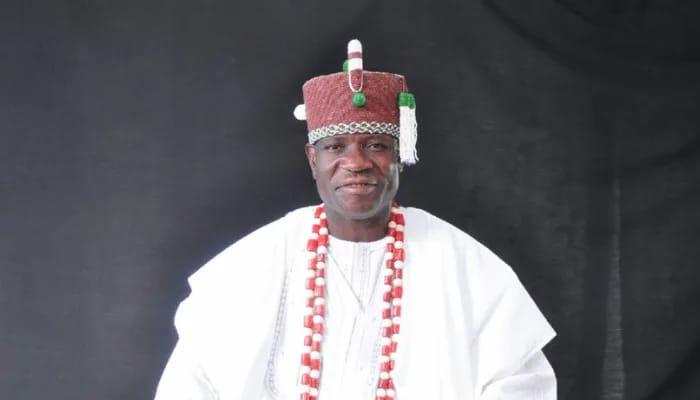
Oba Semiudeen Kasali, the Adeboruwa of Igbogbo Kingdom in Lagos State, recently articulated that traditional rulers in Nigeria currently "reign but no longer rule." He stated that actual authority has transitioned to elected government officials and established constitutional bodies. During an interview with journalists at his palace, commemorating his decade on the throne, the monarch expressed concern that despite their historical role as ultimate arbiters in community conflicts, traditional rulers have been relegated to mere "soft targets" lacking enforcement powers.
"The power resides, in fact, in any local government; the chairman of the local government is the chief executive, is the governor of that local government. There’s no power in the palace anymore," Oba Kasali remarked. The monarch, who is a lawyer and previously served as a state counsel in the Lagos State Ministry of Justice, pointed out that individuals are not obligated to adhere to palace pronouncements, as they possess the constitutional right to seek redress in court. "Some people are not bound to obey what we say in the palace because they want to exercise their constitutional right to approach court; you cannot stop them," he added.
While supporting ongoing initiatives to enshrine a defined role for traditional rulers within the Nigerian Constitution, Oba Kasali cautioned that any such reforms must extend beyond symbolic gestures. He stated, "The general body of traditional institutions in Nigeria, the resolve among all of us is that the government should give us a constitutional role. Be that as it may, my position is that even if you are giving us a role, what kind of roles are we going to be given?" He contended that palaces already facilitate mediation, security coordination, and grassroots mobilization, but their decisions lack legal backing.
To enhance the relevance of palaces, Oba Kasali stressed, "To make the palace relevant… they should make it a condition precedent that the palaces must be approached. Certain actions, certain decisions must be made in the palace." He argued that once matters have been thoroughly heard and resolved within the palace, parties should not be permitted to circumvent traditional authority by subsequently approaching the judiciary.
Oba Kasali asserted the continued importance of traditional rulers as "critical stakeholders" in maintaining security and fostering peace within their domains. He recounted how Igbogbo and nearby coastal communities had faced attacks from criminals using waterways, but noted that collaborative efforts with security agencies and community groups have significantly improved the situation. "In collaboration with the state government and the Nigerian Police, together with the local joint security task force, we are making good headway in checking the activities of criminals that are using our waterways to perpetrate criminality," he explained.
Addressing the nationwide surge in attacks and kidnappings targeting traditional rulers, Oba Kasali attributed the trend to a broader erosion of security and societal values, rather than a specific vendetta against monarchs. He posited, "Monarchs are being kidnapped because they see us as a soft target. These are things that they will do to get attention. That is why they are seen. It’s not only monarchs. Big men within the society, if you play into their hands and they pick [you], they will get attention." A Daily Trust report indicates that approximately 113 traditional rulers have been abducted across the country in the last four years. Oba Kasali lamented this development, contrasting it with precolonial times when capturing a king typically occurred during open warfare as a display of superiority, not for ransom. He concluded that the current situation is "still the problem of inadequate security arrangements," and also criticized citizens for failing to play their part in intelligence gathering and community vigilance.
Oba Kasali further linked many of the crises afflicting traditional institutions to the breakdown of societal values and the politicization of royal stools. Responding to concerns about affluent individuals with questionable character ascending to traditional leadership, he admitted, "I will blame all of us. We discover… that the values that we have in society in those days that existed, that our forefathers adopted… we allowed those things to fly away." He acknowledged that in some instances, kingmakers and communities overlook the implications of who occupies the throne and their conduct, thereby diminishing the dignity of the institution.
Leveraging his legal background, Oba Kasali urged both federal and state governments to formally recognize palace mediation as a mandatory initial step in resolving certain disputes, particularly land and communal issues that currently burden the courts for decades. He recalled the colonial era, stating, "In those days of the colonial era, they still recognised the role of traditional institutions. The clause they gave us was that any customary act or disposition that will be coming from the palace must not be repugnant to natural justice, equity and good conscience. If it complies with that, it will be sanctioned." He observed, however, that current palace decisions are often undermined, with parties sometimes even joining the king as a defendant in court, questioning where the respect for the institution has gone.
Reflecting on his decade as the Adeboruwa, Oba Kasali described his emergence as a "mystery" and a "call to serve the community in another capacity." He noted that his legal education from the University of Ibadan, coupled with his exposure to philosophy and religious studies, has guided him in implementing a "jury system" within the palace, where chiefs deliberate on cases before he delivers judgment. Beyond matters of power, the monarch emphasized his dedication to collaborating with government bodies and community organizations to foster development in Igbogbo and its surrounding coastal areas. He cited improvements in road networks, public schools, primary healthcare centers, and security infrastructure as key achievements during his reign, attributing them to joint efforts by the palace, the Igbogbo Development Association, youth groups, and elected representatives at state and federal levels. Looking ahead, he expressed a desire to be remembered for "leaving a legacy that people will always cherish," aspiring for "unparalleled development in Igbogbo and its environment" in the next ten years.
Comments
(0)0/500 · No URLs or profanity allowed
This matter of traditional rulers no longer having real power na serious gist o. Oba Kasali dey talk truth say elected officials don carry all the power. Make dem sha give our traditional rulers proper constitutional role, not just for show, so dem fit help settle wahala for community well.
Source: Punch NG
Related Stories

Wanted Bandit Leader Turji Offers Talks, Threatens War with Government

Activist Confirms Death of Trafficked Nigerian Girl, Ngufan, in Mali

Troops Secure Release of Five Borno Captives After Three Months

Kaduna Mob Lynches, Incinerates Woman Over Child Theft Claims

Family Demands Interior Minister Probe NSCDC Officer Agada’s Death Amid Cover-Up Allegations